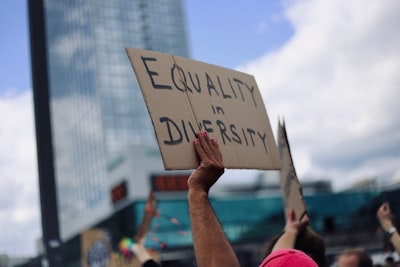
Research on fairness in artificial intelligence and psychometrics has evolved from a simplistic focus on equality to a more nuanced framework incorporating equity and causality. This article explores these dimensions from a technical and business perspective, highlighting how organizations can implement fair systems through the use of custom software applications and advanced AI solutions.
The debate between equality and equity is fundamental in any evaluation context. Equality means treating all individuals the same, while equity recognizes that people start from different situations and therefore require differentiated treatment to achieve fair outcomes. In psychometric tests and machine learning models, applying blind equality can perpetuate historical inequalities. For example, a hiring algorithm that only looks at resumes without considering socioeconomic biases may systematically exclude certain groups. Equity demands adjusting criteria or weights to compensate for these disparities.
Causality plays a crucial role in this analysis. It is not enough to observe correlations between protected variables and outcomes; we must understand the causal mechanisms that generate inequalities. Causal models allow designing interventions that truly correct injustices, rather than merely glossing over the data. In the development of custom software, integrating causal analysis helps identify which variables are truly determinants of fairness and which are mere proxies. This is especially relevant in AI systems that make automated decisions, such as AI agents or Business Intelligence dashboards.
From a business perspective, companies developing technological solutions must take responsibility for ensuring their products are ethical and fair. Q2BSTUDIO, as a software and technology development company, offers services ranging from multi-platform application creation to cloud infrastructure implementation on AWS or Azure. In each project, Q2BSTUDIO teams apply principles of fairness and causal analysis to ensure that solutions are not only efficient but also inclusive. For instance, in an AI-based recommendation system, counterfactuals can be incorporated to evaluate whether an outcome would change under equitable conditions.
Cybersecurity also intersects with fairness: a vulnerable system can be manipulated to introduce biases. Therefore, Q2BSTUDIO integrates cybersecurity practices in all development phases, protecting both data and algorithm integrity. Additionally, BI and Power BI solutions allow visualizing fairness metrics, such as the distribution of outcomes across demographic groups, facilitating informed decision-making.
AI agents represent an exciting frontier for causal research. An autonomous agent interacting with users must learn to balance efficiency with fairness. Here, the distinction between equality and equity becomes operational: the agent could offer more resources to those historically marginalized, using causal models to predict the impact of each intervention. Q2BSTUDIO works on designing these agents, ensuring their decisions are transparent and auditable.
In the cloud domain, AWS and Azure platforms offer machine learning services that include fairness tools. However, correct implementation requires a deep understanding of causal concepts. Q2BSTUDIO engineers know how to configure data pipelines that respect privacy and fairness, and how to use techniques like propensity weighting or regularization to mitigate biases. Collaboration between psychometrics experts and software developers is key to translating fairness theories into concrete practices.
Looking ahead, research on equity, equality, and causality must advance in several directions. First, we need fairness metrics that capture multiple dimensions, such as equality of opportunity and intergroup equity. Second, causal models should be integrated into AI workflows as a standard, not an add-on. Third, companies must adopt a proactive approach, auditing their systems periodically. Q2BSTUDIO already offers algorithmic fairness consulting services, helping organizations navigate these complexities.
In conclusion, the distinction between equality and equity is not merely academic; it has practical implications in software development and artificial intelligence. Causality provides the tools to design truly fair systems. Companies like Q2BSTUDIO are at the forefront, combining technical expertise with an ethical commitment to build a more equitable technological future.