
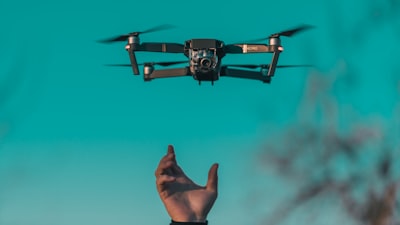
Participatory sensing with drones has revolutionized urban monitoring, enabling the collection of air quality, noise, or traffic data with unprecedented agility. However, dynamic environments, especially wind, severely impact drone speed and energy efficiency, introducing complexities in route planning and task assignment. Traditional approaches fail to scale with large fleets and to manage decisions at multiple time scales: macro task allocation and micro velocity control. To address this, a Two Time-Scale Reinforcement Learning (TSRL) framework has been proposed, separating decision-making into cooperative layers. At the macro level, a task-embedding dispatcher evaluates each drone's suitability sequentially, improving scalability. At the micro level, a wind-aware velocity controller finely adjusts speed to adapt to environmental variations. Results in cities like Hangzhou and Shanghai show system profit increases of 20-46%. However, implementing these solutions requires advanced technological integration beyond theory.
From a technical and business perspective, adopting drone sensing systems in dynamic environments demands a comprehensive approach combining artificial intelligence, cloud computing, and cybersecurity. Companies seeking to leverage these capabilities need custom software applications that integrate RL algorithms, fleet management platforms, and real-time analytics dashboards. Q2BSTUDIO, as a software and technology development company, offers specialized services in creating tailored solutions for such challenges. For example, developing AI modules that implement two-scale architectures requires deep expertise in frameworks like TensorFlow or PyTorch, as well as orchestrating models in cloud environments like AWS or Azure to ensure low latency and high availability. The company can design a complete system where the macro dispatcher and micro controller are deployed as scalable microservices, with asynchronous communication via message queues.
Managing environmental uncertainty, such as wind gusts, not only affects speed but also data integrity and operational safety. Therefore, solutions must incorporate robust cybersecurity to protect communication between drones and the base station, preventing spoofing attacks or sensor manipulation. Q2BSTUDIO offers cybersecurity services including pentesting and cloud infrastructure protection, ensuring sensing data is not compromised. Additionally, collected data analysis can be enhanced with Business Intelligence (BI) tools like Power BI, allowing urban managers to visualize pollution or noise patterns on interactive maps. The integration of autonomous AI agents for real-time decision-making is another area where the company adds value, developing virtual assistants that optimize flight routes based on weather and sensing demand.
Scalability of drone fleets is a logistical and computational challenge. A TSRL-based system, though efficient in theory, requires careful implementation to handle hundreds of drones simultaneously. Here, cloud infrastructure choice is critical. AWS and Azure offer managed machine learning services like SageMaker or Azure Machine Learning, which can accelerate RL model training. Q2BSTUDIO helps companies migrate and optimize cloud workloads, configuring multi-region environments to reduce latency and comply with data regulations. Moreover, process automation through scripts and CI/CD pipelines ensures model updates are deployed without disruption, keeping the fleet operational.
Another crucial aspect is integrating sensing systems with existing smart city management platforms. Drone-generated data must feed BI dashboards that enable policymakers to make informed decisions. For example, a municipality could use Power BI to correlate noise levels measured by drones with vehicular traffic, then adjust low-emission zones. Q2BSTUDIO develops custom connectors and ETLs to synchronize sensing data with cloud databases, ensuring consistency and quality. The company also offers training and support so internal teams can maintain and evolve the solution.
In short, participatory sensing with drones in dynamic environments is a technological opportunity that, if well implemented, can transform urban management. The combination of two-scale reinforcement learning, cloud infrastructure, and advanced cybersecurity, along with BI-driven data analysis, creates a robust and scalable ecosystem. AI agents are the next step to automate complex decisions, such as real-time drone reassignment under weather changes. Q2BSTUDIO, with its experience in custom software development, AI, cloud, and cybersecurity, is the ideal partner to bring these solutions from lab to production, offering an integrated approach that maximizes return on investment.
For companies wishing to explore this field, the first step is to conduct a technical and business feasibility analysis. Defining sensing objectives, typical environmental conditions, and fleet size allows designing an appropriate software architecture. Subsequently, a prototype with a small number of drones is recommended to validate the RL model under real conditions. During this phase, monitoring metrics like energy consumption, data accuracy, and response time is essential. Q2BSTUDIO accompanies the entire project lifecycle, from consulting to maintenance, ensuring the solution evolves with client needs.
In conclusion, the future of urban drone sensing lies in intelligent systems that adapt to uncertainty. The combination of advanced RL techniques with a secure and scalable cloud infrastructure, enhanced by BI and autonomous agents, represents the technological frontier. Q2BSTUDIO is ready to help organizations navigate this transformation, offering services covering everything from custom application development to cloud and cybersecurity integration. Investing in these capabilities not only improves operational efficiency but also opens doors to new business models based on real-time urban data.

