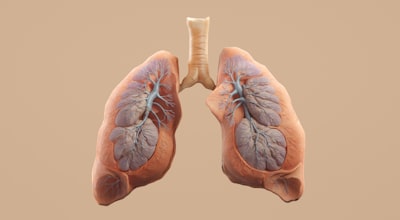
Accurate segmentation of lung tumors from three-dimensional computed tomography (CT) scans is a cornerstone of oncology treatment planning and therapeutic response assessment. However, current deep learning models, even when pre-trained on massive datasets, exhibit a critical vulnerability: their performance degrades abruptly when confronted with out-of-distribution (OOD) images. This OOD phenomenon can produce confidently incorrect segmentations, posing unacceptable risks in real clinical environments. To address this challenge, RF-Deep has been introduced as a lightweight, post-hoc random forests-based detector that identifies when an input image deviates from the training domain and alerts the specialist before an erroneous decision affects the patient.
RF-Deep leverages hierarchical features extracted from a pre-trained and fine-tuned segmentation backbone, combined with an aggregation strategy of regions of interest anchored to tumor predictions. This approach captures OOD likelihood without modifying the original model or requiring large labeled datasets. With as few as 20 in-distribution and 20 OOD scans, the detector achieves exceptional performance, outperforming other methods by several percentage points on challenging near-OOD datasets such as pulmonary embolism or COVID-19 negative, and reaching near-perfect detection on far-OOD scenarios like kidney cancer or healthy pancreas.
The impact of this technology on healthcare is undeniable, but its effective implementation requires a robust infrastructure and a multidisciplinary approach. This is where companies like Q2BSTUDIO, specialized in software and technology development, play a crucial role. Integrating OOD detectors such as RF-Deep into computer-aided diagnosis systems is not trivial: it involves everything from designing custom applications that consume AI models to securely managing medical data in the cloud and generating analytical reports that facilitate clinical decision-making.
For example, a complete solution could include a personalized frontend developed as custom software that allows radiologists to upload CT studies, run segmentation with the trained backbone, and visualize both segmented regions and OOD confidence levels. This frontend would connect to cloud services on AWS or Azure to scale image processing, ensuring low response times even with large data volumes. Moreover, cybersecurity is non-negotiable in healthcare settings: patient data must be protected through encryption, multi-factor authentication, and access audits — services that Q2BSTUDIO can implement comprehensively.
At the business intelligence level, the information generated by these systems can feed Power BI dashboards that monitor segmentation accuracy, OOD detection frequency, and outcome trends over time. This BI approach enables hospitals and research centers to optimize workflows and continuously improve models. Additionally, the trend toward autonomous AI agents that assist in medical image interpretation is gaining momentum. These agents, based on deep learning architectures and endowed with reasoning capabilities, can interact with OOD detectors to decide when to escalate a case to a human expert, reducing workload and minimizing errors.
The flexibility of RF-Deep to adapt to different backbones and pre-training strategies makes it an ideal tool for incorporation into existing segmentation pipelines. However, its production deployment demands deep knowledge of cloud infrastructure and medical domain specifics. Q2BSTUDIO, with its experience in developing artificial intelligence solutions and integrating complex systems, offers consulting and development services covering the entire life cycle of a clinical application — from conceptualization and prototyping to deployment in regulated environments.
Finally, it is important to highlight that OOD detection is not only a technical issue but also an ethical and regulatory one. In a sector where patient safety is paramount, having a post-hoc safety filter like RF-Deep can make the difference between a reliable system and a potentially dangerous one. Health technology companies must ensure their models are not only accurate on average but also recognize when they are operating outside their comfort zone. Collaboration between AI teams, software engineers, and cybersecurity specialists is essential to achieve this goal.
At Q2BSTUDIO, we understand that innovation in digital health requires a holistic approach. That is why we offer services ranging from custom artificial intelligence development to scalable cloud solutions, cybersecurity strategies, and business intelligence. If your organization is interested in incorporating OOD detectors into tumor segmentation systems or any other medical imaging domain, our team is ready to help you design a robust, efficient solution aligned with the most demanding regulations.