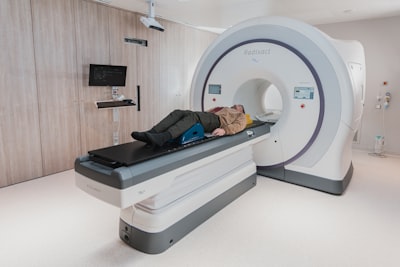
Breast tumor classification using magnetic resonance imaging (MRI) is a highly sensitive diagnostic tool, but its clinical application is limited by inter-center variability and the need to process multiple slices per exam. Deep learning models that perform well on internal data often fail when confronting image sets from other institutions, a phenomenon known as domain shift or dataset origin bias. Recent research has shown that in a confounded scenario where the label is perfectly correlated with data provenance, external accuracy drops to near-random levels (0.5048-0.5265) despite high recall. However, by building a mixed training set where each class contains samples from multiple sources, accuracy and F1 improve dramatically, reaching 0.8884/0.8994 with EfficientNet-B3. This advancement underscores the importance of controlling origin bias to achieve robust and generalizable classifiers.
From a technical perspective, dataset mixing not only balances the representation of each origin but also forces the model to learn intrinsic tumor features rather than scanner- or protocol-specific artifacts. In breast MRI, differences in field strength, pulse sequences, and acquisition parameters generate divergent data distributions that can mislead algorithms. Therefore, strategies such as dataset mixing with patient-level splitting, data augmentation, and leakage prevention are essential to mitigate bias. Companies like Q2BSTUDIO, specialists in AI applied to healthcare, integrate these techniques into their custom software solutions, ensuring that computer-aided diagnosis models maintain performance in real and diverse environments.
The challenge of domain shift is not exclusive to radiology; it affects any machine learning application where training data comes from a homogeneous source. In the business sector, for example, fraud detection systems or virtual assistants based on AI agents also suffer degradation when deployed in contexts different from training. That is why Q2BSTUDIO recommends combining data from multiple origins and employing cloud services such as cloud AWS/Azure to scale processing and storage of large medical image volumes. Furthermore, integrating Business Intelligence tools with Power BI allows real-time monitoring of model performance, identifying potential drifts and facilitating informed decision-making.
Another key aspect is cybersecurity. When working with sensitive patient data, it is imperative to protect both the infrastructure and deployed models. Q2BSTUDIO's cybersecurity solutions include pentesting audits, end-to-end encryption, and role-based access controls, ensuring compliance with regulations such as GDPR or HIPAA. This way, healthcare organizations can leverage advanced tumor classification without exposing critical information.
Process automation also plays a fundamental role. The training pipeline for a breast MRI classifier involves everything from image acquisition to clinical inference. Q2BSTUDIO offers custom software development that automates these stages, reducing reading time for radiologists and improving diagnostic consistency. Their automation solutions, combined with AI agents, enable orchestration of complex workflows such as automatic segmentation of suspicious regions and generation of structured reports.
In short, improving breast tumor classification through dataset mixing demonstrates that controlling origin bias is an indispensable requirement for AI in diagnostic imaging to be reliable and transferable to clinical practice. Healthcare technology companies like Q2BSTUDIO that incorporate these techniques into their developments are making a difference. Whether through custom software, cloud integration, BI, or cybersecurity, the goal remains the same: to provide tools that save lives with the highest possible accuracy. To achieve this, collaboration between domain experts and software developers becomes more necessary than ever, and it is there where Q2BSTUDIO's expertise brings tangible value.