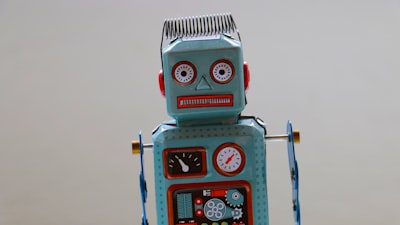
Face pareidolia, that psychological phenomenon that makes us see faces in clouds, power outlets or rocks, has become a surprisingly effective tool for evaluating the robustness of computer vision models. When an artificial intelligence (AI) system faces ambiguous patterns, its behavior reveals hidden biases, levels of uncertainty and decision strategies that are not evident in conventional tests. This diagnostic approach allows companies like Q2BSTUDIO to fine-tune their custom computer vision solutions, ensuring that custom software applications not only recognize objects but also handle ambiguity with judgment.
The original study shows that uncertainty and bias can be decoupled. Models with low uncertainty may be correctly suppressing false positives (like face detectors) or, conversely, overdiagnosing faces where there are none (like vision-language models, VLMs). For example, LLaVA misclassifies 73% of non-human pareidolic images as 'Human', especially when the perceived emotion is negative. This is not a simple failure: it is a window into how the model's internal representation —rather than decision thresholds— determines its behavior under ambiguity. For a software development company like Q2BSTUDIO, understanding this dynamic is crucial when designing AI systems that must operate in real environments, where uncertainty is the norm, not the exception.
Pure vision models (ViT) adopt an 'uncertainty-as-abstention' strategy: they maintain high uncertainty but avoid significant bias. Detectors like RetinaFace or YOLOv8, on the other hand, use conservative priors that suppress pareidolic responses, making them less prone to hallucinations but also less sensitive to genuine faces under marginal conditions. This balance between precision and sensitivity is exactly the kind of problem Q2BSTUDIO addresses with its AI and custom development services. Each model requires fine-tuning according to the use case: a security camera needs to suppress pareidolia to avoid false alarms, while a virtual assistant can tolerate some overdetection if it improves user experience.
Face pareidolia not only serves as a diagnostic probe but also generates 'hard negative' datasets that are ideal for training more robust models. By injecting pareidolic images into training, the model is forced to distinguish between real faces and accidental facial patterns. This process is an advanced form of data augmentation that Q2BSTUDIO integrates into its machine learning pipelines for clients in sectors such as retail, healthcare or security. Moreover, the ability to detect emotions in ambiguous faces —even if erroneous— can be leveraged in sentiment analysis or human-machine interaction applications, provided uncertainty is properly managed.
From a technical perspective, inference on pareidolic images requires scalable and secure cloud computing infrastructure. Q2BSTUDIO deploys vision models on cloud AWS and Azure, optimizing cost and latency. Cybersecurity is another pillar: vision systems that process sensitive data (such as faces) must comply with privacy regulations. Q2BSTUDIO's cybersecurity and pentesting services ensure that solutions are resistant to adversarial attacks and data leaks. Additionally, performance and bias indicators are monitored with Business Intelligence (Power BI) dashboards, allowing product teams to make informed decisions about when a model is ready for production or needs retraining.
Another relevant dimension is process automation. AI agents that manage workflows —like those developed by Q2BSTUDIO— can integrate vision modules that detect pareidolic faces as attention signals or distractors. For example, a customer service virtual assistant might ignore a face in a coffee stain, but alert if it detects a real face in a video surveillance camera. The key lies in the ability to contextualize ambiguity, something that current models still do not fully master. This is where diagnosis through pareidolia becomes indispensable: it allows quantifying and correcting those mismatches.
The study results show that vision-language models (VLMs) are especially prone to semantic overactivation. LLaVA, for example, not only sees faces where there are none but also assigns negative emotions with high confidence. This has direct implications in applications like content moderation, where a system might censor harmless images by perceiving aggressive expressions. For a company developing custom software, understanding these biases is the first step to mitigate them. Q2BSTUDIO performs bias audits on its AI models, using frameworks like face pareidolia to identify blind spots before they affect the end user.
In the research field, face pareidolia is consolidating as a de facto standard for evaluating semantic robustness. Traditional benchmarks —like ImageNet or COCO— do not capture the perceptual ambiguity that arises in real scenarios. By incorporating pareidolic stimuli, R&D teams can measure not only accuracy but also uncertainty calibration and decision consistency. This is particularly valuable for tech companies that seek to differentiate themselves by model quality, not just size. Q2BSTUDIO collaborates with startups and corporations to implement these tests in agile development cycles, integrating pareidolia detection as a continuous validation stage in their CI/CD pipelines.
Finally, it is important to note that pareidolia is not a defect but a property of the human visual system that AI attempts to mimic. When a vision model replicates it, it may be a sign that it has learned general facial features but lacks the context to discern. The solution is not to eliminate pareidolia entirely, but to manage it through adaptive threshold strategies, multimodal fusion, or post-processing with business rules. Q2BSTUDIO offers consultancy in designing hybrid systems that combine deep learning with symbolic logic, achieving an optimal balance between flexibility and control. All of this is supported by robust cloud infrastructure and cybersecurity measures that protect both data and models.
In conclusion, face pareidolia has proven to be a much more powerful diagnostic test than its apparent simplicity suggests. It allows unmasking biases, measuring uncertainty and calibrating vision models precisely. For companies like Q2BSTUDIO, this knowledge translates into better automations, more reliable AI agents and custom applications that truly understand the visual world they interact with. Ambiguity is no longer an enemy but an ally to build smarter and more ethical vision systems.