Visibility and anticipation are two of the greatest challenges facing modern supply chains. When a critical node, such as a seaport or logistics hub, suffers a disruption, the effects quickly propagate across the entire network, impacting delivery times, costs, and reputation. Traditional risk prediction systems focus on numerical accuracy but often fail to provide operational explanations that managers can interpret and audit. In this context, the need for explainable AI arises—not only to anticipate what will happen but also to explain why and how that conclusion was reached.
The reference academic paper, arXiv:2603.04818v3, proposes an evidence-based framework that combines a Temporal Graph Attention Network (TGAT) with a structured large language model (LLM) reasoning module. While we will not copy or paraphrase its content, its approach illustrates how the intersection of graph deep learning and natural language processing can generate interpretable early warnings. Our own technical and business perspective, based on Q2BSTUDIO’s experience in developing artificial intelligence solutions, allows us to explore how these ideas can be turned into practical tools for supply chain risk management.
At Q2BSTUDIO, we understand that AI adoption in enterprise environments depends not only on statistical accuracy but on the trust that systems generate. That is why we advocate for explainable models that integrate real-time data from sensors, IoT devices, and automatic identification systems (AIS) like those used in maritime transportation. By building daily spatiotemporal graphs and applying attention mechanisms, it is possible to capture risk dynamics that linear methods miss. However, the real added value lies in transforming those internal model signals—such as feature z-scores or neighbor influences derived from attention—into clear, actionable narratives.
Integrating LLMs into this flow allows the explanation not to be a black box but a structured text that any logistics manager can understand. For example, instead of receiving a generic alert like “high congestion risk at the port,” the system can detail: “A 23% increase in vessel waiting time, combined with a 15% reduction in unloading capacity, suggests an imminent disruption at node X, influenced by high activity at neighboring port Y.” This level of detail not only improves decision-making but also enables auditing of the model’s reasoning and correction of biases.
From a technical standpoint, implementing such a solution requires a solid, scalable cloud infrastructure. At Q2BSTUDIO, we recommend using cloud services on AWS or Azure to process large volumes of telematic data, train graph models, and deploy real-time inference pipelines. Moreover, cybersecurity is critical when handling sensor data and supply chain communications; thus, our implementations include encryption protocols, multi-factor authentication, and periodic pentesting, as described in our cybersecurity offering.
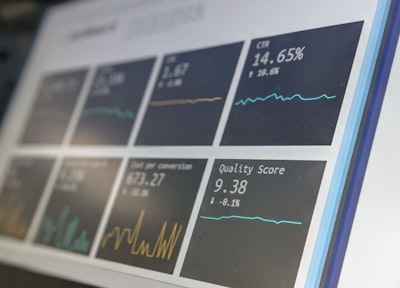
Another fundamental pillar is business intelligence. The reports generated by these early warning systems must be integrated with BI dashboards so that managers can visualize trends, correlations, and KPIs. At Q2BSTUDIO, we develop customized Power BI solutions that consume the outputs of explainable models and present them intuitively. Additionally, process automation through AI agents allows certain alerts to trigger corrective actions without human intervention, such as rerouting shipments or adjusting safety stocks.
Applying this approach in a real environment requires custom software development tailored to each company’s specific architecture. At Q2BSTUDIO, we offer multi-platform application development services to integrate heterogeneous data sources, from ERP systems to fleet tracking platforms. Our multidisciplinary teams combine expertise in data science, software engineering, and logistics to build solutions that not only predict but also explain and recommend.
One of the most interesting challenges is validating the consistency of explanations. The reference paper introduces a directional consistency protocol that measures agreement between LLM-generated narratives and underlying statistical evidence. In our practice, we apply similar techniques, combining feature importance metrics (SHAP, LIME) with human verification in feedback loops. This ensures that alerts are not only accurate but also that their explanations are reliable and auditable.
The business impact of this technology is enormous. A resilient supply chain reduces operating costs, improves customer satisfaction, and protects the brand during crises. With explainable AI, managers can act with confidence, knowing that recommendations come not from an opaque algorithm but from a system that can account for its reasoning. At Q2BSTUDIO, we have observed that companies adopting such solutions can reduce response times to disruptions by up to 40% and improve the accuracy of their contingency plans.
Looking ahead, the integration of autonomous AI agents capable of negotiating with suppliers or adjusting routes in real time will open new frontiers in supply chain management. These agents, trained with explainable models, will be able to justify each decision to human supervisors, maintaining the necessary control. At Q2BSTUDIO, we are developing prototypes of these systems, combining our expertise in process automation with generative artificial intelligence.
In conclusion, explainable AI for early risk warning in supply chains is not a future promise but an achievable reality with the right combination of technology, methodology, and business experience. At Q2BSTUDIO, we offer the necessary capabilities to design, develop, and implement these solutions, ensuring that every alert is accompanied by a clear, verifiable, and useful explanation for decision-making. The key is not only to predict but to understand.