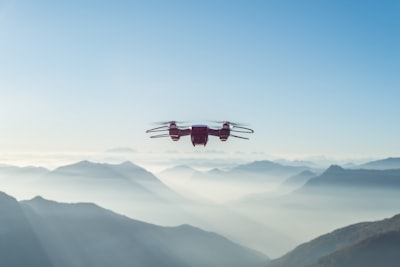
The exponential growth of the global drone fleet promises to transform sectors such as logistics, agriculture, infrastructure surveillance, and emergency response. However, for this future to materialize on a scale —with millions of units operating autonomously and in coordination— it is necessary to overcome a critical gap between available hardware and the software, intelligence, and communication systems that govern them. Computing in drones is not just about onboard processors; it involves a distributed architecture spanning the edge to the cloud, including artificial intelligence models, cybersecurity, and robust data governance. In this article we analyze the main technical challenges and propose solution paths from a business and technology perspective, with references to the capabilities offered by Q2BSTUDIO as a software development and technology company.
One of the most evident challenges is scalability. Managing millions of drones in real time requires coordination systems that go beyond traditional centralized solutions. Cloud computing, combined with edge processing, allows distributing the workload and reducing latency. Here the concept of 'edge-cloud continuum' appears, where critical decisions are made locally on the drone, while heavier analysis and global orchestration take place on cloud platforms such as AWS or Azure. To implement this infrastructure efficiently, companies need specialized cloud services that guarantee high availability and elastic scalability.
Artificial intelligence is another fundamental pillar. Drones require not only autonomous navigation capabilities but also object recognition, trajectory prediction, and decision-making in dynamic environments. Here AI agents —autonomous systems that can plan and execute missions without human intervention— and deep learning models trained with massive data come into play. However, the reliability of these systems is critical: a failure in image interpretation or communication can have serious consequences. That is why a solid data, training, and validation infrastructure, as well as AI assurance mechanisms, are essential. Companies looking to integrate such capabilities can rely on custom AI solutions covering everything from data collection to production deployment.
Cybersecurity becomes a non-negotiable requirement when we talk about drone fleets transporting goods, inspecting critical infrastructures, or collecting sensitive information. Risks range from flight control hijacking to telemetry data theft or identity spoofing. To mitigate them, it is necessary to implement distributed authentication, end-to-end encryption, and attack-resistant communication protocols. Likewise, protecting the base stations and data centers that process the information is equally important. A comprehensive cybersecurity approach, such as the one offered by Q2BSTUDIO through its cybersecurity and pentesting services, allows identifying vulnerabilities and hardening the entire ecosystem.
Building reliable fleets from non-deterministic agents is another technical challenge. Drones, operating in real environments, face unpredictable conditions such as wind, obstacles, or electromagnetic interference. Control algorithms must be robust and capable of real-time adaptation. The combination of predictive control techniques, reinforcement learning, and formal verification systems can help guarantee predictable behavior even under partial failures. In addition, standardization and certification of these systems is essential to achieve regulatory acceptance and public trust. In this field, developing custom applications makes it possible to create specific solutions that meet the requirements of each operation.
The human-machine relationship also deserves attention. Although drones tend towards full autonomy, in many applications —such as emergency supervision or medical delivery— human intervention remains necessary for complex decisions. This raises the need for intuitive user interfaces, real-time data visualization dashboards, and intelligent alert systems. Here business intelligence (BI) plays a key role: transforming telemetry data and performance metrics into actionable information. Tools like Power BI allow creating dashboards that integrate data from multiple sources —from the cloud to the drones themselves— and offer a global view of fleet status. Q2BSTUDIO, with its experience in Business Intelligence and Power BI, can help design these reporting and analysis systems.
We cannot forget workforce training and education. The large-scale deployment of drone technologies will require professionals capable of designing, operating, and maintaining these systems —from software engineers specialized in edge computing and autonomous agents, to cybersecurity technicians and data analysts. Companies must invest in training programs and partnerships with educational institutions to close the talent gap.
In short, the future of drone computing is promising but demanding. The twelve challenges identified by experts —scalability, artificial intelligence, edge-cloud, autonomous agents, data, infrastructure protection, reliability, trust, networks, human-machine collaboration, standards, and training— require a multidisciplinary approach. Companies like Q2BSTUDIO, with the capacity to develop custom software, deploy cloud solutions, integrate AI, and ensure cybersecurity, are perfectly positioned to accompany organizations on this path. Collaboration among technology specialists, drone operators, and regulators will be key to turning the vision of millions of drones flying safely and efficiently into an everyday reality.