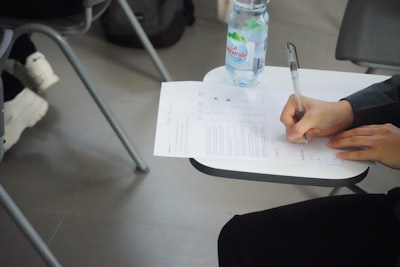
Automated grading of handwritten exams has long been a complex technical challenge, especially when using Small Language Models (SLMs). These models offer undeniable advantages in terms of privacy, cost, and scalability for educational environments, but their performance suffers when processing large images full of visual distractions, such as a full page of student answers. Recent research, such as that presented in the preprint arXiv:2607.18767, shows that using bounding boxes to crop student responses can significantly improve both accuracy and computational efficiency of SLMs in short-answer grading tasks. This finding, based on data from the 2025 Australian Physics Olympiad exam, opens the door to more robust and cost-effective applications in education and beyond.
From a technical perspective, the key is reducing the visual search space. By applying bounding boxes, background noise is eliminated and the model focuses solely on the region of interest—in this case, the student's handwritten response. This not only improves grading accuracy (models go from 65% to 85% accuracy in some cases) but also drastically reduces the required FLOPs because the model processes a lower-resolution image. This approach is especially relevant for SLMs with fewer than 10 billion parameters, which are the most viable for massive deployments in schools or universities with tight budgets.
In a business context, this methodology has direct implications for developing custom software for the education and document management sectors. For example, automated test correction platforms, form digitization systems, or handwritten survey processing tools can benefit from this technique. At Q2BSTUDIO, as a software and technology development company, we have applied similar principles in AI projects for data extraction in highly variable visual environments. Combining bounding boxes with lightweight models allows us to create solutions that run on local devices, respecting data privacy and reducing dependence on cloud connections.
Moreover, the use of bounding boxes is not limited to exam grading. In business tasks such as reviewing handwritten invoices, reading medical forms, or analyzing signatures, this technique can be integrated into automated workflows. This is where AI agents come into play—autonomous agents that process documents and make real-time decisions—an area where Q2BSTUDIO is developing tailored solutions. These agents can combine intelligent cropping with language models to classify, extract, and validate information without human intervention, all running on cloud infrastructures such as AWS or Azure, which offer elastic scalability and high availability.
Of course, data security is a critical factor in such processes. When handling sensitive student or client data, robust cybersecurity measures are essential. The solutions we develop at Q2BSTUDIO include end-to-end encryption, multifactor authentication, and periodic security audits. Additionally, combining bounding boxes with SLMs allows processing to be done entirely on the user's device, minimizing data exposure in the cloud.
Another relevant aspect is integration with Business Intelligence (BI) tools. Once exams or forms are automatically graded, the results can be fed into Power BI dashboards to analyze performance trends, identify improvement areas, or generate customized reports. At Q2BSTUDIO we offer BI / Power BI services that connect this data with interactive dashboards, facilitating data-driven decision-making in both educational and corporate settings.
From an implementation standpoint, using bounding boxes requires prior labeling of the regions of interest, which can be done via pre-trained object detection models (like YOLO or Faster R-CNN) or heuristic rules if the exam layout is fixed. Once the crops are obtained, they can feed SLMs such as Phi-3, Gemma, or Llama 3.2, which with fewer than 8B parameters achieve competitive results when combined with Chain of Thought (CoT) and proper cropping. Research shows that CoT alone is not sufficient; cropping with bounding boxes is the determining factor.
In the future, we will see this technique extend to other domains: from grading science exams to reviewing handwritten legal contracts. The ability to process complex images with small models opens the door to democratizing artificial intelligence in resource-constrained environments. At Q2BSTUDIO we are committed to innovation in this field, developing custom applications that integrate computer vision, natural language processing, and intelligent automation, always with a focus on privacy, efficiency, and scalability.
In conclusion, using bounding boxes as a preprocessing step in vision-based grading tasks with SLMs not only improves accuracy and reduces computational costs but also enables new use cases in education and business. For organizations looking to implement such solutions, having a technology partner like Q2BSTUDIO, specialized in cloud AWS/Azure, cybersecurity, artificial intelligence, and business intelligence, ensures a successful and sustainable long-term deployment.