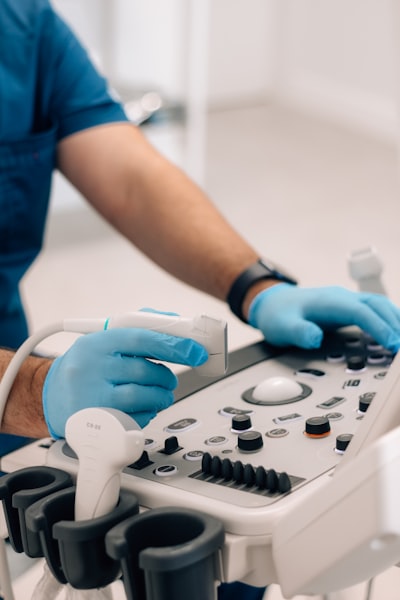
Fetal ultrasound is an essential tool in prenatal diagnosis, enabling early detection of neurodevelopmental abnormalities. Among the brain structures evaluated, the corpus callosum (CC) plays a critical role, as its proper formation is indicative of healthy interhemispheric connectivity. However, accurate localization of the CC in ultrasound images remains a considerable technical challenge. Inherent limitations of ultrasound imaging, such as low contrast, speckle noise, and anatomical variability among patients, make the task difficult even for experienced specialists. In this context, artificial intelligence (AI) has emerged as a promising solution, but traditional centralized learning approaches face significant barriers: they require aggregating large volumes of sensitive patient data, raising serious privacy and security concerns, while also struggling with bandwidth and computational resource constraints in real clinical settings.
FedCC, a federated learning (FL) framework for corpus callosum localization in fetal ultrasound, addresses these challenges innovatively. Designed specifically for multi-center and resource-limited environments, FedCC eliminates the need for data sharing between institutions. Instead, a global model is trained collaboratively through the exchange of updated parameters, preserving patient privacy. The FedCC architecture integrates a frozen DINOv2 feature extractor, known for its robustness in computer vision, with a lightweight YOLO-based detection head. To achieve parameter-efficient adaptation, Low-Rank Adaptation (LoRA) modules are incorporated, allowing only a small subset of weights to be optimized. This strategy drastically reduces computational and communication overhead, making the system viable even in hospitals with modest infrastructure.
The modular design of FedCC allows the architecture to adapt to different image acquisition protocols and ultrasound equipment, a crucial feature in multi-center settings where device heterogeneity can impact performance. Model customization, made possible through the development of custom software, ensures that each client can adjust training hyperparameters, aggregation frequency, or even feature selection without modifying the system core. This flexibility is especially valued by radiology teams seeking to integrate AI without disrupting their daily workflows.
Results obtained on a multi-center dataset of 10,970 ultrasound frames from 58 patients and three clinical sites with heterogeneous equipment demonstrate the effectiveness of FedCC. Under the FedAvg aggregation strategy, the combination of DINOv2 and LoRA achieved an average mAP@50 of 0.857 and an F1-score of 0.803, outperforming full fine-tuning and encoder freezing baselines. Notably, the number of trainable parameters was reduced to 2.9 million compared to 24.4 million for full fine-tuning, representing an approximately 8.5-fold reduction in communication cost. These advances represent a firm step toward scalable, privacy-preserving, and clinically deployable AI systems for fetal neurosonography.
From a technical and business perspective, implementing solutions like FedCC in healthcare requires a comprehensive approach that combines domain knowledge with advanced technological capabilities. This is where companies like Q2BSTUDIO play a fundamental role. With experience in custom software development, Q2BSTUDIO can design and implement complete federated AI systems tailored to the specific needs of each hospital or clinic network. Beyond software development, the underlying infrastructure is another critical pillar. Cloud computing, whether with AWS or Azure, provides the scalability and flexibility needed to handle distributed training and model aggregation processes without compromising security. Q2BSTUDIO offers AI services that enable deploying federated environments with regulatory compliance, ensuring data remains on local servers while encrypted gradients travel securely. Cybersecurity is, of course, a central concern; Q2BSTUDIO teams implement advanced protection measures, such as end-to-end encryption and multi-factor authentication, to safeguard sensitive patient information. Indeed, the very nature of federated learning reduces the attack surface by not centralizing data.
Another key dimension is business intelligence. AI models, such as the corpus callosum detector, generate a vast amount of information that can be exploited with Business Intelligence tools. Q2BSTUDIO integrates BI Power BI solutions to visualize model performance metrics, detection rates, geographical distribution of anomalies, and other indicators. This allows hospital managers to make data-driven decisions, optimize resources, and improve care quality. Likewise, incorporating autonomous AI agents —capable of monitoring the system, alerting about performance degradation, or even retraining local models— adds a layer of intelligent automation that reduces operational burden.
The potential of federated AI in fetal ultrasound extends far beyond corpus callosum localization. Similar techniques can be applied to segmentation of other brain structures, detection of cardiac anomalies, or placental assessment. The combination of federated learning, foundational models like DINOv2, and efficient fine-tuning techniques like LoRA lays the groundwork for a collaborative medical AI ecosystem where hospitals share knowledge without exposing data. On this path, having a technology partner like Q2BSTUDIO, which offers comprehensive services in custom software development, cloud, cybersecurity, BI, and AI agents, makes the difference between a laboratory experiment and an operational clinical solution.
In conclusion, FedCC represents a significant advance at the intersection of artificial intelligence, data privacy, and fetal ultrasound. Its efficient and federated architecture paves the way for widespread clinical adoption, especially in resource-limited settings. For institutions wishing to implement these capabilities, collaboration with specialized companies in custom software and emerging technologies, such as Q2BSTUDIO, accelerates digital transformation and ensures robust, secure, and scalable outcomes. The next frontier of fetal neurosonography is already here, driven by federated AI.