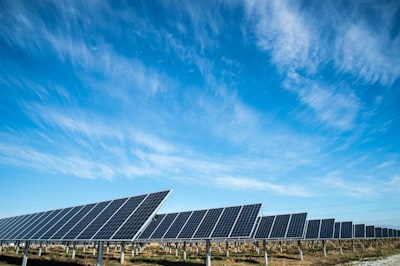
The increasing penetration of distributed generation and flexible loads is reshaping the energy landscape, giving rise to the prosumer — a household or small business that not only consumes electricity but also produces and trades it. In this context, local electricity markets (LEMs) emerge as decentralized platforms where prosumers can exchange energy directly, reducing costs and improving system efficiency. However, designing effective market strategies for prosumers with heterogeneous portfolios — photovoltaic panels, batteries, electric vehicles, heat pumps — remains a significant technical and business challenge. This article analyzes existing approaches from a technical and business perspective, highlighting how custom software and artificial intelligence can optimize participation in these markets.
Recent studies, such as the one referenced conceptually, use agent-based simulations to evaluate the impact of different bidding strategies in uniform-price double-sided call auctions. These strategies range from zero-intelligence (basic, no learning) to adaptive methods that incorporate market data and generation forecasts. Results show notable differences: an extended storage cascade strategy can reduce community energy expenditure by up to 37.4 % compared to the baseline, while an adaptive pricing strategy maximizes aggregate gains under summer conditions. Effectiveness, however, depends on portfolio composition and seasonality, requiring a joint analysis of resource control and pricing decisions.
From a technical standpoint, implementing these strategies in a real environment requires robust, scalable, and secure software platforms. This is where companies like Q2BSTUDIO add value, offering artificial intelligence solutions and custom software development to model, simulate, and deploy complex market algorithms. For example, an AI agent system can learn from weather conditions and historical prosumer behavior to dynamically adjust bids in real time, improving collective efficiency without human intervention. Cloud computing, whether AWS or Azure, provides the infrastructure needed to handle large data volumes and run high-resolution simulations — such as the 15-minute intervals used in reference experiments — ensuring availability and elasticity.
Cybersecurity is another fundamental pillar. In a market where every transaction involves financial and operational data, protecting information integrity and confidentiality is critical. Q2BSTUDIO's cybersecurity solutions include pentesting, communication encryption, and multi-factor authentication, tailored to distributed energy environments. Additionally, Business Intelligence (BI) tools like Power BI allow real-time visualization of energy flows, prices, and profits, facilitating decision-making at both prosumer and community operator levels. A well-designed BI dashboard can show, for instance, that a given strategy performs better in winter than in summer, helping to adjust participation rules.
Agent-based simulation, as described in the literature, thus becomes a digital laboratory to test different configurations before deploying them in production. Companies can develop digital twins of their energy communities using custom software integrated with IoT sensors and market APIs. This approach not only reduces risk but also allows rapid iteration on bidding, storage, and consumption strategies. For example, a prosumer with an electric vehicle can decide whether to charge during low demand hours or sell battery capacity to the local market based on price signals received from the platform, all orchestrated by an AI agent hosted in the cloud.
Challenges are not minor. The heterogeneity of portfolios — a household with only solar panels versus one with a battery and heat pump — requires personalized strategies that are not always easy to generalize. Moreover, LEM regulations vary across regions, forcing algorithms to adapt to specific legal frameworks. Here, the flexibility of custom software development is key: Q2BSTUDIO can design specific modules to comply with local regulations while maintaining a modular and scalable cloud architecture. Integration with weather forecasting and wholesale price systems is also possible through custom APIs, improving prediction accuracy.
From a business perspective, active participation in LEMs can generate additional income for prosumers and reduce dependence on the main grid. Simulation data indicate that adaptive strategies can increase aggregate gains by up to 40 % in favorable seasons. However, mass adoption depends on ease of use and trust in technology. Therefore, user interfaces must be intuitive and trading decisions clearly explained — something that explainable AI agents can facilitate.
In summary, evaluating market strategies for prosumers in local electricity markets is a multidisciplinary field combining energy economics, data science, artificial intelligence, and software development. Results obtained from simulations demonstrate that choosing the right strategy can lead to significant savings and higher revenues, but successful implementation requires a solid technological infrastructure. Companies like Q2BSTUDIO, specialized in custom software, AI, cloud, cybersecurity, and BI, are uniquely positioned to offer comprehensive solutions that make LEMs a profitable and sustainable reality. The next decade will see these systems deployed at scale, driven by digitalization and the need for energy transition.