The question appears repeatedly in technical forums and planning meetings: 'Why would I pay for GitHub Copilot when I can call the same models through an API?' On paper, the argument seems solid. Both access the underlying artificial intelligence, but the real cost and value lie in the implementation details. In this article, we break down what you actually pay for in each option, from a technical and business perspective, and how companies like Q2BSTUDIO help their clients make the right choice based on the development context.
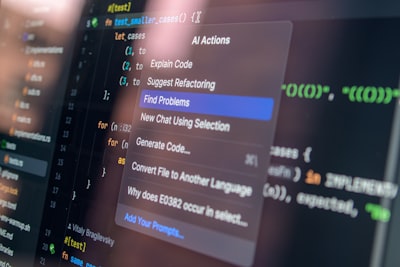
Let's start with the obvious: GitHub Copilot is not just a language model. It is a complete ecosystem of development tools integrated into the editor, the repository, pull requests, issues, and the terminal. When a developer starts from a GitHub issue, inspects the repository, modifies files, runs tests, and opens a pull request, the model call is only one step in that flow. Copilot connects all those points natively: it selects context from the repository, respects organization policies, manages retries, and returns suggestions that fit the existing code. That is what the subscription covers, in addition to model access.
On the other hand, direct API access gives you the basic building blocks. You build the retrieval system, routing, logs, security model, and billing. If your goal is to create a product feature that requires proprietary prompts, an internal vector database, or a custom agent orchestrator, the API is the path. But that freedom comes with real engineering work. A production system needs to decide which repository files to retrieve, how to preserve user instructions, when to retry a failed call, where to store traces, and what credentials an agent can use. Those design decisions are not made by a model endpoint; they are made by the development team.
This is where total cost of ownership comes into play. The price per token is just one variable. In Copilot, AI credits consume input, output, and cached tokens according to the selected model. But the real cost per task includes the selected context, the tools used, retries, and the path from an issue to a reviewed pull request. With the API, in addition to token costs, you must add development time, infrastructure, maintenance, and potential reengineering when the provider updates its model. For many organizations, Copilot's billing model —which pools credits across the organization and allows budget setting— offers visibility that is lost when each developer uses their own API key.
GitHub has published comparative evaluations where, keeping the model, task, and context constant, its agent harness (the same one used by Copilot CLI) achieves the same resolution rate as direct API solutions but consumes fewer tokens in most configurations. This is because the system is optimized for the software development workflow: it knows which files to include, how to structure instructions, and how to manage terminal tool calls. It is not magic; it is focused engineering.
Companies that have already invested in their own agent platform or automation pipelines may prefer the API. For example, an internal agent that reads a tagged issue, retrieves company documentation, creates a change request in a separate system, and writes a complete audit record needs its own data boundaries, event triggers, and approval points. At Q2BSTUDIO, as a company specialized in custom software development, we help our clients design these architectures. We integrate AI models with business systems, manage cybersecurity at every layer, and deploy solutions on cloud AWS or Azure to ensure scalability and regulatory compliance. We also offer artificial intelligence services, Business Intelligence with Power BI, and process automation, always tailored to each business's specific needs.
A trend gaining traction is Bring Your Own Key (BYOK) for Copilot, still in public preview. It allows developers to use models from providers such as Anthropic, AWS Bedrock, Google AI Studio, or Azure OpenAI within Copilot Chat, Copilot CLI, and VS Code, while maintaining the same integration that GitHub builds. The team still uses Copilot's harness and tools, but the token bill goes to their own contract with the provider. This hybrid solution is ideal for organizations that already have cloud spending commitments or commercial agreements with certain providers. Policy management remains centralized: administrators choose which models are available to their teams.
So, what do you actually pay for? If the work is building software within the tools where your team writes, reviews, secures, and ships code, Copilot reduces friction and accelerates the entire cycle. You pay for a system that already connects the editor, repository, issues, pull requests, terminal, and organization policies. If, on the contrary, you are building a product or an internal platform that requires custom behavior, deep integrations, and specific controls, the API gives you the foundation to build your own system. The right choice depends on the work you need to own.
At Q2BSTUDIO, we understand that there is no single answer. That is why, when accompanying our clients in digital transformation projects, we evaluate these trade-offs with real data: usage volume, flow complexity, team maturity, and opportunity costs. Whether you choose Copilot or the direct API, the important thing is to align the tool with the development strategy. Because in the end, value is not in the model, but in how you integrate it to solve business problems.