In today's digital transformation landscape, companies relying on custom software applications face a constant dilemma: how to maintain software quality without slowing down delivery cycles. Manual testing, while necessary in certain scenarios, creates a bottleneck that consumes valuable resources. This article explores whether automated testing for custom software can completely replace manual processes, analyzing from a technical and business perspective the real capabilities of automation.
Manual testing in custom software environments presents unique challenges. Each application has customized workflows, business rules and logic that require specific validations. Quality teams spend endless hours executing repetitive test cases, documenting results and verifying regressions. This approach is not only prone to human error but also limits the ability to scale with new requirements. The question is not whether automation can help, but to what extent it can absorb routine tasks and free human talent for strategic activities.
The short answer is yes, but with nuances. Automated testing for custom software can replace a large portion of manual processes, especially those that are repetitive, predictable and rule-based. A well-designed set of regression and integration tests can run in minutes instead of days, catching failures early and ensuring changes do not break existing functionality. This translates into faster release speed and more consistent quality. However, the replacement is not total: human creativity, contextual judgment and exploration of unforeseen scenarios remain irreplaceable.
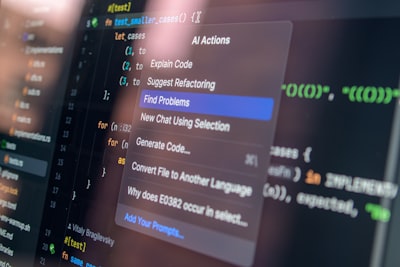
One of the most promising advances is the incorporation of AI and AI agents into the testing cycle. Intelligent systems can analyze application behavior, automatically generate test cases from real user flows and suggest improvements in coverage. AI agents act as virtual assistants that execute complex validations where judgment is required, such as identifying visual anomalies or evaluating emotional responses in user interfaces. These agents learn from historical data and adapt to software changes, reducing manual intervention. Integrating these capabilities within the process automation ecosystem allows companies to maintain full control without sacrificing agility.
The underlying infrastructure plays a critical role. Automated testing greatly benefits from cloud environments such as cloud AWS/Azure, which offer on-demand scalability. Instead of maintaining on-premise servers for testing environments, organizations can provision virtualized instances in seconds, run full test suites in parallel and tear down resources when finished. This not only reduces costs but accelerates feedback cycles. Moreover, cybersecurity must be an integral part of test design: validating that sensitive data is not exposed during automated execution, that authentication tokens are handled correctly, and that CI/CD pipelines comply with protection regulations. A testing strategy without considering security is incomplete and dangerous.
Furthermore, the visibility provided by BI/Power BI transforms data generated by automated tests into actionable insights. Dashboards can show failure trends, execution times, code coverage and correlations between changes and defects. Business and development teams can make informed decisions about where to invest improvement efforts. Automation not only replaces manual processes but generates a continuous flow of metrics that was previously impossible to obtain without prohibitive cost.
In this context, Q2BSTUDIO positions itself as a strategic ally for companies seeking to transform their testing processes. The company not only develops custom software but integrates automated testing from the initial design phase, using AI to discover and map manual tasks, configure forms and workflows, and establish validation rules that reflect best practices. Its approach replaces manual routines without disrupting business continuity, providing automatic audit trails and updated documentation. By measuring time saved, they allow teams to reinvest resources in higher-value activities, such as product innovation or customer experience improvement.
Automated testing for custom software is not a magic solution that completely eliminates human intervention, but it is a powerful tool that allows organizations to scale their quality assurance capabilities. The key is to identify which manual processes are ideal candidates for automation—those that are repetitive, rule-based and high-volume—and complement them with artificial intelligence and autonomous agents to handle tasks requiring some degree of judgment. Cloud infrastructure and cybersecurity measures ensure automation runs safely and efficiently, while BI tools provide the visibility needed for continuous improvement.
In short, automated testing for custom software can indeed replace a significant portion of manual processes, freeing time and resources so teams can focus on what really matters: creating quality software that drives business. The adoption of this technology, led by companies like Q2BSTUDIO, represents a firm step toward digital maturity, where automation and human intelligence coexist in balance.