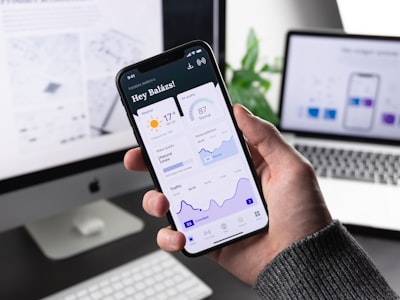
In the era of business mobility, a recurring question arises among development and quality teams: is it possible to integrate automated testing into the mobile device ecosystem without sacrificing robustness or speed? The answer is yes, but it requires a strategic approach that combines cloud technologies, artificial intelligence, and solid cybersecurity practices. Automated testing is no longer a luxury but a necessity when dealing with custom software that must run on phones, tablets, and desktop environments with consistent experiences.
To understand compatibility, we must first recognize that traditional automated testing was designed for stable web and desktop environments. The shift to mobile involves dealing with fragmentation of operating systems, screen sizes, hardware capabilities, and varying network conditions. However, modern automation platforms have evolved to orchestrate tests on real devices, emulators, and simulators directly from CI/CD pipelines. Q2BSTUDIO, a software and technology development company, integrates these capabilities into its CI/CD workflows to ensure that each code change does not break existing functionality, especially in mobile contexts.
The key is to adopt a hybrid approach: combine unit and integration tests executed in the cloud with UI tests that run real scenarios on actual devices. Cloud AWS/Azure services provide scalable infrastructure to launch hundreds of tests in parallel, while AI tools help detect visual and functional regressions that escape the human eye. For example, computer vision algorithms can compare screenshots of an app across different versions to identify unwanted interface changes.
Now, what role does cybersecurity play in this scenario? Mobile automated testing must include tests for secure authentication, data encryption at rest and in transit, and resistance to common attacks such as SQL injection or cross-site scripting (XSS). Cybersecurity solutions integrate into pipelines to validate that biometric credentials, OAuth tokens, and API communications meet the most demanding standards. Without this layer, the agility provided by automation becomes a risk.
But automation does not only verify security; it also optimizes the mobile user experience. Tests can simulate limited network conditions, orientation changes, interruptions from incoming calls, or push notifications. This ensures that adaptive applications deliver responsive dashboards and tactile forms that respond correctly. From a business perspective, this means teams can act on tasks, approvals, and insights from any device without losing functionality. Business intelligence (BI) benefits directly because Power BI dashboards adapted for mobile are automatically tested to ensure key indicators display correctly on small screens.
Artificial intelligence is also revolutionizing how we design and execute mobile tests. AI agents can generate test cases based on actual user behavior, prioritize critical paths, and self-heal scripts when the UI changes. This drastically reduces test suite maintenance, one of the biggest challenges in custom software projects. Q2BSTUDIO incorporates AI agents in its processes to analyze logs, predict failures, and suggest improvements in test coverage, accelerating release cycles.
Another fundamental aspect is compatibility with offline environments. Many mobile apps need to work without internet connectivity, syncing data when connectivity is restored. Automated testing must cover these flows: local storage, synchronization queues, and conflict resolution. Tests run on devices with varying network configurations, from 5G to airplane mode, verifying a smooth experience and no data loss.
The fragmentation dilemma is solved with farms of virtual and real devices hosted in the cloud. Services like AWS Device Farm or Azure App Center allow tests to run on hundreds of models simultaneously with comparable results. Integrating this into a CI/CD pipeline is a matter of configuration, and Q2BSTUDIO has experience orchestrating these environments for clients looking to expand their mobile presence without incurring exorbitant costs.
From a performance standpoint, mobile automated tests must measure load times, battery consumption, and memory usage. Monitoring tools integrated with pipelines detect degradations before they reach production. Hybrid cloud (AWS/Azure) facilitates recreating production environments for stress and capacity tests, ensuring scalability is not compromised.
For companies using Power BI in their mobile apps, automated testing verifies that reports and dashboards render correctly at different resolutions, that tactile filters work, and that real-time data updates are accurate. The combination of BI with automated testing enables informed decisions with reliable data, even from a smartphone.
In conclusion, automated testing is not only compatible with mobile devices but is indispensable for ensuring quality, security, and speed in modern software development. Organizations that adopt a comprehensive approach —combining cloud, AI, cybersecurity, and intelligent agents— reduce maintenance costs and accelerate time-to-market. Q2BSTUDIO offers automated testing solutions as part of its development and consulting services, tailored to each project's specific needs. Mobility is not an obstacle; it is a catalyst for continuous innovation.