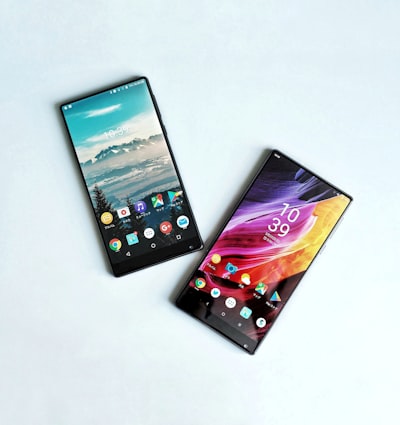
The rivalry between flip foldable phones intensifies with two giants: Samsung and Motorola. The Galaxy Z Flip 8 and the Moto Razr Ultra represent the latest in design, performance, and user experience. But beyond specs, the decision affects how we work, communicate, and protect our data. In this analysis from a technical and business perspective, we explore what each model offers and how custom software services can enhance their use in corporate environments.
Both devices feature 120Hz AMOLED internal screens, similar at 6.7 inches. However, the main difference lies in the external display. The Razr Ultra boasts a 3.6-inch cover screen that allows interaction with notifications, widgets, and even full apps without opening the phone. The Z Flip 8 keeps a smaller 3.4-inch screen, but Samsung has improved functionality with customizable panels. For a company seeking mobile productivity, a larger external screen can reduce friction when checking emails or quick data, especially when used with AI agents that summarize information in real time.
Regarding hinge design, Motorola has improved its mechanism to reduce the visible crease, while Samsung maintains a more noticeable crease but with a more dust-resistant hinge (IP48). Durability is critical in enterprise environments where devices are exposed to harsh conditions. From Q2BSTUDIO, a software development company, we recommend evaluating which model aligns best with the team's usage conditions, especially if planning to integrate AWS/Azure cloud solutions for remote access to heavy applications.
Performance is on par with the Snapdragon 8 Gen 3 (or higher in the final version). Both offer 12GB RAM and 256/512GB storage options. The real difference is in software. Samsung's One UI 7 incorporates Galaxy AI with photo editing tools, live translation, and note summaries. Motorola's My UX focuses on intuitive gestures and a near-stock Android experience, but with fewer advanced AI features. However, AI is not limited to the manufacturer: companies can implement custom AI agents developed by Q2BSTUDIO that run on these devices to automate processes, such as email classification or report generation based on BI/Power BI.
The camera is another differentiator. The Z Flip 8 mounts a 50MP main sensor with a 12MP ultrawide, while the Razr Ultra also uses 50MP but with a 13MP ultrawide. Samsung excels in computational processing, delivering sharper photos in low light. Motorola offers an improved night mode and competent video stabilization. For a business relying on visual documentation (inventories, inspections), camera quality can be decisive. Moreover, cybersecurity of this data is vital; Q2BSTUDIO provides cybersecurity services to protect captured images and documents, ensuring they are not leaked through unauthorized apps.
Battery and fast charging are areas where Motorola takes the lead. The Razr Ultra includes a 3800mAh battery with 68W fast charging, while the Z Flip 8 offers 3700mAh and 25W charging. However, Samsung adds wireless charging and reverse charging, useful for accessories. In a work environment where downtime costs money, the Razr Ultra's fast charging can be an advantage. Yet ultimate battery life depends on app usage and cloud services. Integrating custom software that optimizes energy consumption, developed by Q2BSTUDIO, can make a difference on long days.
Ecosystem is another key factor. Samsung offers DeX, turning the phone into a desktop, plus deep integration with Galaxy watches, tablets, and laptops. Motorola has Ready For, also allowing connection to monitors and peripherals. For teams needing mobility without sacrificing productivity, both are valid, but customization through enterprise software is where real value comes. Q2BSTUDIO designs business intelligence solutions with Power BI that sync in real time with these devices, displaying KPIs directly on the external screen or within native apps.
Security is a fundamental pillar. Samsung Knox provides hardware-level protection, while Motorola relies on Android Enterprise and its own Moto Secure. Both platforms support MDM (Mobile Device Management). However, for regulated sectors like healthcare or finance, a more robust approach is required. Q2BSTUDIO complements these layers with cybersecurity audits, penetration testing, and secure software development from design. The cloud also plays a role: integration with AWS or Azure allows centralizing data and applying granular access policies.
In conclusion, the choice between Samsung Galaxy Z Flip 8 and Moto Razr Ultra is not just technical but strategic. The Razr Ultra wins on external screen and fast charging; the Z Flip 8 on ecosystem and integrated AI software. But the true potential is unlocked when companies combine these devices with custom developments. Whether to implement AI agents that automate responses, build BI/Power BI dashboards for decision-making, or protect information with advanced cybersecurity, Q2BSTUDIO offers the necessary expertise to maximize mobile technology investment. Whichever you choose, make sure the software driving it matches your business needs.