Automated testing for custom software has become a key element to ensure quality and accelerate delivery cycles. However, a recurring question among development teams and product managers is whether it is truly necessary to redesign existing processes before implementing these automated tests. The answer is not binary: it depends on the organization's current state, the maturity of its workflows, and the strategic objectives. What is clear is that automated testing does not operate in a vacuum; its effectiveness is intrinsically linked to how development and deployment processes are conceived, executed, and optimized.
In many companies, custom software development processes have evolved organically, often inheriting manual practices that worked for small teams or projects with low change frequency. When automated tests—whether unit, integration, or regression—are introduced, these manual practices can become a bottleneck. For example, if the team deploys weekly but manual testing takes three days, automation clashes with a cadence not designed for rapid feedback. In such a scenario, redesigning the deployment and review process is not just recommended but necessary to fully leverage the automation investment.
However, redesign does not have to be a large-scale project that paralyzes operations. An effective strategy is to start with current flows, identify the most costly friction points, and apply incremental improvements. Here, automated testing for custom software becomes a lever for change: by running tests continuously, objective data is generated on code quality, failure frequency, and response time. This information allows prioritizing process changes that offer fast ROI, such as standardizing test environments, defining merge policies, or integrating quality gates into the CI/CD pipeline.
The relationship between automated testing and process redesign is bidirectional. On one hand, automation requires predictable and well-defined processes to be efficient (e.g., consistent environments, managed test data, clear versioning). On the other hand, implementing automated tests forces the documentation and rationalization of tasks that were previously done ad hoc. In other words, testing acts as a catalyst for continuous improvement. In companies that already use methodologies like Lean or Six Sigma, this synergy is further enhanced, as they have tools to measure, analyze, and redesign processes rigorously.
When it comes to custom software, complexities increase. Each application has its own business rules, third-party integrations, and security requirements. Automated testing must adapt to these contexts, which often means rethinking how test environments are managed, how external services are simulated, or how sensitive data is handled. This is where the cloud comes into play. Platforms like AWS and Azure provide elastic infrastructures that allow on-demand test environments, reducing costs and speeding up the execution of complete test suites. Cloud services on AWS and Azure are a natural ally for automated testing, as they facilitate the replication of production environments and scalability management.
Furthermore, artificial intelligence is transforming how tests are designed and maintained. AI agents can help generate test cases from logs or code, identify recurring failure patterns, and even self-correct tests that break due to interface changes. In the custom software domain, integrating AI into automated testing reduces maintenance effort and increases coverage without multiplying resources. Cybersecurity is also critical: automated tests must cover injection, authentication, and access control scenarios. Incorporating cybersecurity into testing not only protects the application but builds trust with end users.
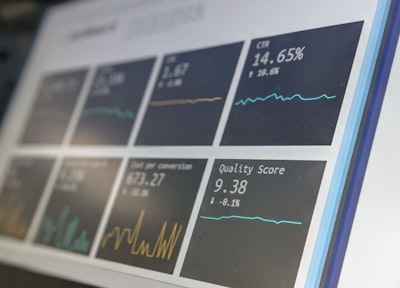
Another relevant factor is result visibility. Business Intelligence tools, such as Power BI, allow real-time monitoring of software quality evolution, mean time to resolve failures, or test success rate. By connecting automated testing results to BI dashboards, teams can make data-driven decisions and proactively adjust processes. This analytical capability is especially useful when managing multiple custom applications with distributed teams.
The initial question, then, is nuanced: a complete process redesign is not always essential before starting automated testing, but an initial assessment of existing flows is highly recommended. Organizations that ignore this assessment risk automating inefficiencies, obtaining low ROI, or generating team frustration. Conversely, those that combine automation with continuous process review achieve faster delivery without sacrificing quality.
Q2BSTUDIO, as a company specializing in software development and technology, offers a comprehensive approach that unites automated testing, process redesign, and gradual modernization. We accompany our clients from the analysis of current processes to the implementation of CI/CD pipelines with automated tests, integrating Lean and Six Sigma methodologies to ensure each change adds value. Our services range from configuring cloud environments on AWS or Azure to creating AI agents for intelligent testing, including implementing BI dashboards with Power BI that give visibility to the team. All with a strong emphasis on cybersecurity, ensuring that custom applications are not only fast and reliable but also secure.
In short, automated testing for custom software and process redesign are two sides of the same coin. It is not about choosing one before the other, but about understanding that they advance together in a cycle of continuous improvement. Companies that adopt this vision achieve not only more frequent releases but also build a quality culture that permeates the entire organization. And on that path, having a technology partner like Q2BSTUDIO makes the difference between isolated automation and a real, sustainable transformation.