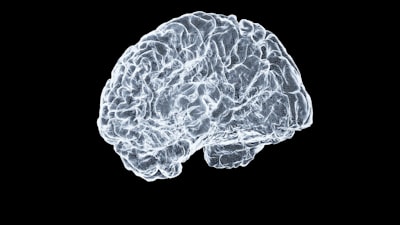
The complexity of the human brain has challenged computational neuroscience for decades. Each neural connection, each functional region, forms a dense weighted graph that researchers attempt to model to understand how cognition, perception, and pathological states emerge. Recently, an innovative approach combines differential geometry with graph transformers to learn compact representations of these brain connectomes without supervised labels. This technique, described in a network neuroscience work, uses a graph transformer autoencoder guided by functional gradient geometry, achieving clear separation of cognitive states and even decoding visual stimuli from brain activity. Beyond the lab, this methodology opens the door to enterprise applications where dense relational data is the norm.
The core principle is that functional connectivity graphs, despite high dimensionality, reside in a low-dimensional latent geometry. This property allows both topological properties (like modularity) and spectral properties (like eigenvalues) to vary smoothly at the population level. The graph transformer autoencoder exploits this regularity, learning graph-level embeddings that preserve essential information. Trained in an unsupervised manner, the model distinguishes mental states such as image viewing or rest, and can generate synthetic connectomes via a diffusion model over the latent space. This advance not only accelerates neurological research but also lays the foundation for AI-assisted diagnostic systems.
The application of such architectures goes far beyond the brain. Any domain dealing with dense graphs — social networks, recommendation systems, fraud detection in financial transactions, protein interaction analysis — can benefit from compact representations capturing global structure. This is where a software development company like Q2BSTUDIO finds a natural niche. With solid experience in AI and machine learning, Q2BSTUDIO helps organizations implement graph-based solutions to extract value from complex data. For example, a cybersecurity system can model network traffic as a dynamic graph and use geometric autoencoders to detect anomalies in real time. Similarly, in Business Intelligence, integration with Power BI enables visualization of clusters and communities within large transaction volumes, facilitating strategic decision-making.
The scalability of these solutions depends on robust cloud infrastructure. Q2BSTUDIO deploys its models on platforms such as cloud AWS/Azure, ensuring parallel processing and secure storage of sensitive data. Cybersecurity is another key pillar: when dealing with neural or financial information, penetration audits and privacy protocols — which the company offers as part of its pentesting services — are required. Additionally, process automation through AI agents allows continuous monitoring of graphs and retraining of models without manual intervention.
From the perspective of custom software development, Q2BSTUDIO designs web and mobile interfaces that integrate these graph models transparently. A client wishing to build a diagnostic system based on brain connectivity — whether for clinical research or to improve user experience in wellness apps — can rely on a team that understands both graph theory and software engineering. The company also offers consultancy to adapt graph transformer architectures to specific domains, optimizing hyperparameters and selecting appropriate loss functions for each case.
The potential impact of this technology is enormous. In neuroscience, it will allow mapping biomarkers of diseases like Alzheimer’s or schizophrenia from a single functional scan. In industry, it will facilitate fraud detection in insurance or personalized content recommendation on streaming platforms. All with an unsupervised approach that drastically reduces the need for labeled data, a common bottleneck in AI projects. Q2BSTUDIO, with its experience in custom applications, can help companies leap from academic research to productive implementation, ensuring models are not only accurate but also explainable and robust.
In summary, the latent geometry of brain graphs has inspired a new generation of autoencoders that learn compact representations without supervision. This same philosophy can be transferred to any domain of dense relational data. Companies like Q2BSTUDIO are ready to capitalize on these advances, offering services ranging from custom software development to cloud integration, cybersecurity, and business intelligence. The convergence of computational neuroscience and software engineering promises to transform how we understand complex networks, and Q2BSTUDIO is the ideal partner to walk that path.