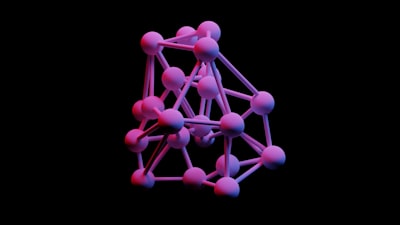
Determining molecular structure from spectroscopic data has historically been one of the greatest challenges in analytical chemistry. The inverse problem—inferring a three-dimensional structure from partial spectral evidence—is intrinsically underdetermined: individual spectra are sparse, low-dimensional, and encode only a fraction of the structural evidence relative to the vast space of possible molecules. However, artificial intelligence (AI) is revolutionizing this field by enabling hypothesis-based iterative approaches and multi-scale refinement.
Recently, systems have been proposed that integrate multimodal spectroscopic data—such as one- and two-dimensional nuclear magnetic resonance (NMR), J-couplings, DEPT experiments, and high-resolution mass spectrometry—within conditional generative models. These models, trained on massive datasets like QM9SPIN (containing over 130,000 molecules with DFT properties), can propose chemically valid structures. Platforms such as SpectroMol and MS-Mol2Mol demonstrate that combining NMR and mass signals can achieve 93.8% accuracy on simulated benchmarks, while also adapting to experimental data with limited fine-tuning.
This breakthrough has implications beyond academia: for pharmaceutical, materials, and agrochemical companies, rapid and accurate structure identification accelerates discovery cycles and reduces costs. Integrating AI into laboratories, however, requires a custom software ecosystem that manages everything from data acquisition to predictive modeling. This is where a company like Q2BSTUDIO brings its expertise in developing custom software applications for scientific environments, combining AI, cloud, and cybersecurity.
The AI-assisted structure elucidation process relies on robust cloud infrastructure. Generative models like those mentioned require training on enormous data volumes (e.g., 400 million molecules for MS-Mol2Mol) and elastic computing capacity. Cloud AWS/Azure services offer scalable and secure environments to deploy these models in production. Q2BSTUDIO helps design cloud architectures that optimize computational cost and ensure availability, enabling chemists to make real-time predictions without worrying about infrastructure management.
Data security is another fundamental pillar. Spectra and molecular structures are sensitive intellectual property in many industries. Therefore, any elucidation platform must incorporate robust cybersecurity measures: end-to-end encryption, role-based access control, and continuous audits. Q2BSTUDIO integrates these practices into its developments, protecting data both at rest and in transit, and performing penetration testing to identify vulnerabilities.
Beyond structural prediction, business analytics plays a key role. BI / Power BI tools allow visualizing patterns in large spectral collections, correlating signals with physicochemical properties, and generating automated reports for multidisciplinary teams. For instance, a Power BI dashboard can show the purity evolution of a compound over a synthesis, integrating NMR, mass, and chromatography data. Q2BSTUDIO customizes these solutions so that scientists can make data-driven decisions quickly.
AI agents represent the most promising frontier. Instead of a static model, autonomous systems are being developed that iterate between generating structural hypotheses, simulating spectra, and comparing with experimental data. These agents can handle multiple spectroscopic experiments simultaneously, adjusting weights based on the reliability of each source. Implementing AI agents in laboratory workflows streamlines the elucidation of complex molecules, such as natural products or metabolites, reducing weeks of manual work to hours. Q2BSTUDIO collaborates with R&D teams to design these agents, combining reinforcement learning and generative models.
A practical case illustrates the potential: suppose a laboratory obtains 1H, 13C, COSY, HSQC NMR spectra and a high-resolution mass spectrum of an unknown compound. An integrated system like the one described could, in minutes, propose the ten most probable structures, assign the signals, and quantify uncertainty. If historical experimental spectra are also available, transfer learning refinement further improves accuracy. This is only possible thanks to a software infrastructure that combines cloud storage, GPU-based modeling, and automated data pipelines.
The future of structural elucidation lies in the convergence of AI, cloud computing, and specialized software engineering. Companies that adopt these technologies will gain a competitive advantage in innovation speed and cost reduction. Q2BSTUDIO offers a comprehensive approach: from initial consulting to define the requirements of an automated elucidation system, to developing custom applications, integrating with AWS/Azure cloud, implementing cybersecurity, and creating BI dashboards. Furthermore, in collaboration with computational chemistry experts, AI agents can be designed that learn from each new spectrum, making the system improve with use.
In summary, combining multimodal spectroscopic data with generative AI models is transforming how chemists determine structures. But for this transformation to be effective in production environments, a robust, secure, and scalable software ecosystem is required. With its expertise in AI, custom software development, cloud, cybersecurity, and BI, Q2BSTUDIO positions itself as the ideal partner to turn these scientific advances into tangible business solutions. Structural elucidation is no longer a bottleneck: with the right tools, it becomes a fast, reliable, and automated process.