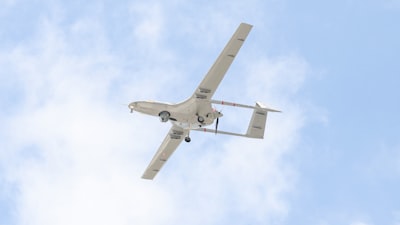
In the context of sixth-generation (6G) wireless networks, Integrated Sensing and Communication (ISAC) is emerging as a key technology to optimize spectrum usage and enable advanced services. ISAC systems allow the same infrastructure to simultaneously perform data transmission and environmental perception, which is especially valuable in scenarios such as surveillance, autonomous navigation, or smart cities. However, practical implementation of ISAC faces coverage and accuracy limitations, especially when the base station (BS) is fixed. To overcome these barriers, the incorporation of unmanned aerial vehicles (UAVs) offers a flexible and dynamic solution, thanks to their controllable mobility and ability to adapt sensing coverage.
A critical aspect in the design of UAV-assisted ISAC systems is the joint optimization of the drone's trajectory and beamforming parameters, with the goal of minimizing estimation error in sensing parameters. In particular, the Cramér-Rao bound (CRB) has become a fundamental metric to quantify the maximum achievable accuracy in angle-of-arrival (AoA) estimation, an essential parameter for localization and target tracking tasks. Reducing the time-averaged CRB means improving the system's ability to detect and track targets with lower variance, even in environments with interference or unfavorable channels.
The challenge of simultaneously optimizing the UAV trajectory and the beamforming design is inherently non-convex, due to the complex interdependence between mobility, power resources, and communication constraints. To address this problem, deep reinforcement learning (DRL) techniques offer an effective framework, allowing the UAV to learn optimal movement policies from experience, while beamforming is adjusted via null-space projection to mitigate interference with the communication user. This hybrid approach not only improves spectral efficiency but also ensures that downlink quality-of-service (QoS) requirements remain within established margins.
Recent simulation results demonstrate that the proposed methodology reduces the time-averaged CRB by more than 10% compared to ISAC systems without UAV assistance. Moreover, it outperforms fixed-drone-trajectory configurations and maximum-ratio-transmission (MRT)-based beamforming techniques. These improvements are particularly significant in dense urban environments or search-and-rescue operations, where the ability to adapt the flight path in real time makes the difference between effective detection and system failure.
From a technical and business perspective, implementing these systems requires highly specialized software development. Companies like Q2BSTUDIO offer custom software services that integrate DRL-based optimization algorithms, AI models for trajectory prediction, and cybersecurity tools to protect communication links between the UAV and the base station. The cloud platform, whether AWS or Azure, provides the scalability needed to process large volumes of sensor data and run complex simulations, while Business Intelligence solutions such as Power BI facilitate the visualization of CRB metrics and operational KPIs.
In this context, the emergence of autonomous AI agents capable of managing multiple UAVs in coordinated missions opens new possibilities. These agents can learn to dynamically adjust both trajectory and radiation pattern, minimizing CRB without compromising the user's data rate. Cybersecurity integration is equally critical, as an attack on control channels could divert the drone or falsify sensing measurements. Therefore, a holistic approach combining cloud AWS/Azure, BI/Power BI, and AI is essential to deploy reliable and efficient ISAC systems.
In conclusion, CRB-based trajectory and beamforming optimization represents a significant advance in UAV-assisted ISAC systems. Leveraging reinforcement learning and null-space projection enables detection accuracies previously unattainable, while maintaining communication performance. For organizations seeking to implement these solutions, having a technology partner like Q2BSTUDIO, specialized in custom software and the integration of emerging technologies, is key to transforming theory into tangible results.