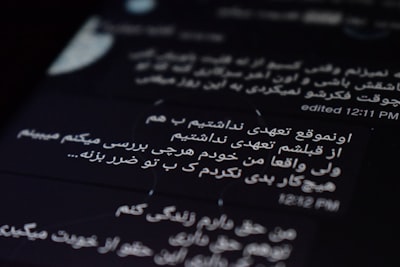
Optical Character Recognition (OCR) for languages like Persian has historically been a major technical challenge. Although more than 110 million people speak Persian in countries such as Iran, Afghanistan, and Tajikistan, available OCR tools for this language are notably inferior to those for Latin alphabets. This gap is no coincidence: it stems from the intrinsic complexity of the Perso-Arabic script, which includes obligatory cursive connectivity, context-dependent glyph forms, abundant ligatures, precise diacritic placement, and stylistic variations between calligraphies like Naskh and Nastaliq. Added to this is the scarcity of large-scale, high-quality annotated datasets, as manual annotation is costly and time-consuming. In this context, the synthetic Persian Pixel dataset emerges as an innovative solution that promises to transform the OCR landscape for Persian. Generated using the SynthOCR-Gen pipeline, this resource contains over 343,000 high-fidelity image-text pairs, ranging from sentences to paragraphs and full pages, based on a carefully curated seven-million-word Persian corpus. The generation process faithfully models the typographic characteristics of Persian, including contextual character joining, positional glyph variants, diacritic placement, and multiple representative typefaces. To bridge the synthetic-to-real domain gap, images are enriched with more than twenty-five stochastic degradation models that simulate typical document artifacts: ink bleed, paper aging, blur, illumination variations, scanner imperfections, compression artifacts, and various types of noise.
The relevance of Persian Pixel goes beyond mere text recognition. This dataset enables training and fine-tuning modern transformer-based OCR architectures, such as TrOCR and Donut, which previously lacked sufficient Persian data to achieve performance comparable to other languages. By providing an open and scalable resource, Persian Pixel lays the groundwork for research in Persian document analysis, historical manuscript digitization, and end-to-end document understanding. Moreover, it demonstrates that programmatic synthetic data generation is a practical, cost-effective, and scalable alternative to manual annotation, especially for scripts with high typographic complexity and limited annotated resources. This approach not only benefits Persian but also sets a precedent for other languages with similar challenges, such as Arabic, Urdu, or Pashto.
From a business and technical perspective, initiatives like Persian Pixel reflect the power of artificial intelligence and synthetic data generation in solving real-world problems. At Q2BSTUDIO, we understand that the key to advancing recognition and natural language processing technologies lies in combining cutting-edge models with high-quality data. That is why we offer custom software development services that integrate OCR, computer vision, and AI solutions tailored to each client's specific needs. Whether for digitizing historical archives, automating data entry in enterprise systems, or developing intelligent assistants, our team applies techniques similar to those used in Persian Pixel to train robust models even in low-resource languages. Synthetic data generation not only reduces costs but also allows scaling annotation to millions of examples without relying on intensive manual labor.
Furthermore, the technological infrastructure needed to train and deploy models like TrOCR or Donut requires robust and secure cloud platforms. Therefore, at Q2BSTUDIO we integrate AWS and Azure cloud services to manage distributed training environments, massive dataset storage, and production deployment of recognition APIs. Cybersecurity is another fundamental pillar: when handling sensitive documents, we ensure data protection through encryption best practices, access control, and continuous audits. Our cybersecurity services help organizations shield their OCR systems from vulnerabilities. Likewise, business intelligence (BI) plays a crucial role in extracting value from digitized texts. Using tools like Power BI, we transform unstructured data into interactive dashboards that facilitate decision-making. And for processes requiring intelligent automation, we develop AI agents capable of performing tasks such as document classification, key field extraction, or automatic spell-checking, all based on models trained with high-quality synthetic data.
The Persian Pixel case illustrates how the combination of synthetic data, transformer models, and proper cloud infrastructure can overcome barriers that hinder the digitization of minority or complex languages. At Q2BSTUDIO, we apply this same multidisciplinary approach to offer turnkey solutions ranging from initial consulting to ongoing maintenance. Our team of software engineers, data scientists, and cloud experts works closely with clients to design custom OCR systems that adapt to any language, format, and document volume. Experience gained from similar projects allows us to replicate the success of Persian Pixel in business environments, reducing development times and maximizing recognition accuracy.
Ultimately, Persian Pixel is not just a dataset; it is a model of how technological innovation can democratize access to written information in historically underserved languages. For companies looking to digitize their archives, automate document processes, or develop text-based products, the lesson is clear: synthetic data, combined with artificial intelligence and scalable cloud infrastructure, offers a viable and efficient path. At Q2BSTUDIO, we are ready to guide organizations along this path, bringing our expertise in AI, custom software development, cloud, cybersecurity, and BI. Just as Persian Pixel opens new frontiers for Persian OCR, we help our clients open new frontiers in their own domains. The digitization of Persian is only the beginning; the future of text recognition lies in synthetic generation, deep learning, and collaboration between technology companies and linguistic communities.