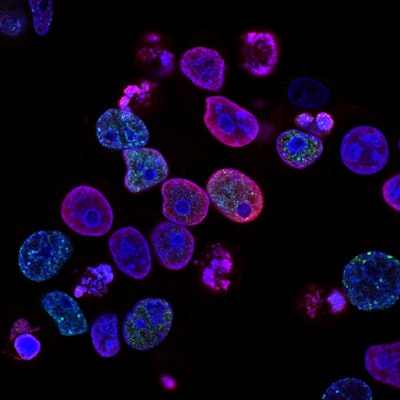
In the current landscape of computational biology, Cell Painting has emerged as a fundamental tool for capturing high-dimensional morphological signatures that reflect cellular state. However, interpreting morphological trajectories over time, especially under chronic and subtle perturbations such as low-dose-rate ionizing radiation, remains a significant challenge. Large language models (LLMs) have demonstrated an impressive ability to synthesize heterogeneous evidence into coherent biological narratives, but their application in science demands quantitative auditing mechanisms to ensure the validity of generated hypotheses. A framework based on retrieval-augmented generation (RAG) and rigorous evaluation, as described in a recent study, offers a promising avenue to address this need. In this article we explore the technical components of such a framework, its implications for software development, and how specialized technology companies can contribute to its implementation.
The study in question proposes a workflow where week-matched treated-control morphology deltas are combined with retrieved perturbation neighbors, pathway context, and literature evidence. All of this is organized through stable evidence identifiers that allow an LLM to generate structured, evidence-linked hypotheses. This architecture, reminiscent of information retrieval systems used in enterprise applications, highlights the importance of having robust infrastructures for processing and storing large volumes of data. To this end, many organizations turn to cloud AWS/Azure solutions, which provide the scalability needed to handle the massive datasets generated by high-throughput microscopy. Furthermore, integrating these pipelines with artificial intelligence platforms requires a custom software development approach, where companies like Q2BSTUDIO offer custom applications that automate the orchestration of language models and knowledge bases.
The framework introduces two quantitative auditing tests: V1, which verifies the validity of evidence citations by checking that the identifiers mentioned by the LLM exist in the original prompt; and V2, a proxy-based test that evaluates consistency between predicted biological processes and the most altered morphology features. Preliminary results show that V1 detected no invalid references, while V2 revealed significant morphology compatibility that increases with perturbation strength and correlates positively with an independent morphology drift summary. These findings underline the need for robust auditing systems, similar to those implemented in cybersecurity to verify data integrity. Adopting cybersecurity practices in biological research environments ensures that AI-generated hypotheses are traceable and reproducible, a prerequisite for experimental validation.
From a technical perspective, implementing this framework requires infrastructure combining cloud storage, vector databases for morphological neighbor retrieval, and LLM APIs. This is where custom software development becomes relevant: platforms like those built by Q2BSTUDIO allow efficient integration of these components, also using BI / Power BI tools to visualize morphological trajectories and audit results. Interactive dashboards enable researchers to explore generated hypotheses and compare their consistency with observed data, accelerating the discovery cycle.
Another key aspect is the role of AI agents in automating auditing tasks. Rather than relying solely on a monolithic LLM, the framework could benefit from specialized agents that execute V1 and V2 tests autonomously, reporting anomalies or inconsistencies. This architecture, similar to that used in multi-agent systems for enterprise tasks, can be developed through AI customization, where Q2BSTUDIO offers consulting and development services to create solutions tailored to each laboratory's specific needs. Combining intelligent agents with retrieval-augmented systems not only improves hypothesis accuracy but also reduces inherent bias in language models.
In the specific case of low-dose-rate ionizing radiation, the framework identified an adaptive phenotype involving metabolic reprogramming and proteostatic stress at doses of 0.003 to 0.3 mGy/hour. These hypotheses, although promising, must be experimentally validated. Auditing provides a reliability stamp that increases confidence in predictions, but current limitations include proxy-based evaluation and the lack of ground-truth mechanism labels. To overcome these challenges, integrating multi-omic data and using causal models could complement the current approach. In this regard, developing process automation through software allows building pipelines that continuously update knowledge bases and retrain models with new experimental results.
The future of auditing LLM-generated hypotheses in cellular morphology lies in building open and collaborative software ecosystems. Companies like Q2BSTUDIO, with experience in multiplatform application development, cloud computing, and cybersecurity, are well-positioned to lead this transformation. The ability to offer comprehensive solutions covering everything from data capture to auditable report generation, through artificial intelligence and business intelligence integration, provides a competitive edge for laboratories seeking to accelerate discoveries while maintaining high standards of scientific rigor. Thus, quantitative auditing is not just a technical requirement but an opportunity to innovate at the intersection of biology, software, and artificial intelligence.