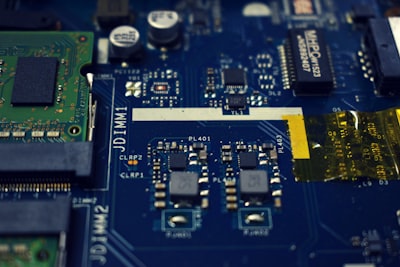
Printed circuit board (PCB) design is a discipline where precision and efficiency determine the success of an electronic product. For decades, manual creation of schematic symbols and footprints for components has been a bottleneck: it consumes hours of meticulous work and is prone to errors that can ruin a prototype. However, the emergence of generative artificial intelligence is reshaping this landscape. Recent research shows that multimodal large language models (MLLMs) can automatically recognize and generate these elements, achieving accuracies of 86% for symbols and 80% for footprints. This breakthrough not only speeds up the process but also lays the foundation for a new generation of automation in electronic engineering.
Creating a database of symbols and footprints through generative AI represents a technical and business milestone. By combining deep learning with large volumes of manufacturer data —datasheets, 3D models, images— it is possible to extract and encode the geometry and functionality of each component. The result is a repository that grows constantly, already containing thousands of entries, and can be directly integrated into computer-aided design tools such as Altium, Eagle, or KiCad. For hardware companies, having such a library provides a tangible competitive advantage: it reduces prototyping time, minimizes costly corrections, and allows resources to be focused on circuit innovation.
From a technical perspective, the process involves multiple stages. First, MLLMs process images and text to identify pins, dimensions, and electrical properties. Then, a generative module produces symbol and footprint files in standardized formats. The reported accuracy is promising, though human supervision is required for non-standard components or ambiguous documentation. Nevertheless, the ability to scale to thousands of components without manual intervention is revolutionary. Companies like Q2BSTUDIO, specialized in custom software development, are building solutions that integrate these models into engineering workflows, tailoring generation to each client's specific needs.
Cloud infrastructure is a natural ally for such dynamic databases. Hosting the library on platforms like AWS or Azure offers elastic scalability, global access, and continuous updates without interrupting designers' work. Cybersecurity becomes a pillar: protecting the intellectual property of designs and component data is critical when technical information is a strategic asset. Q2BSTUDIO implements secure cloud architectures with encryption, access control, and continuous monitoring, ensuring the component library is protected against external and internal threats.
Furthermore, business intelligence enhances the value of these repositories. Tools like Power BI allow analyzing usage metrics: which components are most used, which are obsolete, where design bottlenecks occur. With custom BI solutions, companies can optimize their component inventory, predict future needs, and reduce procurement costs. Generative AI not only creates the library but keeps it alive through usage data and continuous feedback.
AI agents represent another qualitative leap. Instead of a monolithic model, multiple specialized agents are deployed: one interprets datasheet images, another extracts electrical parameters from text, another validates footprint geometry, and an orchestrator coordinates the process. These multi-agent systems work in parallel, improving accuracy and speed. Q2BSTUDIO helps companies design and implement these architectures, integrating AI agents with existing ERP and PLM systems. For instance, an agent can monitor new component releases and automatically generate missing symbols, keeping the library always up to date.
Automating symbol and footprint creation is not an end in itself but a means to achieve faster, more reliable, and safer electronic designs. Combined with cloud, cybersecurity, and BI, it becomes an ecosystem that drives innovation. Companies that adopt these technologies will drastically reduce development cycles —from weeks to days— and improve product quality. At Q2BSTUDIO, we offer the talent and experience to implement these solutions in a personalized way, integrating custom software, artificial intelligence, cloud AWS/Azure, cybersecurity, and BI. If your company seeks to accelerate PCB design and build its own intelligent library, explore our capabilities and let us build the future of electronic automation together.