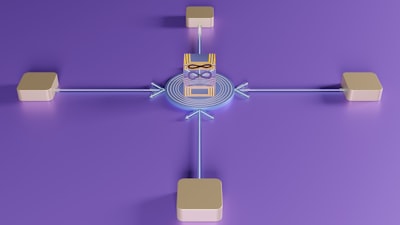
The complexity of Graph RAG (Graph Retrieval-Augmented Generation) systems has grown exponentially in recent years, driven by the need to reduce hallucinations and outdated data in large language models. However, the fragmentation of graph formats and the lack of detailed visualization tools make it difficult to evaluate and compare different approaches. In this context, GraphContainer emerges as an innovative platform designed to unify and visualize Graph RAG workflows, offering a solution that allows researchers and developers to debug and compare retrieval strategies interactively and transparently.
GraphContainer is built on two key components: a Unified Graph Representation (UGR) layer that standardizes multiple formats, and a Graph Recorder that visually tracks and renders the step-by-step retrieval process. This architecture not only resolves the structural heterogeneity of graphs coming from different frameworks but also provides an interactive web interface for live visual debugging. Users can import heterogeneous graphs and observe how each Graph RAG method navigates the information, identifying bottlenecks, redundancies, or incorrect jumps in multi-hop answers.
From a technical perspective, the UGR layer acts as a universal translator that converts formats such as RDF, Property Graphs, or Knowledge Graphs into a common internal representation, preserving the original semantics. This allows retrieval algorithms designed for a specific format to be tested on others without modification. The Graph Recorder, meanwhile, logs every node and edge visited during retrieval, generating a visual history that can be replayed or analyzed offline. This functionality is crucial for understanding why a model fails on complex questions requiring multiple logical hops.
The business value of GraphContainer is immense. Companies implementing generative AI for customer service, document analysis, or technical support can benefit from a platform that accelerates the design of optimal Graph RAG pipelines. Instead of relying on blind tests or costly iteration cycles, teams can visualize their models' behavior and adjust parameters in real time. For example, a company developing a virtual assistant for financial queries can compare how different graph structures—from dense graphs to sparse networks—affect response accuracy and speed.
In this ecosystem, Q2BSTUDIO's expertise in custom software development is fundamental. The company has worked on integrating artificial intelligence solutions with cloud platforms like AWS and Azure, ensuring scalability and security. Cybersecurity plays a critical role when handling graphs containing sensitive data; therefore, Q2BSTUDIO offers pentesting and auditing services to protect these assets. Additionally, its specialization in Business Intelligence with Power BI allows connecting Graph RAG results to executive dashboards, turning technical debugging into business insights.
GraphContainer also opens the door to creating more sophisticated AI agents. By visually debugging knowledge retrieval, developers can train agents that not only answer questions but also explain their reasoning step by step. This is especially valuable in regulated sectors like healthcare or finance, where traceability of decisions is mandatory. Q2BSTUDIO is already exploring how to integrate GraphContainer with its own intelligent agent solutions, combining the power of graphs with language models to automate complex processes.
Controlled comparison of graph formats and retrieval strategies is another strong point of GraphContainer. Researchers can simultaneously load representations in different notations—such as directed, undirected graphs or hypergraphs—and run the same retrieval algorithm on each, visualizing differences in real time. This capability reduces experimentation time from weeks to hours and democratizes access to advanced Graph RAG techniques that previously required deep knowledge of specific implementations.
Finally, looking ahead, GraphContainer is likely to evolve into an open platform enabling collaboration among distributed teams. The ability to share debugging sessions and compare results in a common repository will accelerate the standardization of metrics and benchmarks in the field. Companies like Q2BSTUDIO, committed to constant innovation, see GraphContainer as an ally to offer their clients more robust and transparent artificial intelligence solutions. If your organization is considering implementing Graph RAG or needs to optimize its current pipelines, contacting experts in artificial intelligence and custom software development can make the difference between a system that hallucinates and one that truly understands the context.