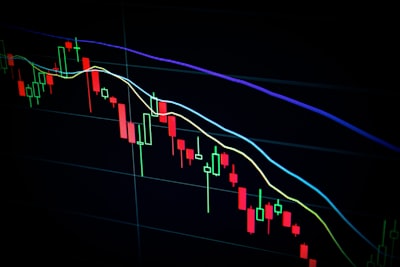
The cryptocurrency market is a mirror that does not lie: when most traders feel most confident about a trend, the reversal is about to happen. This phenomenon, known as the contrarian indicator of retail sentiment, repeats cycle after cycle: investors buy at the top when everything looks bullish and sell at the bottom when panic is at its peak. But why does this happen so systematically? The answer lies not in bad luck, but in the very structure of human behavior and the lack of objective decision-making systems. In this article we analyze the deep causes of this pattern and how businesses can avoid it thanks to technology and data analysis, with special attention to the role of Q2BSTUDIO as an ally in creating custom software applications that bring intelligence to investment decisions.
The mechanism is deceptively simple. When an asset’s price rises strongly for weeks, traders already in profit feel euphoria and increase positions. But their buying power is exhausted: no new buyers are willing to pay higher prices. At that moment, the market runs out of fuel and collapses. Conversely, after a prolonged decline, fear takes over the majority, who rush to short sell just when the weak sellers have already capitulated. The result is a rebound that traps the last bears. This cycle is not random; it reflects the lagging nature of emotions: price moves first, sentiment follows. That is why when an investor feels “very sure” about a trade, they are usually late.
The key question is: how to break this vicious circle? The answer lies in outsourcing emotional decisions through automated, data-driven systems. This is where companies like Q2BSTUDIO offer technological solutions that transform intuition into algorithms. For example, developing custom software allows integrating objective indicators — such as the long/short ratio of exchanges or open positions volume — into real-time dashboards. These systems, deployed on cloud infrastructures like AWS or Azure, process large volumes of historical and live data to identify sentiment exhaustion patterns, exactly what the human eye can hardly capture when clouded by emotion.
A systematic approach benefits not only individual traders but also companies managing investment portfolios or corporate treasuries. Artificial intelligence (AI) and AI agents can analyze thousands of signals simultaneously — from financial news to changes in implied volatility — and generate alerts when market consensus reaches extreme levels. For example, an AI agent trained with historical data from previous cycles can detect when the long/short ratio exceeds a critical threshold, suggesting a potential reversal. This is precisely what Q2BSTUDIO’s artificial intelligence and process automation services offer, helping organizations make investment decisions based on facts, not emotions.
Beyond sentiment analysis, cybersecurity plays a fundamental role in protecting data and automated trading strategies. Storing and processing sensitive information in the cloud requires robust security measures to prevent leaks or tampering. Q2BSTUDIO’s cybersecurity and pentesting solutions ensure that algorithmic trading platforms are shielded from attacks, allowing algorithms to run without external interference. Together with Business Intelligence (Power BI), which visualizes sentiment and performance indicators in real time, companies can monitor their exposures and adjust positions proactively.
The sentiment trap does not only affect cryptocurrency traders. In traditional financial markets — stocks, currencies, commodities — the same pattern repeats: retail investors tend to buy into bubbles and sell at lows. The reason is that the human brain is wired to follow the herd, an evolutionary legacy that is counterproductive in markets. That is why custom software tools, like those developed by Q2BSTUDIO, allow designing strategies that ignore emotional noise and execute orders based on predefined rules. An automated trading system, for example, can buy when the long/short ratio is at historical lows (indicating excessive pessimism) and sell when at highs (excessive optimism), without fear or greed interfering.
In practice, implementing such a system requires combining several technologies: cloud databases (AWS or Azure) to store time series, AI models to detect exhaustion patterns, AI agents to execute trades, and BI dashboards to monitor performance. Q2BSTUDIO integrates all these components into turnkey solutions tailored to each client’s specific needs. For example, an investment firm can request a customized dashboard showing the long/short ratio of multiple assets, along with volatility and volume indicators, all updated in real time from the cloud. This type of custom application is the antithesis of emotional trading: it turns opinion into data and intuition into an algorithm.
The final message is clear: if you have ever found yourself buying just when everyone was bullish, or short selling when panic was at its peak, you are not a bad trader — you are simply using emotion as a signal. The solution is not to try to control emotions at 2 a.m. staring at a chart, but to build a mechanical system that removes them from the equation. Companies that adopt this approach — relying on custom software development, artificial intelligence, the cloud, cybersecurity, and Business Intelligence — not only avoid sentiment traps but also gain a sustainable competitive edge. At Q2BSTUDIO we understand that technology is the only antidote to mass psychology, and that is why we help our clients design solutions that put data ahead of emotions.