Typing instruction has undergone a quiet yet profound transformation in recent years. While traditional methods relied on static diagrams and hours of repetitive practice, a new generation of digital tools is changing the game. Among them, hand animation in keyboard simulators stands out as a major pedagogical breakthrough, capable of reducing learning curves and improving accuracy from day one. But beyond its educational value, this technology holds valuable lessons for any company looking to develop interactive, custom software focused on user experience. At Q2BSTUDIO, where we specialize in custom software development for multiplatform environments, we see these solutions as a perfect case study on how observation and simulation can be integrated into modern digital products.
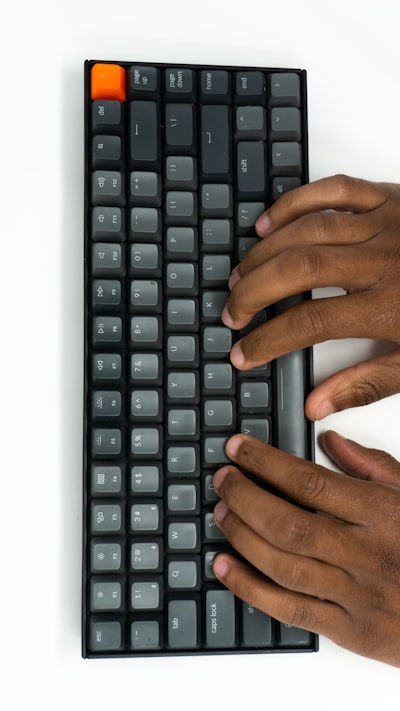
The key to hand animation lies in a neuroscientific principle known as observational learning. When a user sees a faithful representation of how fingers move over keys — which phalanx presses, how the hand arches, the distance from home row — their brain activates the same mirror neurons as if they were performing the action. This biological mechanism allows motor patterns to be assimilated without physical execution, speeding up muscle memory. In the realm of software development, replicating this kind of feedback requires deep knowledge of 3D modeling, real-time motion tracking, and precise synchronization with keyboard input. It's no coincidence that companies seeking to innovate in human-machine interfaces turn to technologies like artificial intelligence and cloud computing to achieve these levels of interactivity.
From a technical perspective, implementing a keyboard simulator with animated hands involves several challenges. The first is capturing and representing correct posture. It's not enough to show a generic hand: each finger's position must be adjusted according to the key pressed, respecting real biomechanics. This is where AI comes into play, capable of analyzing typing patterns and predicting the next position, reducing latency between keystroke and animation. Additionally, the cloud — whether AWS or Azure — allows storing user profiles and synchronizing settings across devices, essential in educational or corporate environments where training is deployed at scale. At Q2BSTUDIO we offer cloud services on AWS and Azure that enable such scalable and secure architectures.
Another critical aspect is security. When a teaching tool collects data on how a user moves their hands or which keys they press most frequently, sensitive information is generated that must be protected. Cybersecurity is not an optional add-on; it must be integrated from the design stage. In our cybersecurity and pentesting solutions, we apply privacy-by-design principles, encryption of data in transit and at rest, and regular audits to prevent leaks. Similarly, keyboard simulators that handle student or employee data must comply with regulations like GDPR, reinforcing the need for a comprehensive approach in development.
The revolution we are witnessing goes beyond individual teaching. Keyboard simulators with hand animation allow remote instructors to demonstrate exact technique without being physically present. Just share the screen; the student sees in real time which finger to use and how to position the wrist. This capability opens the door to massive corporate training, where a single expert can guide hundreds of employees from anywhere in the world. For companies managing distributed teams, integrating this technology into their learning platforms can mean significant savings in travel costs and time. This is where Business Intelligence (BI) and tools like Power BI come into play, enabling measurement of student progress, identification of error patterns, and optimization of courses. At Q2BSTUDIO we develop BI and Power BI solutions tailored to each sector, facilitating data-driven decision making.
The next evolutionary leap will come from intelligent agents. Imagine a virtual assistant that, upon detecting a user repeatedly making the same typing error, triggers a personalized animation or adjusts the difficulty level in real time. These AI agents not only correct technique but can also recommend specific exercises, remind about postural breaks, or even adapt the interface to user preferences. The convergence between keyboard simulators, AI, and process automation is a fertile field for innovation. At Q2BSTUDIO we are exploring how to integrate AI agents into training platforms, generating autonomous and highly personalized learning experiences.
Of course, not every organization needs a keyboard simulator, but the underlying principle — immediate visual feedback — is applicable to many other domains. From robotic surgery training to programming language instruction, the ability to show exactly what action should be performed and how reduces cognitive friction and accelerates skill acquisition. Developing such applications requires a multidisciplinary team combining UX design, software engineering, biomechanics knowledge, and increasingly, artificial intelligence. At Q2BSTUDIO we offer precisely that combination, helping companies of all sizes create automation solutions ranging from simple assistants to complex simulation environments.
Hand animation in keyboards is not just a pedagogical tool; it is an example of how technology can bridge the gap between theoretical instruction and practice. By observing a virtual hand typing correctly, the learner internalizes the motor sequence without the wear of trial and error. For businesses, investing in this type of custom software can mean a competitive advantage: employees trained faster, with fewer errors and greater satisfaction. And for developers, it represents an exciting technical challenge combining 3D graphics, artificial intelligence, cloud, and security. At Q2BSTUDIO we are committed to driving these innovations, offering services that range from initial consulting to production deployment and maintenance. If you're looking to transform how your users learn or interact with complex systems, hand animation is just the beginning of what we can build together.