The subscription economy has transformed how we consume software, turning what was once a one-time purchase into a recurring expense that silently accumulates. While millions of users pay month after month for tools they could own, a solo developer from Vietnam has decided to challenge the status quo with an ambitious project: creating one hundred apps in one hundred days, offering them as one-time purchases or open source. This movement, dubbed OneTime Suite, not only questions the dominant business model but also demonstrates how artificial intelligence can accelerate software development to previously unthinkable levels.
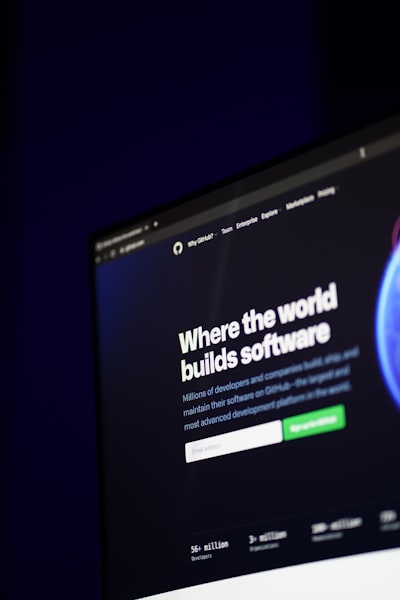
Benjamin Boyce, the founder behind OneTime Suite, is no ordinary programmer. His approach combines a clear business vision with technical execution that leverages the latest in generative AI. Instead of writing every line of code from scratch, he used Anthropic's Claude Code to generate functional skeletons for 102 applications in a single week. That translates into a hundred GitHub repositories ready to be refined. The real work, however, comes afterward: over one hundred days, Boyce polishes each app, adds features, designs interfaces, writes documentation, and turns it into a finished product that competes directly with giants like Linktree, Loom, or Wispr Flow.
The value proposition is simple yet powerful: why pay $180 a year for a link-in-bio page when you can buy the alternative for $50 forever? Or why subscribe to a screen recorder when you can download one for $20 with no renewals? The gap between what users think they spend on subscriptions (about $86 per month, according to surveys) and what they actually spend (close to $219) reveals a financial hole that Boyce aims to plug. His model rests on two pillars: open source generates trust and organic traffic, while the premium version — with additional features and support — sells at a one-time price that proves unbeatable in the long run.
However, the project is not without challenges. Maintaining one hundred applications requires ongoing investment in updates, security, and customer support. Boyce acknowledges this: lightweight apps, such as desktop tools, are pure one-time purchases; those that need servers include an optional monthly subscription, though it remains cheaper than the competition. The key is that the user has a choice: own or rent. And that, in itself, is a cultural revolution.
Beyond the anecdote, the case of OneTime Suite raises deep questions for the software industry. The barrier to entry for creating competitive products has dropped dramatically thanks to AI. If a single developer with two Claude subscriptions and one hundred days can replicate the catalog of startups backed by millions of dollars, then the subscription model ceases to be a technical necessity and becomes a strategic decision. Companies that want to stay relevant must rethink their approach: offer real value, not just a digital lease agreement.
To navigate this new landscape, having a solid technology partner is essential. At Q2BSTUDIO, we understand that custom software is no longer a luxury but a necessity to compete. Personalization, scalability, and integration with cloud services like AWS or Azure allow us to build solutions that users want to own, not just rent. Our multi-platform application development team works closely with clients to design products that fit exactly their needs, eliminating unnecessary recurring costs.
Artificial intelligence, of course, plays a central role in this transformation. Not just as an engine to quickly generate code, but as an integrated component that enhances the user experience. AI agents, for example, can automate repetitive tasks, predict behaviors, and offer intelligent assistance within any application. At Q2BSTUDIO, we have developed AI solutions that integrate naturally into business workflows, enabling organizations to reduce operational costs and deliver differentiated value to their customers.
Another critical aspect is cybersecurity. When software is distributed as open source or sold with a one-time payment model, the responsibility to protect data falls on both the developer and the user. Vulnerabilities can be exploited if constant updates are not maintained. That is why, at Q2BSTUDIO, we include security audits and pentesting as part of our cybersecurity services, ensuring that the applications we build are robust against current and future threats.
Business analytics also benefit from this paradigm shift. With Business Intelligence tools like Power BI, companies can monitor application usage, identify churn patterns, and optimize their offerings. The one-time payment model requires a deep understanding of the customer lifecycle, something only possible with accurate data and interactive dashboards. At Q2BSTUDIO, we offer BI consulting and implementation so that any organization can make informed decisions.
Ultimately, the story of Benjamin Boyce and OneTime Suite is more than a tech curiosity: it is a symptom of a changing era. The subscription is not inevitable; it is a choice that the industry imposed and can now be challenged with the right tools. For companies, the opportunity lies in adopting hybrid models that combine the flexibility of open source with the reliability of professional software, and in relying on experts who understand both technology and business. At Q2BSTUDIO, we are ready to accompany that journey.