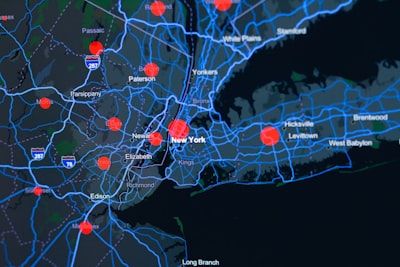
Accurate path loss prediction in urban environments is a central challenge for wireless network planning. Traditional methods, such as empirical models (COST231, Okumura-Hata) or ray tracing, often sacrifice accuracy for speed or vice versa. In this context, radio map estimation (RME) using deep learning has emerged as a promising alternative. Recently, the EA-RMENet (Efficient Attention Radio Map Estimation Network) model has demonstrated remarkable performance, achieving an RMSE of 0.0334 on the RadioMapSeer3D dataset with an inference time of only 0.022 seconds per sample. This article analyzes the technical capabilities of EA-RMENet, its potential in business applications, and how companies like Q2BSTUDIO can integrate similar solutions into the development of custom software for the telecommunications sector.
EA-RMENet is based on a U-Net architecture with an EfficientNetB5 encoder, attention-gated skip connections, and an Atrous Spatial Pyramid Pooling (ASPP) module. The EfficientNetB5 encoder uses compound scaling that balances network depth, width, and resolution, optimizing both accuracy and computational efficiency. The attention gates suppress irrelevant features in the skip connections, enhancing the model's ability to focus on key regions of the urban environment. Meanwhile, ASPP captures multi-scale context using convolutions with different dilation rates, essential for modeling the variability of obstacles such as buildings, streets, and vegetation. This design allows EA-RMENet to learn complex spatial representations from radio map images, overcoming the limitations of statistical parameter-based methods.
In a business context, deploying models like EA-RMENet can transform network planning. Telecom operators need to predict coverage in dense urban areas to optimize antenna placement, reduce costs, and improve service quality. However, conventional methods require intensive computation or expensive on-site data. This is where deep learning applied to RME offers an advantage: once trained, the model can generate path loss maps in milliseconds, enabling fast simulations in dynamic scenarios. Technology companies like Q2BSTUDIO can leverage this capability to develop customized AI solutions that integrate RME models into network management platforms. Additionally, combining with cloud services AWS or Azure allows scaling processing of large geospatial data volumes, while BI tools like Power BI facilitate predictive map visualization for executive decision-making.
Cybersecurity also plays a crucial role. Network planning data is sensitive as it reveals critical infrastructure. Therefore, when implementing EA-RMENet-based solutions, robust cybersecurity systems are essential to protect both training datasets and production predictions. Q2BSTUDIO can offer pentesting and auditing services to ensure that applications integrating these models meet security standards. Furthermore, process automation —from data collection to report generation— through intelligent AI agents can reduce manual intervention and accelerate planning cycles.
From a technical perspective, EA-RMENet achieved third place in the ICASSP 2023 Radio Map Prediction Challenge, with a competitive RMSE of 0.0406. This result validates its potential for real-world applications. However, business adoption requires more than an accurate model: seamless integration with existing systems is necessary. This is where custom software development makes a difference. Q2BSTUDIO can design personalized platforms that incorporate EA-RMENet as a core module, connecting it with geographic data APIs, GIS systems, and interactive dashboards. Hybrid cloud (AWS/Azure) allows deploying the model in elastic environments, adjusting resources according to demand. Additionally, BI capabilities (Power BI) transform predictions into intuitive visualizations for engineering and business teams.
In conclusion, EA-RMENet represents a significant advance in path loss prediction, combining efficiency and accuracy. For companies like Q2BSTUDIO, this type of model opens opportunities to innovate in network planning software development, integrating AI, cloud, cybersecurity, BI, and automation. The key is to adapt these technologies to each client's specific needs, offering modular and scalable solutions that make a difference in the competitive telecommunications landscape.