The advancement of digital pathology has brought a major technical challenge: accurately aligning histological sections stained with different markers. This need, known as multimodal whole-slide image (WSI) registration, is critical for detailed cellular analysis and AI-assisted diagnosis. In this context, the CORE (Coarse-to-fine Registration) framework emerges as an innovative solution that combines segmentation techniques, feature matching, and non-rigid deformation to achieve nuclear-level registration. However, behind this technology lie concepts that go beyond the lab: cloud architectures, intelligent agents, and Business Intelligence platforms that enable scaling these processes to real clinical environments.
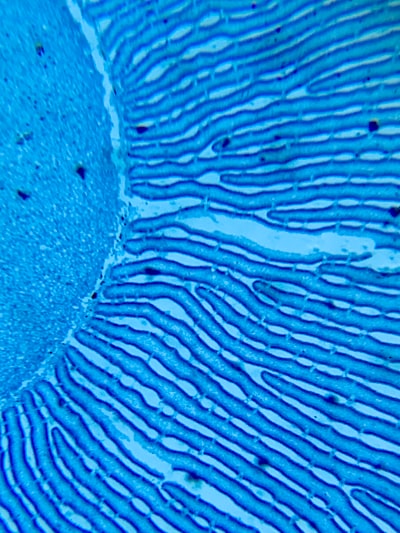
The multi-stained image registration process begins with tissue mask extraction using prompt-based segmentation models, removing artefacts and non-tissue regions. This initial stage relies on a pre-trained feature extractor that accelerates dense feature matching between slides. Once coarsely aligned, nuclei centroids are detected and a fine rigid registration is applied using a custom shape-aware point-set matching model. Finally, non-rigid adjustment employs Coherent Point Drift (CPD) to estimate a non-linear displacement field ensuring precise nuclear correspondences across modalities as diverse as bright-field and immunofluorescence microscopy.
From a business perspective, implementing a robust cellular registration system requires much more than cutting-edge algorithms. Organizations need custom software applications that integrate these workflows into scalable cloud platforms. For example, deploying CORE on Azure or AWS environments allows processing terabytes of images without compromising latency, while ensuring the AI needed for real-time inference. Furthermore, cybersecurity becomes a fundamental pillar when handling patient data: any breach could compromise diagnoses and privacy. That is why at Q2BSTUDIO we design solutions that protect every layer of the pipeline, from image ingestion to cloud storage.
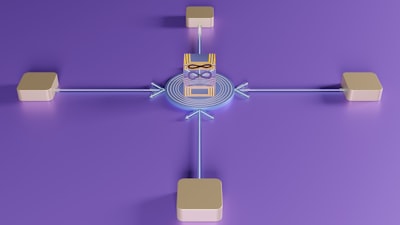
The differential value of CORE lies not only in its precision, but also in its generalization capability. Experiments on public and private datasets show it outperforms state-of-the-art methods in robustness and accuracy. But for a hospital or laboratory to benefit from these results, they need more than an algorithm: they need a complete software ecosystem. This is where AI agents come into play—small autonomous units that monitor registration, detect anomalies, and dynamically adjust parameters. These agents integrate with BI/Power BI dashboards that provide real-time metrics on system performance, allowing managers to make data-driven decisions.
Another crucial aspect is process automation. Multi-stained image registration traditionally required hours of manual work from specialized technicians. With the coarse-to-fine approach, much of the process is automated, but initial setup and final validation still require human intervention. At Q2BSTUDIO we develop cloud services on AWS/Azure that orchestrate these workflows, combining Docker containers, scalable databases, and REST APIs so that cellular registration becomes a service accessible from anywhere in the hospital network.
The application of artificial intelligence in this field is not limited to registration. Deep learning models used for nuclei detection and point correspondence are trained on labeled datasets, requiring high-performance GPU computing infrastructures. Q2BSTUDIO offers consulting to optimize these pipelines, selecting the most suitable hardware and software, whether on public, private, or hybrid clouds. Additionally, integration with hospital information systems (HIS) and picture archiving systems (PACS) is key to ensuring traceability and continuity of care.
In the near future, the combination of cellular registration with autonomous AI agents will open the door to fully automated digital pathology, where biomarker analysis, cell density quantification, and anomalous pattern detection are performed without human intervention. This will not only accelerate diagnoses but also allow pathologists to focus on complex cases requiring their expertise. Companies like Q2BSTUDIO are already working on prototypes that integrate CORE with Business Intelligence systems and custom dashboards, offering laboratories a unified view of the entire workflow.
To conclude, multi-stained image registration at the cellular level represents a qualitative leap in precision medicine. Frameworks like CORE demonstrate that it is possible to achieve exact nuclear correspondence across different stains and microscopes, but their effective deployment depends on a solid, secure, and scalable software architecture. At Q2BSTUDIO we help organizations design and implement these solutions, combining custom software development, artificial intelligence, cloud computing, and cybersecurity to transform digital pathology into an operational and profitable reality.