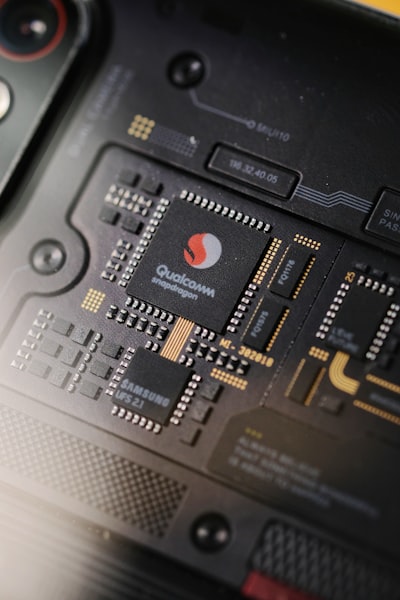
Qualcomm has notified its customers of a double-digit percentage price increase that will take effect for products shipped from September 1. The company argues it has exhausted its ability to absorb higher costs from suppliers, amid a persistent semiconductor shortage that continues to drive prices up. Although Qualcomm attempted to source alternative components, global scarcity has limited those options, forcing it to pass the extra cost onto its buyers.
This decision is not an isolated event, but another signal of a tense chip market that affects the entire technology value chain. Qualcomm is a key supplier for smartphone manufacturers, 5G modems, IoT connectivity, automotive, and network infrastructure. Any price increase has a ripple effect that starts with original equipment manufacturers (OEMs), continues through device brands, and ultimately impacts the end consumer, who will likely see more expensive phones and other products or fewer features.
From a technical perspective, the situation reveals the fragility of a globalized supply chain. Dependence on a few critical players like Qualcomm, TSMC, or Samsung in chip manufacturing means any imbalance — whether from explosive demand, natural disasters, geopolitical tensions, or logistical issues — turns into a pricing crisis. Qualcomm's attempt to diversify suppliers illustrates that even tech giants find it difficult to escape this dynamic.
For companies that rely on these components, Qualcomm's hike is a wake-up call. It is not just about paying more for chips, but about reviewing procurement strategies, optimizing product design, and above all investing in proprietary technology that reduces dependence on external hardware. This is where software and digitalization play a decisive role.
One of the most effective ways to mitigate the impact of such increases is to invest in custom software development. Companies like Q2BSTUDIO, specialized in personalized software development, help organizations create solutions that optimize processes, reduce operational costs, and automate tasks, decreasing reliance on expensive hardware. For example, instead of using multiple dedicated chips, well-designed software can consolidate functionalities into a single, more efficient processor, extending device life cycles and reducing exposure to component price fluctuations.
Another strategic pillar is cloud migration. AWS and Azure cloud services offer scalability and flexibility that allow businesses to shift workloads from hardware-dependent local infrastructures to virtualized environments. With the cloud, it is possible to upgrade capabilities without purchasing new hardware every time chip prices rise. Q2BSTUDIO has expertise in native cloud architectures, migrations, and cloud cost optimization, helping clients become more resilient to supply shocks.
Artificial intelligence also emerges as a key tool. AI agents can predict demand patterns, optimize inventories, and automate procurement decisions, reducing the impact of unexpected price hikes. Q2BSTUDIO develops custom AI agents that integrate with ERP and CRM systems, providing real-time visibility into the supply chain and recommending proactive actions. Additionally, AI applied to product design can help engineers select alternative components or redesign circuits to use more available or cheaper chips.
Cybersecurity cannot be overlooked. In a context of uncertainty, supply chain cyberattacks become more frequent. Protecting sensitive data and ensuring operational continuity is a priority. Q2BSTUDIO offers cybersecurity services, including pentesting, security audits, and regulatory compliance, to shield companies' technological infrastructures from threats that could worsen cost problems.
Finally, business intelligence (BI) and tools like Power BI allow organizations to visualize the real impact of price increases on their margins and make data-driven decisions. With interactive dashboards, finance teams can simulate scenarios and adjust pricing or procurement strategies. Q2BSTUDIO implements BI solutions that integrate data from multiple sources, offering a clear view of business health in volatile times.
Ultimately, Qualcomm's price hike is a symptom of a semiconductor market that will remain volatile. Companies that react by investing in custom software, cloud, AI, cybersecurity, and BI will be better positioned to absorb these impacts and maintain competitiveness. Q2BSTUDIO, as a technology partner, accompanies its clients in that process, offering solutions that turn adversity into an opportunity for modernization.