In the vast landscape of machine learning and predictive analytics, black-box models like random forests or deep neural networks often dominate discussions due to their accuracy. However, the need for interpretability in regulated, financial, or industrial sectors has driven the search for alternatives that offer transparency without sacrificing performance. One of the most promising proposals in this regard are the Twoblock clustering trees with coskewness-based dimension reduction, a technique that combines the hierarchical structure of decision trees with local multivariate linear models and a particular form of dimensionality reduction based on the third statistical moment.
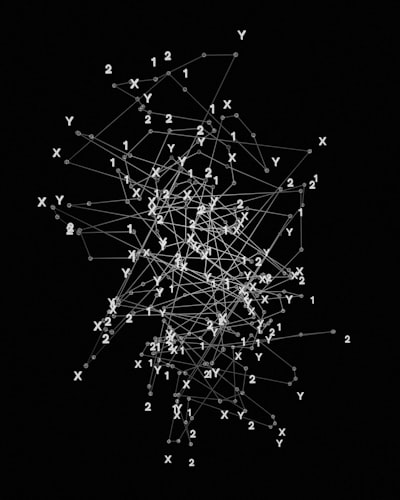
The essence of these trees lies in their ability to partition the feature space into regions where a simple linear model — or a reduced linear model via Twoblock — adequately captures the relationship between predictors and response. Unlike classical regression trees that use constant averages in leaves, here each leaf contains a local linear model, allowing representation of piecewise linear relationships with accuracy close to more complex methods. The real added value is the use of coskewness as a reduction criterion: instead of limiting itself to covariance (second moment), it maximizes the joint skewness among variables, facilitating the detection of non-normal clusters and hidden structures that other methods overlook.
From a practical standpoint, these trees offer a remarkable balance between accuracy and explainability. In controlled simulations, they demonstrate the ability to recover piecewise linear regimes, while on real data they compete in performance with black-box techniques like random forests. But what truly sets them apart is that each split and each leaf model can be inspected and interpreted, something invaluable when decisions must be justified to auditors, clients, or regulators. In a business environment where trust in algorithms is critical, this transparency becomes a strategic asset.
At Q2BSTUDIO, we understand that innovation comes not only from adopting cutting-edge algorithms but from integrating them intelligently into software solutions that solve real problems. Therefore, developing custom applications that incorporate models like Twoblock trees can make a difference in applied Artificial Intelligence projects. For example, in a Business Intelligence system with Power BI, embedding an interpretable tree allows analysts not only to see predictions but to understand underlying rules. Similarly, in cybersecurity environments where real-time anomaly detection is required, the ability of these trees to identify non-normal clusters improves threat detection without losing traceability.
Technical implementation of these models requires careful handling of dimensionality reduction and split optimization. The coskewness reduction involves computing third-order matrices, which can be computationally expensive on very large datasets. Cloud scalability, whether with AWS or Azure, comes into play here. Our cloud services are designed to deploy complex algorithms with elasticity, allowing Twoblock trees to process millions of records without bottlenecks. Moreover, integration with autonomous AI agents — capable of dynamically selecting the most suitable model based on the task — opens the door to adaptive decision systems where the tree itself reconfigures as new data arrives.
Another aspect worth noting is the synergy with modern Business Intelligence. Interactive dashboards that display not only predictions but the tree structure — how observations are grouped, which variables are most relevant at each node — provide a layer of business intelligence that goes beyond traditional reports. At Q2BSTUDIO we have developed frameworks that allow exporting interpretable trees directly to Power BI dashboards, enabling decision-makers to explore underlying patterns without needing a master's degree in statistics.
Cybersecurity is another fertile field for this technique. Cyberattacks often present asymmetries and non-Gaussian behaviors that covariance-based models miss. By maximizing coskewness, Twoblock trees can identify groups of anomalous events with interpretability that allows security analysts to understand why a particular network flow was flagged as suspicious. This is especially valuable when action justifications or regulatory notifications are needed. Our team in cybersecurity integrates these models into pentesting and continuous monitoring solutions, combining interpretable machine learning with solid security audits.
For companies betting on intelligent automation, Twoblock trees provide an excellent foundation. Being deterministic and easy to audit, they can be incorporated into automated workflows where every decision must be traceable. For example, in a dynamic pricing recommendation system, such a tree can define customer segments and assign personalized linear models, all visible and modifiable by the business team. At Q2BSTUDIO, we accompany our clients in designing these architectures, from prototyping with test data to production deployment with container orchestration and real-time monitoring, ensuring both effectiveness and transparency.
Looking ahead, the convergence of interpretable trees with AI agents is perhaps one of the most exciting lines. An agent equipped with a Twoblock tree can explain its decisions in natural language, learn from new evidence by adjusting local linear models, and collaborate with other agents in federated environments. At Q2BSTUDIO, we are exploring these capabilities in applied research projects, combining our experience in Artificial Intelligence with the specific needs of sectors such as banking, logistics, or healthcare. The goal is that every model not only predicts but tells its story.
In conclusion, Twoblock clustering trees with coskewness dimension reduction represent a powerful tool for those seeking accuracy without sacrificing interpretability. Far from being a mere academic curiosity, their practical application in business environments is proving that it is possible to have the best of both worlds. At Q2BSTUDIO, as a software development and technology company, we are committed to transferring these innovations into tangible solutions: from custom applications to cloud platforms that scale with the business. We invite organizations to explore how this technique can fit into their data ecosystem, unlocking the potential of truly transparent and actionable analysis.