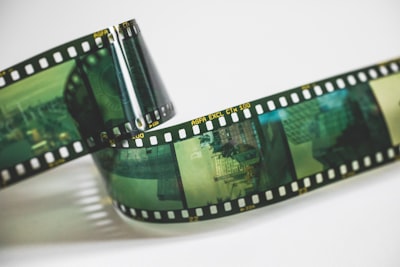
The restoration of historical films represents one of the most complex challenges in image processing due to the simultaneous presence of multiple degradations: scratches, dust, blur, noise, flicker, and photometric aging. Until now, video restoration methods treated these problems implicitly, reconstructing frames without clear knowledge of where or how severely the damage occurred. The recent advance proposed under the name DART (Degradation-Aware Recurrent Transformer) radically changes this paradigm by predicting and propagating a soft defect mask over time, guiding temporal fusion and conditioning the restoration network on both the location and severity of the damage. This allows the restoration process to be explicitly aware of film artifacts, rather than relying solely on reconstruction losses. Experiments show that DART improves no-reference perceptual quality over previous architectures, maintaining a compact and efficient model, and producing cleaner and more temporally consistent restorations.
In the business and technology landscape, such innovations in artificial intelligence have a direct impact on how companies develop custom software applications for sectors that require advanced visual data processing. For example, a post-production film company could integrate a DART-based solution to automate the detection and correction of defects in archival films, drastically reducing manual labor time. However, bringing such a model into production demands not only deep learning expertise but also a robust and scalable infrastructure. This is where companies like Q2BSTUDIO, specialized in software development and technology, play a key role. Q2BSTUDIO offers cloud AWS and Azure services that allow deploying AI models with high computational requirements in elastic environments, ensuring performance and controlled costs. Additionally, cybersecurity becomes critical when handling valuable digital assets, and Q2BSTUDIO provides cybersecurity and pentesting offerings to protect both data and deployed models.
From a technical perspective, the heart of DART is a recurrent transformer that, unlike traditional video restoration approaches, does not treat all pixels equally. The defect mask it generates is a soft representation (values between 0 and 1) indicating the probability of damage at each spatiotemporal location. This mask is propagated across frames, allowing the model to weight temporal information adaptively: in damaged areas, information from neighboring frames is favored; in intact areas, the original texture is preserved. This mechanism is similar to attention systems used in natural language processing, but adapted to video sequences. The recurrence of the transformer ensures that information from previous states influences the current restoration, creating temporal coherence that other models fail to achieve.
The business implementation of architectures like DART also requires a comprehensive approach to Business Intelligence and Power BI to monitor model performance, inference times, and restoration quality. Companies adopting this type of AI often need dashboards that visualize key metrics, something Q2BSTUDIO can build as part of its BI solutions. On the other hand, process automation through AI agents is a growing trend: an agent could automatically manage the restoration workflow, from film ingestion to export of the restored version, integrating DART as a core module. Q2BSTUDIO develops custom AI agents that integrate with existing systems, leveraging cloud platforms to scale on demand.
The future of film restoration inevitably lies in the combination of advanced deep learning techniques, cloud infrastructure, and robust cybersecurity. DART represents an important step toward damage-aware restoration, and companies like Q2BSTUDIO are ready to help their clients implement these capabilities in their own environments, whether through custom software development, AI consulting, or cloud deployment. The key is not only understanding the technology but knowing how to integrate it efficiently and securely into real production processes.