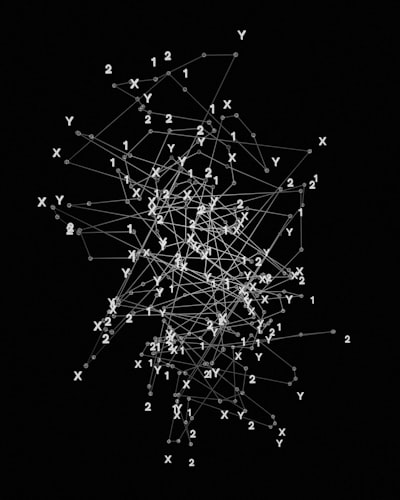
In the fast-paced world of machine learning, analyzing large-scale text corpora remains a core challenge. Tasks such as identifying biases in training data or detecting unwanted model behaviors require methods that balance cost, control, and precision. Traditionally, techniques based on large language models (LLMs) offer depth but at a high cost, while dense embeddings provide efficiency but lack interpretability. This is where sparse autoencoders (SAEs) emerge as a revolutionary tool: they create representations where each dimension corresponds to an interpretable concept, enabling much more granular and controllable data analysis.
SAE embeddings, like those generated by sparse autoencoder architectures, organize information into a broad hypothesis space where each feature has semantic meaning. This allows, for example, discovering semantic differences between datasets without manual labeling, or identifying unexpected concept correlations in documents. A notable practical case is comparing model responses: it has been observed that Grok-4 clarifies ambiguities more often than nine other frontier models, a finding that SAEs reveal at 2-8 times lower cost than traditional LLMs, and with greater reliability in bias detection.
Moreover, SAE embeddings are inherently controllable. By filtering specific concepts, it is possible to cluster documents along axes of interest (e.g., sentiment or topic) and outperform dense embeddings in property-based retrieval tasks. This opens the door to deep case studies, such as investigating how OpenAI model behavior has changed over time, or finding 'trigger' phrases learned by Tulu-3 from its training data. These capabilities position SAEs as a versatile tool for unstructured data analysis, underscoring the neglected importance of interpreting models through their data.
In the business realm, adopting interpretable embeddings can transform how organizations extract value from their data. With a solid technical approach, companies like Q2BSTUDIO integrate these techniques into AI and custom software solutions, enabling clients to not only analyze large text volumes but also make decisions based on actionable insights. For example, an AI agent system can use SAE embeddings to monitor customer service conversations, detect biases in real time, and automatically adjust responses.
Cybersecurity also benefits: SAEs can identify anomalous patterns in text logs or emails, facilitating early threat detection. Combined with cloud infrastructure like AWS or Azure, it is possible to scale analysis to petabytes of data without losing control over interpretability. Furthermore, in Business Intelligence, organizations can connect these embeddings with tools like Power BI to visualize trends and correlations that were previously invisible, enriching dashboards with deep semantic layers.
From a development perspective, implementing SAE embeddings requires a well-architected design. Sparse autoencoders must be trained on representative data with careful tuning of hyperparameters such as sparsity and dictionary size. This is where the expertise of Q2BSTUDIO makes a difference: they offer cloud AWS/Azure services to manage intensive computation, as well as AI consulting to optimize models for specific use cases, whether in document classification, semantic search, or bias detection.
The future of data analysis points toward tools that combine the power of LLMs with the efficiency and control of SAEs. It is no longer just about processing text, but understanding it. With SAE embeddings, each dimension is a window into meaning, and each filter is a key to unlock strategic insights. Companies that adopt these technologies will not only improve their analytical capabilities but also build more ethical and transparent systems, aligned with a market increasingly aware of algorithmic responsibility.
In summary, the data analysis kit based on sparse autoencoders represents a significant advance for enterprise artificial intelligence. By offering interpretability at reduced costs and with greater control than current alternatives, SAE embeddings become a key piece for any organization seeking to extract deep knowledge from textual data. Whether for model audits, product personalization, or regulatory compliance, this technology is poised to become a standard in the data arsenal of innovative companies.