In healthcare systems of resource-limited countries, the efficient and equitable allocation of essential medicines remains one of the most complex challenges. The scarcity of high-quality data restricts the use of traditional data-driven techniques, but machine learning (ML) offers a promising alternative. This article explores how ML, combined with strategies such as multi-task learning and catalytic priors, can significantly improve access to vital medicines, especially in regions like sub-Saharan Africa. Based on real-world experiences, such as the staggered implementation in Sierra Leone that achieved a 19% increase in consumption of allocated products, we analyze the potential of these technologies from a technical and business perspective. Additionally, we highlight how companies like Q2BSTUDIO can provide the necessary software solutions to bring these advances to a global scale.
The core problem lies in optimizing scarce resources: hospitals, health centers, and governments must decide which medicines to purchase and in what quantities, often with incomplete or outdated data. Traditional methods, such as static inventory models, fail because they do not adapt to demand variability or logistical constraints. This is where machine learning demonstrates its value. By training models on limited historical data but using multi-task learning techniques —which share information across related tasks— it is possible to improve sample efficiency and obtain robust predictions. Catalytic priors, meanwhile, introduce inductive biases that favor equity, preventing certain regions or groups from being underserved. This combination creates a decision-aware framework that not only predicts but recommends optimal actions for allocation.
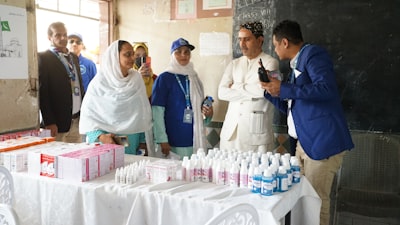
A practical example is the system implemented in collaboration with the government of Sierra Leone, where ML was used to prioritize medicine distribution in high-need districts. The subsequent econometric study revealed a measurable increase in consumption of allocated products in treated areas, demonstrating that artificial intelligence can close access gaps without requiring large infrastructure investments. This success led to the tool being scaled nationwide, impacting an estimated two million women and children under five. It is a paradigmatic case of how low-cost technologies can generate high social impact.
From a business perspective, implementing these solutions requires a robust technological ecosystem. Organizations looking to replicate this model need custom software that integrates machine learning modules, secure databases, and visualization dashboards. Customization is key because each health system has its own regulations, workflows, and data sources. A generic software rarely fits these particularities. Therefore, having a development partner like Q2BSTUDIO, specialized in multi-platform solutions, allows building tools that exactly meet client needs, from field data capture to executive reporting.
Artificial intelligence (AI) is the central engine of this approach. Machine learning models, such as those based on deep learning or decision trees, can identify hidden patterns in consumption data, seasonality, and epidemic outbreaks. Companies like Q2BSTUDIO offer AI services ranging from initial consulting to implementation and maintenance of predictive models. Additionally, integration with cloud services (AWS and Azure) ensures scalability and availability, allowing models to run in real time even in regions with limited connectivity. Cybersecurity also plays a critical role, as health data is sensitive and must be protected under regulations like HIPAA or GDPR. A medicine allocation system must include multi-factor authentication, encryption, and periodic audits, aspects that Q2BSTUDIO addresses with its cybersecurity solutions.
Another relevant area is business intelligence (BI) and the use of Power BI to visualize medicine allocation and consumption. Interactive dashboards allow decision-makers to monitor key indicators such as stockout rates, geographic coverage, and impact on maternal and child health. Combined with AI agents —autonomous systems that can suggest reallocations in real time— an intelligent ecosystem that learns and continuously improves is created. For example, an AI agent could detect that a district is consuming less than expected and recommend an additional shipment or a change in distribution strategy.
Implementing these technologies is not without challenges. Data quality remains an obstacle, but techniques such as synthetic data augmentation or semi-supervised learning can mitigate it. Additionally, resistance to change among healthcare staff requires training and user-centered design. Q2BSTUDIO solutions include intuitive interfaces and dashboards that facilitate adoption. Likewise, a data governance model is crucial to ensure transparency and ethics in AI use, avoiding biases that perpetuate inequalities.
In conclusion, machine learning offers a viable, low-cost pathway to improve access to essential medicines in resource-constrained settings. The combination of multi-task learning, catalytic priors, and a decision-aware approach overcomes data scarcity and achieves measurable results, such as the 19% increase in consumption observed in Sierra Leone. For these solutions to be sustainable and scalable, a solid technological infrastructure is needed, including custom applications, cloud computing, cybersecurity, and BI tools. Q2BSTUDIO is prepared to provide this ecosystem, supporting government organizations and NGOs in the digital transformation of their health systems. Technology, when applied with a clear purpose and ethical design, can transform lives.