Traditional digital twins have long been a key tool in simulating physical systems, but their geometric rigidity and the need for constant retraining when domain or boundary conditions change limit scalability. In this context, Zero-Shot Digital Twins emerge as a disruptive solution: models that can simulate physical behaviors on never-before-seen geometries without specific retraining. At Q2BSTUDIO, a leading software and technology development company, we have explored how Graph Neural Networks (GNNs) can power this new generation of digital twins.
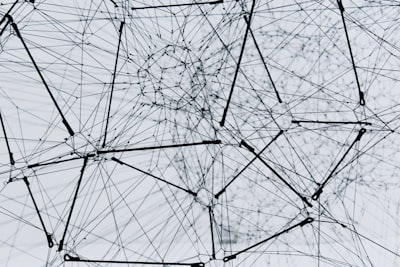
The architecture is based on a geometric deep learning approach that incorporates thermodynamic principles: energy conservation and non-negative entropy production. Using a thermodynamics-informed Graph Neural Network, the model processes spatial information from an object or fluid through a graph where each node represents a point in the physical domain and edges encode interactions. This allows the system to adapt to any input geometry, as the graph is automatically generated from real-time visual data.
A key aspect is the ability to infer unobservable fields, such as mechanical stresses or velocity and energy distributions, from initial visual boundaries. This is achieved via an auxiliary network that mitigates initial numerical transients. Additionally, a closed-loop data assimilation mechanism is integrated: using deep segmentation networks and sparse optical flow, the system tracks macroscopic deformations and fluid boundaries, continuously correcting the autoregressive simulation and eliminating numerical drift. This approach allows the digital twin to run in real time, with latencies under 25 ms per frame.
From an enterprise perspective, Zero-Shot Digital Twins open unprecedented possibilities in sectors such as manufacturing, civil engineering, or fluid simulation. At Q2BSTUDIO we offer custom applications that integrate these technologies, adapting them to each client's specific needs. We combine the power of graph neural networks with cutting-edge artificial intelligence, robust cybersecurity, and cloud platforms like AWS and Azure to ensure scalability and performance. Our BI and Power BI services, along with process automation using AI agents, complement these solutions to provide a complete digital transformation ecosystem.
For example, in the case of a viscoelastic beam undergoing large deformations, the zero-shot model predicts stress and displacement evolution without needing to recalibrate parameters for each new geometry. Similarly, in a fluid tank with nonlinear sloshing, the digital twin captures free-surface dynamics in real time. Both applications have been validated in augmented reality environments, where operators can visualize latent mechanical variables overlaid on the real world.
The key to success lies in the ability to learn geometry-invariant representations. Unlike methods based on fixed meshes or discretized differential equations, GNNs allow the model to generalize to arbitrary geometries as long as the graph structure correctly reflects physical connectivity. This drastically reduces development and maintenance costs, as no retraining is required for each new design or boundary condition.
At Q2BSTUDIO we understand that adopting these technologies requires a strong focus on cybersecurity and data governance. Therefore, all our digital twin implementations include security protocols that protect sensitive data integrity and ensure simulation privacy. In addition, integration with AWS and Azure cloud services enables rapid and scalable deployment tailored to each organization's needs.
Looking ahead, Zero-Shot Digital Twins represent a step forward toward universal simulation, where any physical system can be modeled without prior configuration. At Q2BSTUDIO we are positioned to lead this revolution, offering cloud services and software process automation that integrate these capabilities. Our AI agents also enable real-time optimization of simulations, automatically adjusting parameters based on observed data.
In conclusion, the combination of graph neural networks with thermodynamic principles and real-time data assimilation is redefining what is possible with digital twins. At Q2BSTUDIO, as a software and technology development company, we are committed to helping businesses leverage these innovations to improve processes, reduce costs, and accelerate innovation. Whether through custom applications, artificial intelligence, cybersecurity, or data analytics with Power BI, we offer comprehensive solutions that make the potential of zero-shot digital twins a reality.