In a market where uncertainty is the only constant, businesses seek tools that not only solve current problems but anticipate tomorrow's. Secure custom software development has evolved beyond mere tailored coding; today it integrates artificial intelligence, predictive analytics, and cloud architectures to offer a proactive business vision. The question is no longer whether software can predict trends, but how to implement it securely and effectively. Q2BSTUDIO, as a custom software development company, puts this premise into practice by combining cybersecurity, AWS/Azure cloud, and AI models to transform data into actionable predictions.
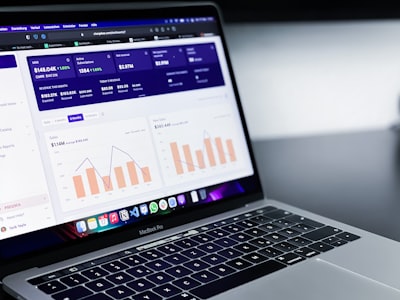
The concept of 'secure custom software' is not limited to protecting data through encryption or authentication. It is a holistic approach where every layer of the application —from frontend to database— is designed with security by default. But what happens when that same software incorporates prediction engines? The answer is an ecosystem capable of processing large volumes of historical and real-time data, applying machine learning algorithms to identify patterns that escape the human eye. For example, a Business Intelligence system with Power BI can visualize sales time series, while an integrated AI model anticipates demand spikes or compliance risks. Thus, the software not only reports what happened but suggests what will likely happen.
The key lies in integrating three pillars: security, customization, and prediction. Security ensures that sensitive data —such as customer information or business strategies— is not compromised during predictive processing. Customization allows models to be adapted to the industry, size, and specific objectives of each organization. And prediction, powered by autonomous AI agents, offers scenario simulations that help executives make informed decisions. For example, a logistics company could use volume predictions to adjust its delivery fleet, while a bank would employ propensity models to identify customers with a high probability of churn. All this runs on cloud infrastructures like AWS or Azure, providing scalability and high availability without sacrificing security.
From a technical perspective, secure custom software development with predictive capabilities involves several phases. First, a requirements analysis identifies relevant data sources —transactions, IoT sensors, social media— and defines key performance indicators (KPIs). Then, data pipelines are built to clean, transform, and store information in data lakes or warehouses, often using cloud services like Amazon S3 or Azure Data Lake. Subsequently, data scientists train time series, classification, or regression models using frameworks such as TensorFlow or PyTorch. These models are deployed as microservices within the application, exposed via REST APIs consumed by frontend modules. Finally, early warning systems are implemented to notify stakeholders when predictions exceed critical thresholds.
Q2BSTUDIO applies this methodology in real projects. For instance, in a development for a retail chain, a demand prediction model was integrated with a Power BI dashboard, reducing dead inventory by 18% and improving product availability during peak season. Security was ensured through encryption at rest and in transit, role-based access controls, and periodic audits. Another case was a health platform that uses artificial intelligence to predict disease outbreaks based on environmental and mobility data, deployed on AWS with HIPAA compliance. These examples demonstrate that custom software is not just a tactical asset but a strategic advantage.
Cybersecurity plays a fundamental role in this ecosystem. A predictive model fed with financial or customer data must be protected against data leaks, training data manipulation, or adversarial attacks. Therefore, Q2BSTUDIO incorporates practices such as homomorphic encryption, data anonymization, and regular penetration testing. Additionally, choosing AWS or Azure cloud allows leveraging native services like AWS Shield or Azure Security Center for continuous monitoring. Security is not an add-on but an emergent property of the design.
Another relevant aspect is scalability. Predictive models often require large computing capacities during training, but once in production they must respond in milliseconds. Cloud architecture, with load balancers and auto-scaling, ensures the software maintains performance even under peak queries. For example, an e-commerce recommendation system can process thousands of requests per second during Black Friday without degradation, thanks to containers on Kubernetes and NoSQL databases like DynamoDB.
However, trend prediction is not a crystal ball. Models are based on probabilities and may fail if market conditions change drastically. Therefore, companies must combine predictive software with human judgment. Executive dashboards, powered by BI, present forecasts alongside confidence intervals and uncertainty factors. Q2BSTUDIO trains teams to interpret this data and make informed decisions, avoiding blind automation. The key is the balance between algorithmic prediction and human oversight.
Regarding implementation, secure custom software development with predictive capabilities is not a standard product; it requires close collaboration between the client and developers. Q2BSTUDIO follows an iterative process based on agile methodologies, with short sprints and periodic reviews of predictive models. CI/CD pipelines are used that integrate automated security tests (SAST, DAST) and model validation (data drift, bias). In this way, the software evolves with the business and remains aligned with changing regulations like GDPR or ISO 27001.
For companies seeking a competitive edge, investing in custom software with trend prediction is a logical decision. But it is not enough to buy a tool; one must build a solution that adapts to the internal culture and processes. Q2BSTUDIO offers precisely that: a tailored development where security, artificial intelligence, and the cloud combine to create systems that not only respond but anticipate. From demand planning to fraud detection, the applications are as diverse as the sectors that need them.
In conclusion, secure custom software development can indeed predict trends, provided it is designed with a comprehensive approach covering data, models, infrastructure, and security. Q2BSTUDIO demonstrates that, with the right methodology, companies can transform software into a digital oracle —but controlled, ethical, and reliable— guiding their strategic decisions toward the future.