The shift to remote and hybrid work has posed a fundamental technical challenge: how can enterprise applications support geographic flexibility without sacrificing performance or security? The answer lies in scalable application architecture, an approach that allows organizations to grow in users, data, and functionality without needing to redesign the system every time conditions change. Far from being a mere technical option, this architecture has become the pillar that sustains the operations of distributed teams across multiple time zones, ensuring that collaboration, visibility, and governance remain intact.
When we talk about scalability, we do not only refer to the ability to handle traffic spikes. In the context of remote work, a scalable architecture must also provide secure access from any device, integrate synchronous and asynchronous communication tools, and deliver real-time analytics that respect employee privacy—all without the IT team having to rewrite code every quarter. Are scalability and telework compatible, then? Experience shows that not only are they compatible, but a solid architecture is a necessary condition for remote work to be sustainable in the long term.
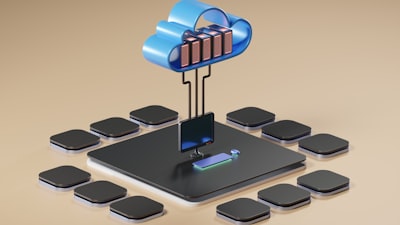
Companies that adopt a monolithic approach often face bottlenecks as the number of remote users grows. Latency increases, authentication mechanisms become slow, and updates require downtime that affects global teams. In contrast, an architecture based on microservices deployed on the cloud—whether AWS or Azure—allows independent scaling of components, on-demand resource allocation, and 99.9% availability. Q2BSTUDIO, a company specializing in software development and technology, applies this principle in its projects: each application is designed from the start with elasticity and perimeter security in mind.
Cybersecurity is another major enabler of remote work. A scalable architecture cannot neglect data protection when employees access from home or public networks. That is why the cybersecurity solutions implemented by Q2BSTUDIO include multi-factor authentication, device management, end-to-end encryption, and network segmentation. These protection layers are natively integrated into the application, without making the user experience cumbersome. Moreover, cloud infrastructure allows security patches to be applied automatically, reducing the exposure window.
Collaboration in distributed environments is not limited to having a chat or video tool. Custom applications can incorporate contextual collaboration spaces, where meetings, documentation, and decisions are recorded and accessible at any time. Q2BSTUDIO designs these features leveraging artificial intelligence and AI agents that help schedule meetings respecting each time zone, translate messages in real time, or summarize long discussions. All of this is part of a custom software architecture that adapts to the specific workflows of each organization, without imposing generic solutions.
Another critical component is business intelligence. When teams are dispersed, visibility into key metrics can be lost without centralized dashboards. This is where BI/Power BI solutions come into play, integrated into the scalable application itself. Q2BSTUDIO configures dashboards that show productivity, resource usage, and project KPIs, always respecting privacy: they measure results, not keystrokes. Data is updated in real time thanks to cloud infrastructure, and AI algorithms can alert about deviations before they become problems.
Process automation also benefits from scalable architecture. Repetitive tasks—such as task assignment, report generation, or calendar synchronization—can be managed by AI agents trained for each context. This frees up time for remote employees to focus on high-value activities. Q2BSTUDIO integrates these process automation capabilities within the same ecosystem, avoiding the need to jump between multiple tools.
In short, scalable application architecture is not only compatible with remote work, but it enhances it. It allows companies to grow without re-engineering, provides an excellent employee experience, and maintains the governance required in B2B environments. Q2BSTUDIO develops this type of architecture as an integrated service, combining cloud AWS/Azure, cybersecurity, artificial intelligence, and business intelligence in a single platform tailored to each client. For those seeking to scale without losing the flexibility of remote work, this is undoubtedly the answer.