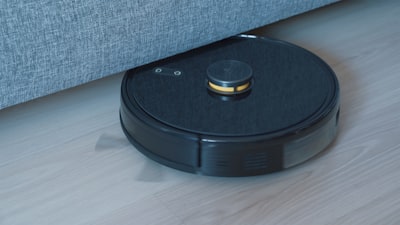
The iRobot Roomba Max 705 has entered the home cleaning market with a 45% discount, bringing it to $499—an all-time low for a robot vacuum without an integrated mop. Designed for homes with carpets or pets, it forgoes the mopping module to focus on deep suction and intelligent navigation. But beyond the commercial offer, this device is a fascinating case study of how artificial intelligence, LiDAR navigation, and cloud connectivity are transforming household appliances into nodes of a digital ecosystem. In this article, we analyze the technical keys of the Roomba Max 705 and how companies like Q2BSTUDIO, specializing in custom software development, artificial intelligence, and cybersecurity, can help businesses leverage the same type of technology to optimize corporate processes.
The LiDAR sensor on the Roomba Max 705 not only maps the room with millimeter precision but also allows the vacuum to remember the layout of each room and plan efficient cleaning routes. This Simultaneous Localization and Mapping (SLAM) system is similar to those used in autonomous vehicles and industrial robots. The integration of artificial intelligence for object recognition—cables, shoes, toys—enables the robot to avoid obstacles and focus on dirtier areas. From a business perspective, this combination of sensors and algorithms offers valuable lessons: a well-calibrated sensor plus an AI model trained on real data can dramatically reduce operational errors. Q2BSTUDIO, as a software and technology development company, implements similar systems in industrial automation projects, where robots must navigate changing environments and avoid collisions with people or objects. The Roomba Max 705's ability to repeat cleaning passes in detected dirty areas resembles the control loops Q2BSTUDIO designs for manufacturing processes, where a computer vision system adjusts actions in real time.
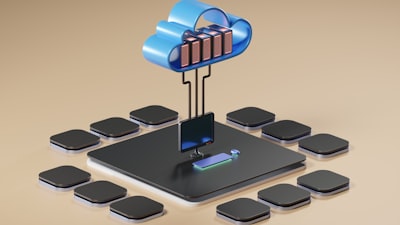
The vacuum's connectivity to the iRobot cloud allows for storing maps, scheduling cleanings, and receiving mobile notifications. This cloud architecture is similar to what Q2BSTUDIO deploys for its clients on Amazon Web Services (AWS) or Microsoft Azure, ensuring scalability, security, and low latency. In fact, managing home data—floor plans, usage patterns, cleaning history—involves cybersecurity challenges that should not be underestimated. Any IoT device, from a vacuum to a thermostat, can become an attack vector if not properly protected. Q2BSTUDIO offers cybersecurity and pentesting services to audit connected systems, ensuring that sensitive user information remains exposed. In the case of the Roomba Max 705, iRobot has implemented end-to-end encryption and multi-factor authentication in its app—a standard every company should adopt.
Another highlight is the customization allowed by the Roomba Home app: choosing rooms, no-go zones, suction levels, and intensive cleaning modes. This flexibility recalls the Business Intelligence (BI) dashboards that Q2BSTUDIO develops with Power BI, where users can filter data, set alerts, and visualize key indicators. The underlying logic is the same: give control to the user through an intuitive interface that hides algorithmic complexity. In the corporate world, that same ability to parameterize rules and automate decisions is what Q2BSTUDIO transfers to its clients by creating custom applications, integrating workflows that reduce manual intervention and increase efficiency.
The Roomba Max 705 uses a self-emptying system that accumulates up to 75 days of dust in sealed bags capturing particles as small as 0.7 microns. This maintenance-free design is an example of how automation can free up human time. On the corporate side, Q2BSTUDIO develops AI agents that automate repetitive tasks—from email classification to report generation. These intelligent agents, trained with language models and machine learning, act as virtual assistants executing processes without constant supervision, analogous to how the vacuum decides when to empty itself or increase power on a carpet. The key is designing systems that make contextual decisions based on real-time data.
From a technical perspective, the Roomba Max 705 does not publish its suction power in Pa, but claims 180 times more suction than the 600 series. Though imprecise, this metric reflects an industry trend: manufacturers compete to offer higher performance without neglecting energy efficiency. Q2BSTUDIO applies a similar approach in software development, optimizing algorithms to consume fewer computational resources without sacrificing accuracy. For instance, in computer vision projects for quality control, lightweight models are trained to run on edge devices with limited processing power, reducing cloud dependency. This efficiency philosophy applies to both a vacuum and an industrial monitoring system.
In conclusion, the Roomba Max 705 is not just a discounted appliance; it is a window into how sensor technology, AI, and cloud computing are democratizing automation. For businesses looking to implement similar solutions in their processes, having a technology partner like Q2BSTUDIO is essential. Their expertise in cloud services on AWS and Azure, custom application development, cybersecurity, Business Intelligence with Power BI, and AI agents makes it possible to turn concepts like LiDAR mapping or object recognition into profitable and secure business tools. If the Roomba Max 705 can autonomously clean a house, imagine what intelligent automation can do for your business.