The recent Iranian missile attack on an Amazon data center in Bahrain has shaken the foundations of technological infrastructure in the Middle East. Beyond the geopolitical implications, this event represents a turning point in how companies assess the resilience of their cloud systems. The destruction of a critical facility not only affects hosted services but also raises urgent questions about reliance on a handful of cloud providers and the need for truly robust disaster recovery strategies.
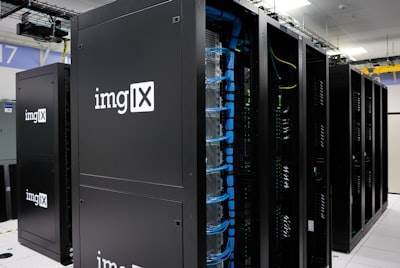
Amazon Web Services (AWS) confirmed that its data center in Manama, Bahrain, suffered severe structural damage after a series of ballistic missile impacts. Although the company activated its failover protocols, the service interruption lasted for hours, affecting local and international customers using resources such as EC2 instances, RDS databases, and S3 storage. The incident highlights the vulnerability of physical data centers in conflict zones—a risk many organizations had previously considered remote.
From a technical perspective, the attack demonstrates that cloud security is not limited to firewalls and encryption. Cybersecurity must include physical protection, geographic redundancy, and contingency plans covering everything from hardware loss to the total destruction of an availability zone. Companies that have centralized their operations with a single provider or in few geographic locations now face a scenario of strategic vulnerability. This is where the recommendation to diversify the use of cloud services like AWS and Azure, combined with on-premise or multicloud solutions, becomes crucial to mitigate the impact of catastrophic events.
For organizations looking to strengthen their infrastructure, specialized technology consulting is essential. Companies like Q2BSTUDIO offer cloud services on AWS and Azure, ranging from migrations to designing fault-tolerant architectures. Their expertise in multi-region deployments allows clients to distribute workloads across different data centers, minimizing the risk of total outage. Additionally, integrating monitoring and automation tools with Power BI can generate real-time dashboards that alert on operational anomalies, facilitating rapid decision-making.
The business impact of the incident goes beyond service outages. Many companies lost data not backed up in synchronous replicas, resulting in millions of dollars in losses. The lesson is clear: backup and disaster recovery solutions must be designed with a comprehensive approach that includes encrypted backups and periodic restoration drills. In this context, artificial intelligence and AI agents are emerging as key tools for automating threat detection and incident response. Intelligent agents can analyze traffic patterns, identify anomalous behaviors, and execute mitigation actions without human intervention, reducing reaction time.
Furthermore, the attack underscores the importance of having specialized cybersecurity services. Physical and logical security audits, penetration testing, and advanced access controls are pillars of a modern defense strategy. Q2BSTUDIO, as a software development and technology company, integrates these capabilities into its solutions, offering clients a holistic approach that combines cybersecurity, cloud computing, and custom software development. For example, custom applications developed by Q2BSTUDIO can include security modules tailored to each business's specific environment, from multi-factor authentication to end-to-end encryption.
However, the debate is not limited to technical security. Dependence on US cloud providers in a geopolitically tense region like the Middle East invites reflection on digital sovereignty. Governments and companies are reconsidering data localization and the convenience of deploying sovereign or hybrid clouds. In this scenario, Business Intelligence (BI) tools and Power BI allow visualizing the performance and geographic distribution of resources, facilitating investment planning in infrastructure. The ability to analyze large volumes of operational data with customized dashboards helps identify single points of failure and optimize budget allocation for backup technologies.
Moreover, generative artificial intelligence and AI agents are transforming how businesses manage business continuity. Predictive models can anticipate demand spikes or potential hardware failures, while autonomous agents execute preventive maintenance tasks. In a context where each minute of downtime costs thousands of euros, these technologies become indispensable allies. Q2BSTUDIO, with its expertise in custom software development, integrates AI solutions into enterprise platforms, enabling clients to automate critical processes and improve operational resilience.
The repercussions of the attack also reach the technology supply chain. Manufacturers of servers, cooling systems, and network equipment face altered delivery schedules, and insurance premiums for data centers in risk zones have skyrocketed. Companies operating in conflict regions must reassess their service level agreements (SLAs) with cloud providers, demanding stricter compensation clauses and guarantees of geographic redundancy. Transparency about the exact location of data centers and contingency plans has become a non-negotiable requirement for technology procurement departments.
In parallel, the incident has accelerated the adoption of multicloud and edge computing architectures. Distributing workloads across AWS, Azure, and local providers minimizes the impact of a targeted attack. Additionally, edge computing allows processing data near the source, reducing dependence on large server concentrations. Q2BSTUDIO advises its clients on implementing these architectures, designing hybrid solutions that combine the power of the cloud with low latency at the edge. Its process automation services also help orchestrate complex workflows across different environments, ensuring data consistency.
Finally, it is important to highlight that preventing future attacks requires public-private collaboration. Governments must invest in cyber and physical defense infrastructure, while technology companies must share threat intelligence. AI agents can play a crucial role in correlating data from multiple sources, identifying attack patterns before they materialize. Cybersecurity is no longer an isolated department; it is a cross-cutting responsibility that affects the entire organization.
In conclusion, the destruction of the Amazon data center in Bahrain is a brutal reminder that technology, no matter how advanced, depends on vulnerable physical infrastructure. Companies must rethink their cloud strategies, diversify providers, implement robust backup systems, and adopt emerging technologies like AI and autonomous agents. Q2BSTUDIO's experience in custom software development, cloud AWS/Azure, cybersecurity, BI/Power BI, and AI agents provides a comprehensive framework to address these challenges. Only through a holistic approach and rigorous planning can business continuity be ensured in an increasingly uncertain world.