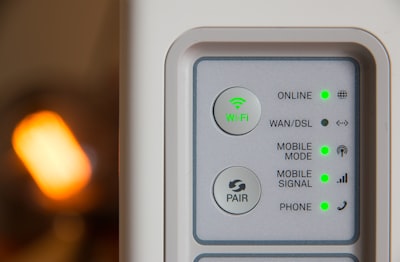
The launch of T-Mobile's new 5G Home Internet offer, which includes the first month free and up to $200 back via a prepaid Mastercard, represents a strategic move in the residential connectivity market. Beyond its commercial appeal, this promotion reflects how 5G technology is transforming access to high-speed internet, especially in areas where fiber optics have not yet arrived. To understand its real impact, it is necessary to analyze not only the consumer benefits but also the technical and business implications that this connectivity brings.
T-Mobile's 5G Home Internet service uses the same fifth-generation mobile network that powers smartphones, but optimized for fixed use. This means users receive a 5G router that connects to the nearest cell tower, offering speeds comparable to traditional broadband, with the advantage of easy installation and no long-term contracts. The current promotion, covering the first month at no cost plus a rebate of up to $200, is designed to attract customers who hesitate to migrate from cable or fiber providers. However, what truly matters is the technological ecosystem that can be built on this connectivity foundation.
From a technical perspective, 5G Home Internet is not simply 'mobile internet at home.' The 5G network offers low latency, high capacity, and network slicing, allowing critical traffic to be prioritized. For a business or independent professional, this opens doors to applications that require real-time response, such as telemedicine, augmented reality, or remote machinery control. But to fully leverage this potential, suitable software is needed. Here, companies like Q2BSTUDIO, specialized in custom software development, play a key role. Custom software can integrate 5G network data with artificial intelligence, cybersecurity, and business analytics systems, creating solutions that go beyond simple connectivity.
Imagine a scenario: a company using T-Mobile's 5G connection as a backup for its cloud infrastructure. With the current offer, it can save on the first month and use that capital to invest in cloud services on AWS and Azure managed by Q2BSTUDIO. The combination of a stable 5G link with a scalable cloud architecture allows deploying applications with high availability, without relying on a single fiber connection. Moreover, 5G's low latency improves user experience in interactive applications, such as real-time Power BI dashboards or AI agent-based virtual assistants.
Cybersecurity also becomes a critical pillar. When using a shared mobile network, data travels through the air and requires robust encryption. Q2BSTUDIO integrates cybersecurity solutions into the software it develops, protecting both communication and data stored in the cloud. For example, an industrial asset monitoring system connected via 5G can include perimeter firewalls, intrusion detection, and multi-factor authentication, all orchestrated from a custom application. T-Mobile's promotion, by lowering the entry barrier, allows more businesses to experiment with these architectures without a large upfront investment.
The $200 rebate can be used to cover the first months of a cloud service or to hire an AI agent for customer support. AI agents, capable of processing natural language and learning from interactions, are especially useful in environments where 5G connectivity ensures instant responses. Q2BSTUDIO develops these agents on a custom basis, integrating them with CRM systems, databases, and BI platforms. Thus, a small business that takes advantage of T-Mobile's offer can transform its digital operation from day one.
Another relevant aspect is scalability. T-Mobile's 5G network is constantly expanding, with coverage improving every month. For a local business, this means it can start with a basic plan and, as it grows, migrate to more robust solutions. Q2BSTUDIO helps in that transition by designing software that adapts to different bandwidths and latency requirements. For instance, an inventory application running on 5G can sync with the cloud in milliseconds, enabling decisions based on instantly updated data. The first month free and rebate promotion encourages this early adoption.
From a domestic consumer perspective, the offer is equally attractive. A household with multiple IoT devices, 4K streaming, and telecommuting can benefit from the symmetric speed that 5G offers (though it depends on congestion). However, the real added value lies in flexibility: with no long-term contracts, users can switch providers if they find a better offer. This pressures traditional operators to improve their services and pricing, benefiting the entire digital ecosystem in the long run.
In conclusion, T-Mobile's 5G Home Internet promotion is not just a commercial deal; it is a catalyst for adopting advanced technologies. Combined with Q2BSTUDIO's expertise in custom software, cloud, AI, cybersecurity, and BI, this connectivity can become the backbone of modern businesses. Whether for a startup needing to prototype an application with AI agents or a medium-sized company wanting to migrate its systems to the cloud, the free first month and $200 rebate are a springboard for digital transformation. The key is to see it not only as immediate savings but as an investment in technological infrastructure that, when well managed, multiplies its value over time.