
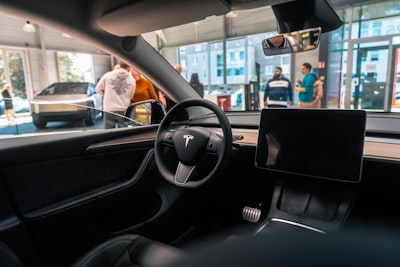
Tesla has taken a significant step in its autonomous mobility strategy by launching robotaxi tests in the cities of Orlando and Tampa, Florida. This move comes just ahead of the release of the second quarter (Q2) financial results, an event that the market watches closely to calibrate expectations for the company. Unlike Elon Musk’s grand promises about a massive network of autonomous taxis, the company has adopted a cautious approach, without revealing the exact number of vehicles deployed in each city or the true scale of the pilot program.
The choice of Florida is no coincidence. The state has a favorable regulatory framework for autonomous vehicle testing, with varied weather and traffic conditions that allow Tesla to validate its Full Self-Driving (FSD) system in real-world scenarios. Orlando, known for its dense tourist traffic, and Tampa, with its wide avenues and bridges, offer an ideal laboratory to test the robotaxi’s interaction with pedestrians, cyclists, and other drivers. The company is using a fleet of Model 3 and Model Y vehicles equipped with FSD hardware, without relying on Lidar, trusting solely in cameras and neural networks.
This pilot represents a change in strategy compared to Musk’s initial vision, who promised an operational robotaxi network by 2020. Tesla has learned from the technical and regulatory challenges that have delayed mass deployment. For instance, the need to ensure safety in low-visibility situations, complex intersections, or adverse weather conditions has driven the company to continuously iterate its artificial intelligence (AI) software. This methodical approach, albeit slower, may prove more robust in the long run, especially when compared to competitors like Waymo or Cruise, which have faced accidents and suspensions.
From a technical perspective, Tesla’s robotaxi relies on advanced AI architecture that processes terabytes of data per vehicle daily. To manage this enormous amount of information, the company uses cloud infrastructure, both AWS and Azure, to train deep learning models and run simulations. Cybersecurity is another critical pillar: protecting vehicles from potential cyberattacks is essential for the service’s viability. Tesla invests in intrusion detection systems and end-to-end encryption, something that companies developing mobility solutions must prioritize.
In this context, the role of companies like Q2BSTUDIO becomes relevant. As a firm specialized in software development and technology, Q2BSTUDIO helps companies across various sectors create custom software applications that integrate AI, cloud data analytics, and cybersecurity. For example, a manufacturer of autonomous vehicle components might need a real-time monitoring system based on cloud AWS/Azure, or a Business Intelligence dashboard with Power BI to visualize performance metrics. Q2BSTUDIO’s expertise in AI solutions and cloud services enables its clients to accelerate digital transformation with the same prudence and quality that Tesla applies to its robotaxis.
Looking ahead to the Q2 results, analysts expect Tesla to report on the impact of this pilot on its accounts. Although direct revenue from robotaxis will be minimal in the short term, Tesla’s ability to demonstrate progress in autonomy could bolster investor confidence. The company may also announce agreements with insurers or mobility partners in Florida, paving the way for a gradual expansion to other cities like Miami or Jacksonville.
Tesla’s caution contrasts with Musk’s initial optimism, but it seems aligned with industry lessons. Deploying AI agents in vehicles requires not only robust software but also careful integration with road infrastructure and local regulations. Every kilometer traveled by the robotaxis in Orlando and Tampa generates valuable data to refine decision-making models, from predicting pedestrian intentions to navigating roundabouts.
For companies observing this move, the lesson is clear: technological innovation must be accompanied by a disciplined focus on quality and safety. Q2BSTUDIO applies that philosophy in every custom software development project, whether for process automation, implementing Power BI dashboards, or creating tailored cybersecurity solutions. The company understands that launching a product without adequate testing can have serious consequences, as has happened in the autonomous vehicle sector.
In conclusion, the start of robotaxi tests in Orlando and Tampa marks a cautious yet significant milestone for Tesla. The company shows it prefers to move forward steadily rather than rush, a strategy that could set it apart in the long term. While the market awaits Q2 results, the focus is on Tesla’s ability to scale this technology safely. And in parallel, companies like Q2BSTUDIO continue to provide the technological support needed to make AI, cloud, and cybersecurity the pillars of any successful digital transformation.
