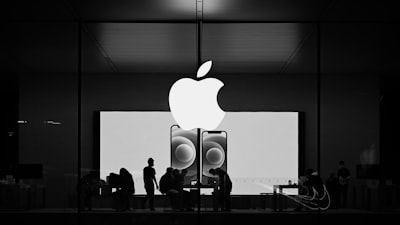
The appointment of John Ternus as the new CEO of Apple, scheduled for September 2025, marks a milestone in the evolution of the Cupertino company. Tim Cook, who has led the firm for over a decade, will move to a seat on the board of directors, passing the baton to an executive with a solid track record in hardware development and strategic project leadership, such as the MacBook Neo and the iPhone 17 series. This transition is not merely a change of names; it represents a bet on continuity of a philosophy that has cemented Apple's dominance in the consumer market and positioned it to challenge emerging giants like OpenAI.
Apple's current situation is outstanding. Its products maintain growing market share, from Macs to iPhones, and the recent launch of the iPhone 17 has confirmed a sustained growth trend. Even memory-driven price inflation has not dampened demand. The MacBook Neo remains the best-selling leader on Amazon, with six of the top ten slots held by Apple machines. Meanwhile, analysts from Counterpoint and IDC note that iPhone shipments continue to rise while other manufacturers decline. The upcoming generation of operating systems, the 27 series, is already receiving very favorable reviews in beta, highlighting its stability and performance. In the field of artificial intelligence, Apple has managed to differentiate itself with a focus on edge-AI, moving away from big frontier model bets and winning converts among industry experts.
But the most significant move for the future is the lawsuit against OpenAI. Although the judicial outcome is uncertain, the strategic impact is evident: Apple reinforces its identity as a protector of its intellectual property and positions itself as the original hardware reference against OpenAI's efforts to enter that territory. The legal action, likely endorsed by Ternus himself, seeks to sow doubt in public perception. As Joe Abercrombie wrote, 'A man is measured by his enemies.' OpenAI thus becomes Apple's new existential bugbear, following in the footsteps of Microsoft Windows, Real Networks, Adobe Flash, Android, and Samsung. This strategy of definition by opposition has been a constant in Apple's history and, under Ternus's leadership, will intensify.
In this context of change and competition, companies of all sizes need to rethink their technological infrastructure. The transition to cloud environments, the adoption of artificial intelligence, and data protection are fundamental pillars. This is where companies like Q2BSTUDIO play a crucial role. This software and technology development firm offers solutions that enable organizations to adapt to new paradigms, whether through custom software that optimizes internal processes, or by integrating cloud services such as AWS and Azure that ensure scalability and efficiency.
Artificial intelligence is not just a battleground for tech giants; it is a tool any business can leverage. Q2BSTUDIO develops AI-based systems capable of automating tasks, analyzing data, and improving decision-making. Cybersecurity, meanwhile, has become an unavoidable priority: companies must protect themselves against increasingly sophisticated threats. With pentesting and consulting services, Q2BSTUDIO helps build solid defenses. Furthermore, Business Intelligence, especially with tools like Power BI, allows transforming data into strategic information. AI agents, one of the latest trends, can act as virtual assistants managing complex workflows, and Q2BSTUDIO is already working on pioneering implementations in this area.
Returning to Apple, the new CEO inherits a company at its peak, but with notable challenges. Talent retention is a weak point Ternus must address, especially when OpenAI is accused of trying to poach Apple engineers through what could be considered industrial espionage. If Apple manages to prove these practices, it will not only protect its human capital but also reinforce its narrative of originality. Doubt, as a strategic weapon, is already sown: 'If OpenAI's designers are so good, why do they need to steal them from Apple?'
Apple's immediate future includes new product designs, new families, and the celebration of the twentieth anniversary of the iPhone. All under Ternus's baton, a leader who promises continuity but also audacity in defending the brand's identity. For companies observing this transition, the lesson is clear: technological innovation must be accompanied by a solid intellectual property strategy, a decisive commitment to AI, and a robust cloud infrastructure. On that path, having experienced technology partners like Q2BSTUDIO makes the difference between adapting or falling behind. The era of John Ternus at Apple has already begun, and the corporate world is preparing to write the next chapter of this story.