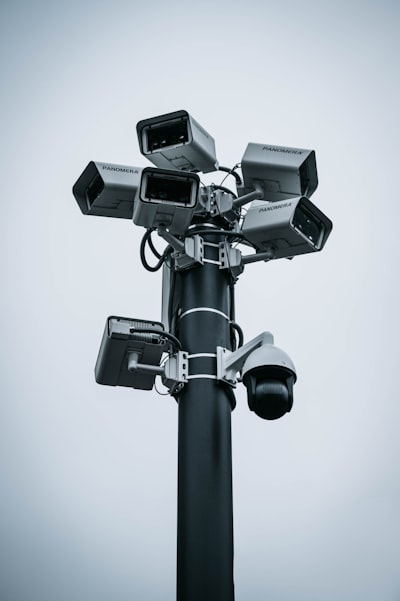
A recent report by Dutch intelligence services (AIVD and MIVD) has revealed that at least one Russian intelligence service is exploiting vulnerabilities in internet-connected IP cameras to spy on military transport routes, weapons shipments bound for Ukraine, and the locations of NATO troops. This attack, affecting multiple European countries, demonstrates how everyday devices become entry points for sophisticated espionage operations. Beyond the geopolitical alarm, the case raises technical and business challenges that companies must urgently address.
IP cameras often come with insecure factory settings: default passwords, open ports, and lack of communication encryption. Russian actors have exploited precisely these weaknesses, accessing live feeds and extracting critical information without needing complex malware. For an organization dependent on military logistics, this is like having a spy in the corridor. But the problem is not exclusive to defense: any company using IoT devices without a comprehensive security approach faces the same risk.
From a technical perspective, the solution lies in implementing robust architectures that segment networks, enforce multi-factor authentication, and keep firmware updated. This is where custom software development plays a crucial role. Companies like Q2BSTUDIO design personalized software that integrates security layers from the design phase, ensuring every connected device has a managed lifecycle. Additionally, the cloud offers a controlled environment: by migrating infrastructure to cloud AWS/Azure, granular access policies and continuous monitoring can be applied.
Artificial intelligence (AI) has become an indispensable ally. Detection systems based on «AI agents» can analyze anomalous traffic patterns in camera networks, triggering alerts before an attack materializes. For example, an AI agent trained on normal video surveillance behavior can identify unauthorized access or suspicious transmissions to unknown IP addresses. This capability is key to anticipating threats like the one described by Dutch intelligence.
Another relevant aspect is data analysis. The information extracted by spies —routes, schedules, supply volumes— has immense strategic value. Similarly, companies can use Business Intelligence (BI) tools like Power BI to visualize and protect their own supply chains. At Q2BSTUDIO we offer BI/Power BI solutions that allow organizations to monitor logistics in real time, detect deviations, and react to potential intrusions. Cybersecurity is not just a firewall: it is a continuous flow of data and decisions.
The news of hacked IP cameras in Europe and Ukraine should serve as a catalyst for all industries to review their security posture. Every connected device is a potential entry point. Investment in cybersecurity —from pentesting to implementing zero-trust architectures— is no longer optional. Companies that integrate custom development, cloud, AI, and BI into their security strategy will be better prepared to face advanced threats, whether from nation-states or criminal actors.
In conclusion, the massive hacking of IP cameras by Russia underscores the fragility of global digital infrastructure. The response cannot be purely technical: it requires a cultural shift toward security by design. Q2BSTUDIO, as a software and technology development company, is committed to helping its clients build resilient systems, where every camera, every server, and every line of code contributes to a trustworthy digital ecosystem. Hybrid warfare is also waged in cyberspace, and the best defense is an architecture designed to anticipate the enemy.