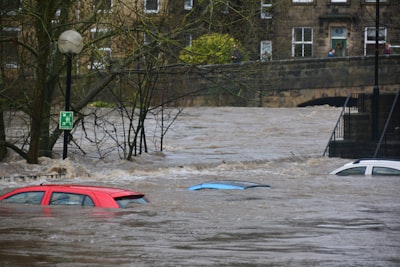
Climate change is not a distant threat: it is a reality already altering weather patterns and increasing the frequency of extreme events such as pluvial floods. In the United States, these rainfall-driven floods account for 45% of National Flood Insurance Program (NFIP) claims, but predicting them accurately remains a major technical challenge. Traditional models either operate at coarse resolutions, are limited to specific regions, or require computational power that makes them impractical for daily continental-scale use. To address this problem, a team of researchers has developed DELUGE, a multimodal deep learning framework that predicts pluvial flood damage at ~1 km resolution and national scale, trained on spatially and temporally corrected NFIP claims (2017-2022). But beyond the scientific breakthrough, this case illustrates how artificial intelligence, when combined with an interpretable architecture and well-curated data, can transform risk management and open opportunities for technology companies like Q2BSTUDIO, specialized in custom software development and AI solutions.
The key to DELUGE lies in its modular structure, which breaks risk down into hazard, exposure and vulnerability components, and in its architectural innovation: two parametric modules —a Value Modulator and a Temporal Modulator— conditioned on terrain descriptors and embeddings from a foundational model called AlphaEarth. These modules not only improve predictive performance but also expose directly inspectable hydrological response parameters, providing interpretability by design. When evaluated using a spatial block holdout, DELUGE outperformed classical algorithms Random Forest, XGBoost and LightGBM by 9% to 30% in dollar-weighted area under the precision-recall curve (PR-AUC), a metric that penalizes errors on high-cost claims, which are the ones that truly matter for insurers and emergency managers.
This approach is not only relevant for hydrology: it demonstrates that it is possible to integrate foundational geographic embedding models into geospatial prediction tasks, a transferable pattern for other domains. And this is where companies like Q2BSTUDIO find fertile ground. The company, with experience in artificial intelligence, can help organizations implement similar risk prediction systems tailored to their needs. For example, by combining satellite data, IoT sensors and Deep Learning models, it is possible to build predictive dashboards that alert about urban floods, landslides or wildfires, all hosted on cloud infrastructures such as AWS or Azure, services that Q2BSTUDIO masters and offers as part of its value proposition.
Pluvial flood prediction is just one of many applications where AI can make a difference. But for these systems to be adopted by insurers, governments and businesses, accuracy alone is not enough: they must be interpretable, scalable and secure. Cybersecurity is a critical pillar when handling sensitive data from critical infrastructures and claims. That is why Q2BSTUDIO integrates security practices into every project, from architecture design to production deployment. Moreover, the ability to automate data analysis processes through AI agents —autonomous systems that execute repetitive tasks of extraction, transformation and loading— allows organizations to focus on strategic decision-making.
Another key aspect is data visualization and analysis. DELUGE models generate daily predictions at kilometer resolution, which means a huge volume of information. For response teams to act quickly, Business Intelligence (BI) tools are needed to transform that data into interactive charts, alerts and dashboards. Q2BSTUDIO develops solutions with Power BI, Tableau or open-source platforms, adapted to each client's workflow. For example, an early warning system for a city could integrate DELUGE predictions with real-time weather data and display them on an interactive map that managers consult from a tablet.
The technology behind DELUGE also illustrates how foundational models can be fine-tuned for specific tasks without training from scratch, reducing computational costs and accelerating time to production. This is especially relevant for small and medium enterprises that want to adopt AI without making huge investments. Q2BSTUDIO offers consulting and turnkey development services, from problem definition to model maintenance, including integration with legacy systems and team training.
In short, DELUGE is not just an advance in data science applied to natural disasters: it is a tangible example of how artificial intelligence, well designed and with an interpretable architecture, can generate real value. And for that value to reach organizations, it is necessary to have technology partners who understand both the model and the business. Companies like Q2BSTUDIO, with its portfolio of services in cloud AWS/Azure, cybersecurity, BI and custom application development, are ideally positioned to help clients leverage these advances. The next flood cannot be prevented, but it can be predicted —and with the right technology, its impact can be minimized.