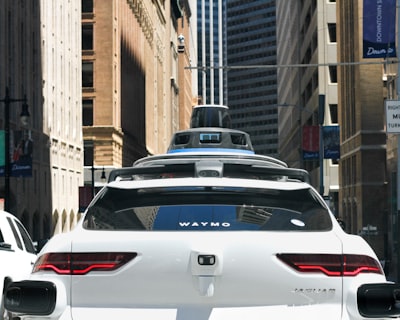
Autonomous driving based on large language models (LLMs) has shown impressive ability to follow instructions and reason about complex scenes. However, the main bottleneck remains inference latency: a 7-billion-parameter model cannot run at the speed a vehicle needs to control steering and acceleration every 50 milliseconds. Current solutions often skip simulation ticks, reusing old commands and generating control outputs that ignore the newest data up to half the time. This trade-off between accuracy and speed severely limits performance on realistic routes.
Facing this challenge, an innovative architecture emerges that separates slow reasoning from fast reaction. The slow system, a frozen 7B vision-language backbone, processes navigation instructions and visual history at low frequency but exposes its per-layer key-value cache as a persistent scene representation. The fast system, a lightweight action expert, attends to that cache and to the current camera frame at every simulation tick, generating waypoints in a single forward pass. The key is to train the expert with randomized staleness, simulating the time lag that occurs in real deployment, thus aligning training with asynchronous execution.
This fast-slow architecture not only eliminates the need to skip ticks, but also ensures that every control command is based on the most recent observation. In tests with the CARLA environment and LangAuto-Short routes, the system produces fresh control every 50 ms, improving route completion from 37.0% (frame-skipping baseline) to 94.0%. An ablation analysis reveals that the expert alone raises the driving score, but per-tick freshness adds an additional jump from 82.1% to 94.0% and reduces red-light violations by one third. Moreover, trained on a single town, the expert transfers zero-shot to two unseen towns, maintaining 84-94% completion versus 31-41% for the baseline. Open-loop waypoint error is reduced nearly four times compared to the backbone's own action head, with a per-tick cost of only 32 ms on a consumer GPU.
From a technical perspective, this approach represents a paradigm shift in deploying artificial intelligence in real-time critical systems. Instead of forcing a huge model to run at high frequencies, tasks are decoupled: semantic reasoning and context understanding happen at low frequency, while trajectory prediction and motor control run at high frequency using precomputed representations. This design is not only more efficient, but also more robust against network latency and variations in computational load.
In the business context, this architecture has direct implications for autonomous mobility solutions, but also for any application that requires combining complex reasoning with real-time response, such as service robots, virtual assistants, or industrial monitoring systems. The key is designing the interface between the two systems: the shared knowledge cache. At Q2BSTUDIO, as a company specialized in artificial intelligence and cloud services AWS/Azure, we understand that integrating large models with lightweight systems requires careful orchestration of infrastructure. For example, deploying the backbone on cloud instances with dedicated GPUs and the expert on edge devices with lightweight accelerators enables an asynchronous workflow that maximizes decision freshness without sacrificing reasoning capability.
Furthermore, the randomized staleness training technique is transferable to other domains where a lag exists between representation generation and usage. In real-time analytics projects, such as Business Intelligence (BI) dashboards or cybersecurity systems, asynchronous updating of historical data combined with immediate event processing can significantly improve responsiveness. Indeed, at Q2BSTUDIO we apply similar principles when developing custom software that requires processing large volumes of data in the cloud and reacting locally with low latency.
Another relevant aspect is the zero-shot transfer capability of the expert to unseen environments. This suggests that the backbone cache encodes sufficiently generic representations of the driving space, allowing the expert to learn adaptable policies without costly retraining. In practice, this drastically reduces data requirements for new scenarios, a critical factor in the adoption of autonomous systems.
Regarding cloud infrastructure, the ability to run the backbone on AWS or Azure with auto-scaling and the expert on the vehicle or edge minimizes operational costs. The latency of 32 ms per tick on a consumer GPU shows that it is viable even with affordable hardware, lowering barriers to entry for startups and research centers. At Q2BSTUDIO, we offer consulting and development of artificial intelligence and cloud solutions that integrate these asynchronous architectures, helping companies implement real-time decision systems without compromising accuracy.
Finally, it is worth noting that safety and cybersecurity are fundamental aspects of autonomous systems. A fast-slow system can be designed with security layers: the lightweight expert, having a smaller attack surface, can be audited more easily, while the backbone, running in the cloud, can benefit from advanced cybersecurity measures such as encryption in transit, multi-factor authentication, and continuous monitoring. Q2BSTUDIO integrates these practices into all its projects, ensuring that technological innovation is accompanied by the necessary protection.
In summary, the fast-slow asynchronous inference architecture solves one of the most pressing problems of LLM-based autonomous driving: latency. By separating slow reasoning from fast reaction, and training the expert with simulated delays, fresh and efficient control is achieved, multiplying performance. This design philosophy has applications beyond the automobile, in any domain where artificial intelligence must combine deep understanding with immediate response. At Q2BSTUDIO, we are committed to bringing these solutions to our clients, integrating artificial intelligence, cloud, and custom software development to transform ideas into operational realities.