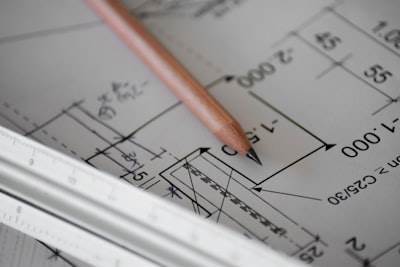
Artificial intelligence is transforming entire sectors, but there is one field where multimodal models still face a major challenge: interpreting real construction drawings. Unlike natural images or simplified interior layouts, construction drawings are technical documents that combine abstract geometry, symbolic notation, data tables, manual annotations, and specialized text. Until now, there was no benchmark to measure the ability of visual language models in this domain. With the arrival of DrawingVQA, the first benchmark specifically designed to evaluate multimodal models on real construction drawings, a new frontier opens for process automation in civil engineering, architecture, and other technical disciplines.
DrawingVQA is not just a dataset: it is a rigorous measurement instrument. The scientific publication, registered under code arXiv:2607.15418v1, describes a benchmark that includes 33 real issued-for-construction drawings and 92 expert-curated question-answer pairs. The questions are organized into three reasoning levels: perceptual comprehension (identifying basic visual elements), contextual interpretation (relating symbols to their meaning in the drawing), and domain-expert reasoning (applying technical knowledge to solve complex problems). This approach evaluates not only what a model sees, but how it understands and reasons about dense technical information.
The most innovative aspect of DrawingVQA is its dual categorization framework. On one hand, it classifies questions according to seven construction-engineering dimensions: reading dimensions, identifying structural components, interpreting material annotations, analyzing installations, verifying regulations, reading detail drawings, and coordinating between disciplines. On the other hand, it measures them across four cognitive capabilities of AI models: visual perception, language understanding, logical reasoning, and domain-specific knowledge. This dual perspective is the first to explicitly link real engineering workflows with artificial reasoning competencies.
The results from evaluating the most advanced multimodal large language models (MLLMs) on DrawingVQA are revealing: there is a significant gap between AI performance and that of a human expert, especially at the highest reasoning levels. Models succeed in basic perceptual tasks, such as locating a door symbol, but fail dramatically when they need to infer the assembly sequence of a structure from cross-referenced annotations or when they must apply a technical standard not explicitly shown in the drawing. This demonstrates that current multimodal understanding has a bias toward visual-generic content and lacks the semantic depth required by real engineering.
For companies like Q2BSTUDIO, dedicated to custom software development and artificial intelligence solutions, this benchmark represents both a business opportunity and a technical challenge. The ability to automatically interpret construction drawings could be integrated into project management systems, on-site collaboration platforms, or automated inspection tools. In fact, AI agents are already being explored that, fed with real drawings, can answer questions like 'What type of beam is specified on axis 2?' or 'Does the distance between columns comply with seismic regulations?' without human intervention. This requires not only more powerful models but also specialized training data and artificial intelligence processes adapted to the technical context.
Cybersecurity also plays a crucial role in this ecosystem. Construction drawings are sensitive documents containing confidential information about critical infrastructures. When their processing is automated via cloud services, whether on AWS or Azure, it is essential to ensure that data is not intercepted or tampered with. Q2BSTUDIO offers cybersecurity solutions designed to protect these flows, from end-to-end encryption to identity and access management in multicloud environments. Without a solid security foundation, any AI system applied to drawings risks becoming an attack vector.
The analysis of data obtained from drawings, such as measurements, material quantities, or specification compliance, greatly benefits from Business Intelligence tools. With Power BI, for example, it is possible to create dashboards that visualize in real time the status of a construction project based on information automatically extracted from drawings. This synergy between AI, cloud, and BI allows construction companies to make faster, data-driven decisions, reducing errors and cost overruns. Q2BSTUDIO integrates these capabilities into its custom developments, offering platforms that connect drawing interpretation with ERP and project management systems.
Adoption of these technologies is not immediate. A cultural shift is needed in engineering and construction companies, which have traditionally been reluctant to adopt complex digital solutions. However, benchmarks like DrawingVQA provide a clear roadmap: first, measure where current models fail; second, invest in specialized data and models; third, implement solutions that respect real workflows. Companies that take this step will be able to automate repetitive tasks, free their engineers for higher-value work, and ultimately build faster with fewer errors.
From a technical perspective, Q2BSTUDIO is already working on adapting multimodal models for specific domains, using fine-tuning techniques with datasets like DrawingVQA. Experience in custom software development allows each solution to be personalized for the client: from a virtual assistant that answers questions about drawings on a construction site to an automatic compliance verification system. The cloud, whether AWS or Azure, provides the scalability needed to process thousands of drawings simultaneously, while artificial intelligence handles semantic interpretation. All under a cybersecurity umbrella that protects the client's intellectual property.
The future of AI-assisted engineering lies in the ability to understand complex documents such as construction drawings. DrawingVQA has highlighted current shortcomings but also pointed the way forward. For companies that want to lead this transformation, the combination of AI agents, custom applications, secure cloud, and intelligent data analysis will be the key to success. At Q2BSTUDIO, we are ready to accompany that journey, offering technological solutions that not only interpret drawings but transform the way we build the world.