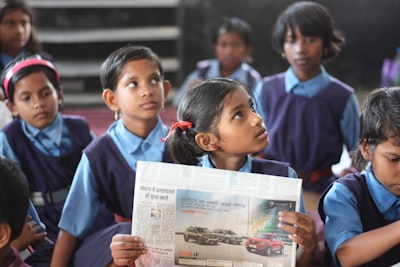
In rural India, the gender gap in science and technology is not just a statistic: it is a reality that limits the future of millions of girls. While globally only 28% of the STEM workforce is female, in communities like those in Maharashtra and Karnataka — where child marriage and family responsibilities outweigh the classroom — female dropout rates spike between ages 11 and 14. To change this dynamic, IEEE, through its Circuits and Systems Society (CASS), launched the Women in Science, Engineering (WiSE) project, an immersive five-day program combining hands-on learning, female role models, and family commitment. This article analyzes how WiSE is transforming lives and what lessons it offers for the global tech industry, including how companies like Q2BSTUDIO can draw inspiration from this model to nurture STEM talent from the ground up.
The WiSE program, funded with USD 80,000 by IEEE CASS, selects 160 to 200 girls each year from rural and tribal areas to attend the Indian Institute of Technology Bombay (IIT-B) campus. There, for one week, participants work in small teams supervised by volunteers and professors. The heart of the program is the Break-Make-Program (BMP) methodology: disassembling devices, understanding how they work, rebuilding them, and improving them. Sessions include bioluminescence with bacteria, autonomous underwater vehicles, and building a remote-controlled robot as the final project. “The idea is to show girls that they can break down a problem and rebuild it with their own hands,” says Rajiv Joshi, project creator and principal researcher at IBM Watson Research Center.
But WiSE’s impact does not end on campus. Each girl receives a construction kit, developed by students from Rajesh Zele’s lab at IIT-B, which she can take home and share with her community. In this way, knowledge multiplies: Sushi Pawar, a participant from the first edition, built a drone during the program and later presented it to Prime Minister Narendra Modi at the national event Pariksha Pe Charcha, proving that a rural girl can reach the highest levels of technological visibility. The program also requires active parental involvement: parents must attend quarterly meetings for at least four years after the program, ensuring they support their daughters’ continued schooling in an environment where education competes with early marriage.
One of WiSE’s pillars are the “Winspirers” — women who have succeeded in STEM or other fields despite similar obstacles. Savita Dakle, a farmer who dropped out after 10th grade, got married, and had two children, built a coalition of over one million female farmers using mobile phones and social media to share information on pricing and crops. Her story resonates with participants because it shows that circumstances do not define possibilities. “WiSE completely changed my perspective,” says Ritu Ravindra Patil, another student. “Meeting those women inspired me to aim for higher education.”
Results, though not yet empirically measured, are promising. Many girls from the 2023 cohort remain in school and have chosen technical careers. Tejswini Manoj Patil, for example, moved from feeling intimidated by science to active confidence: “The hands-on projects showed me that I am capable of solving real-world problems.” And Pallavi Bharti, who initially wanted to be a doctor, discovered a vocation in engineering that she now pursues with determination.
The WiSE model is being replicated by IEEE CASS chapters in Bangalore and Kerala, adapting its components to local needs. Jayesh Tanwani and Suman Dwivedi in Bangalore are already taking STEM outreach to remote schools in Karnataka. Alex James in Kerala has integrated the BMP approach into his AI hardware lab at Digital University Kerala. Rajiv Joshi and Rajesh Zele hope the concept will cross borders: they have received requests from countries in Asia, Africa, and Europe. “We want to make a difference in young women’s lives,” says Zele. “It’s about giving them the skills to stand on their own feet and the information to make good decisions.”
This early STEM education approach has direct parallels with how tech companies approach talent development. At Q2BSTUDIO, for instance, building custom software applications, implementing artificial intelligence solutions, and automating processes require professionals with a strong science and technology foundation. The gender gap remains a global challenge: according to the World Economic Forum, only 28% of the STEM workforce are women. Programs like WiSE not only attack that inequality at its root, but also demonstrate that inclusion begins long before university, when curiosity can still be sparked and cultural biases countered.
For the industry, replicating this model means investing in mentorship programs, accessible educational kits, and partnerships with academic institutions. Companies that develop custom software, cloud computing with AWS/Azure, cybersecurity, and business intelligence with Power BI can benefit from an ecosystem where more women enter tech careers. Gender diversity is not just a matter of social justice; it also drives innovation and profitability. A team with diverse perspectives solves problems more creatively and adapts better to global markets.
WiSE ends its formal cycle in 2025, but its legacy lives on in every girl who now dreams of being an engineer, scientist, or developer. The next time a tech company seeks female talent, it might find it in a Maharashtra village where a teenager learned to build robots at fifteen. As Joshi says: “Talent is universal, but opportunity is not.” And it is the industry’s responsibility to create those opportunities, from educational programs to inclusive workplaces. At Q2BSTUDIO we work every day to make technology more accessible and diverse, offering services in cross-platform software development, artificial intelligence, and process automation. Because the future of STEM is built today, and we all have a role to play.