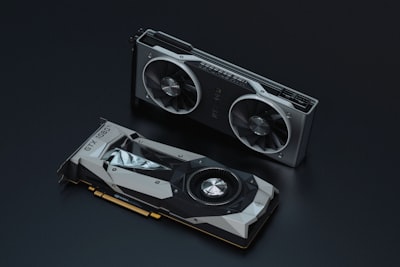
Monitoring temperatures on modern graphics cards is a critical task for both overclocking enthusiasts and professionals seeking stability under prolonged workloads. Nvidia has traditionally kept some secrecy around VRAM temperatures, but a new community-developed plugin has managed to unlock this information on the upcoming RTX 50 series. This tool, which integrates with monitoring software such as HWInfo or GPU-Z, exposes the internal thermal sensors of the GDDR7 modules that will equip these next-generation GPUs.
The relevance of this plugin goes beyond mere technical curiosity. With increasing memory frequencies and chip densities, VRAM has become a hot spot that can limit performance or even cause instability if not managed properly. Being able to visualize the temperature of each memory module allows users to adjust fan curves, reduce voltages, or modify chassis airflow to avoid thermal bottlenecks. In this context, custom software development becomes a key piece to create tools that adapt to the specific needs of each hardware, and this plugin is a clear example of how the community can innovate beyond official solutions.
From a business perspective, advanced component monitoring opens opportunities to integrate predictive analysis systems. For example, a company managing a fleet of workstations with RTX 50 could use VRAM temperature data to anticipate failures and schedule proactive maintenance. This is where Business Intelligence solutions with Power BI come into play, allowing visualization of thermal trends over time and correlation with application performance. Q2BSTUDIO, as a software and technology development company, offers services ranging from creating custom applications to capture this data to integrating it with cloud platforms like AWS or Azure, facilitating real-time storage and processing.
Cybersecurity also plays a relevant role in this ecosystem. By exposing previously hidden sensors, the plugin could be used by malicious actors to extract system information or even for thermal denial-of-service attacks. Therefore, any corporate implementation must incorporate robust protection measures. Q2BSTUDIO includes in its portfolio cybersecurity and pentesting services to ensure that monitoring applications do not become attack vectors. Additionally, artificial intelligence can be applied to detect anomalous patterns in temperature readings that indicate a possible system compromise.
In the overclocking realm, the ability to read VRAM temperature accurately allows users to fully exploit the potential of RTX 50 without fear of damaging the modules. Enthusiasts are already sharing guides on how to adjust memory parameters using the plugin data, and some are even developing scripts that automate frequency reduction when critical thresholds are exceeded. This type of automation, combining hardware and software, is a field where Q2BSTUDIO can contribute its expertise in software process automation, creating intelligent agents that monitor hardware and make real-time decisions.
Artificial intelligence, in the form of autonomous agents, could analyze VRAM temperature curves and propose optimal overclocking configurations based on usage history and environmental conditions. For instance, an AI agent could learn that in summer, with higher ambient temperatures, it is preferable to slightly reduce memory voltage to maintain stability. These solutions are exactly the type of innovation that Q2BSTUDIO drives, combining its knowledge in cloud computing (AWS and Azure) with machine learning models to offer differential value to its clients.
From a technical standpoint, the plugin relies on reading internal registers of the RTX 50 memory controller, leveraging open interfaces that Nvidia has left in its firmware for debugging. Although the company does not officially publish these APIs, the reverse engineering community has managed to map the sensors and create virtual drivers that translate signals into readable data. This process requires deep knowledge of GPU architecture and communication standards like I2C or SMBus, skills that are also fundamental in custom application development for enterprise environments.
The arrival of this plugin coincides with the expected launch of the RTX 50 series, which promises innovations in GDDR7 memory with speeds up to 32 Gbps. Thermal management of these memories is one of the most important design challenges, and having access to their temperatures will allow users to validate whether the cooling systems offered by manufacturers are sufficient or if additional improvements are needed. In this sense, companies working with GPU-intensive workloads, such as 3D rendering, scientific simulation, or AI model training, will greatly benefit from being able to monitor and optimize each component.
Q2BSTUDIO, with its experience in artificial intelligence and AI agents, can help organizations implement intelligent monitoring systems that not only collect data but also act upon it. For example, a system could detect that a VRAM module temperature is rising abnormally and automatically reduce the GPU workload or activate an additional fan via an IoT device. This is possible thanks to the integration of cloud services like AWS IoT Core or Azure IoT Hub, which connect physical hardware with business logic in the cloud.
In conclusion, the new plugin for revealing VRAM temperature on Nvidia RTX 50 is not only a useful tool for overclockers but also opens the door to more advanced business applications. Precise thermal monitoring improves reliability, extends equipment lifespan, and optimizes performance. Q2BSTUDIO, as a technology partner, offers solutions ranging from custom application development to cybersecurity, including artificial intelligence and data analysis with Power BI, all on robust cloud infrastructures. For those looking to push their systems to the limit or manage GPU fleets efficiently, this plugin is just the beginning of a new era where custom software and automation will make the difference.