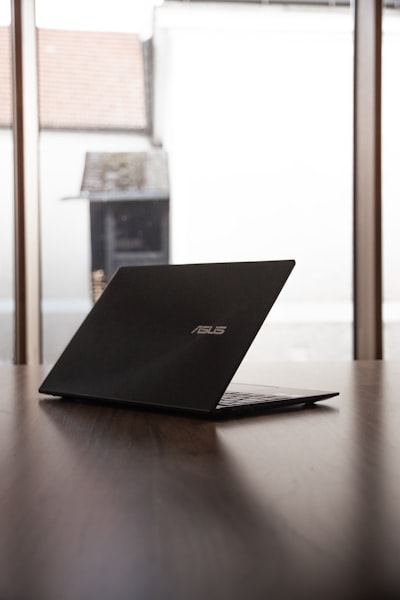
The Asus Zenbook A16 arrives on the market with the promise of being a definitive tool for business productivity. With a Qualcomm Snapdragon X2 Elite Extreme processor, 48 GB of RAM, and a 16-inch 3K OLED display, this laptop positions itself as a serious contender in the premium segment. However, beyond the technical specifications, the key question arises: is it truly the best ally for professionals who need performance, battery life, and mobility? In this review, we explore its capabilities from a technical and business perspective, linking its strengths to the real needs of modern organizations.
Designed with a 'ceraluminum' chassis weighing only 2.87 pounds (1.3 kg), the Zenbook A16 surprises with its lightness in a 16-inch form factor. Its Zabriskie Beige finish, though polarizing, offers a pleasant thermal feel and meets MIL-STD 810H certification. Connectivity includes two USB4 ports, HDMI 2.1, an SD card reader, and an audio jack, though it lacks an Ethernet port. For professionals on the go, this configuration is sufficient for connecting peripherals and external displays, but those requiring wired networks will need adapters.
Where this device truly excels is in office productivity. In the Procyon Office benchmark, the Snapdragon X2 Elite Extreme achieved scores surpassing most laptops with previous-generation Intel and AMD processors. This translates to a smooth experience when handling applications like Excel, Word, or PowerPoint, even with heavy documents and multiple browser tabs open. Battery life is another strong point: with 18 hours of video playback and over 8 hours in an office workload, the Zenbook A16 allows a full workday without needing a power outlet. For companies developing custom software, this combination of performance and battery life is ideal for development teams that need to run virtualized environments or compile code without interruptions.
The 2880 x 1800 OLED display with a variable 120 Hz refresh rate offers deep blacks and vibrant colors, certified VESA DisplayHDR True Black 1000. Design and multimedia editing professionals will find a precise tool here, though the lack of a touchscreen may be a limitation for certain workflows. The six-speaker audio system is exceptional, delivering clean and powerful sound that surpasses most laptops, perfect for video conferences or presentations without additional headphones.
However, not everything is perfect. The review unit experienced battery issues on a first sample and graphics drivers that would not update properly, a sign that Asus’s quality control might be inconsistent. In gaming, performance is disappointing: at 1080p with low settings, Cyberpunk 2077 barely reaches 54 FPS, far from the 60 FPS needed for a smooth experience. This is not critical for a productivity-focused laptop, but it does limit its versatility. Additionally, the lack of a dedicated number pad on a 16-inch device is an omission that accountants or financial analysts will notice.
From a business perspective, the Zenbook A16 can integrate into environments using cloud AWS/Azure services, as its Wi-Fi 7 and Bluetooth 5.4 connectivity ensure fast transfers and low latency. The 80 TOPS NPU AI capabilities allow running local language models (LLMs) without relying on the cloud, though in practice, the lack of proper drivers for LM Studio limited testing. Q2BSTUDIO, as a software development and technology company, recommends this laptop for teams working with BI/Power BI, as its processor handles large datasets and real-time visualizations without trouble. Furthermore, its robustness and battery life make it a solid candidate for deploying AI agents in field environments where portability is crucial.
In terms of cybersecurity, the Zenbook A16 includes Windows Hello facial recognition and a TPM chip but lacks a physical camera shutter. For professionals handling sensitive data, Q2BSTUDIO recommends complementing the device with cybersecurity software solutions, such as corporate VPNs and password managers. The 48 GB of soldered RAM (non-upgradable) is sufficient for light virtualization, but those needing more capacity should consider other options.
Compared to competitors like the Acer Swift 16 AI or Dell XPS 16, the Zenbook A16 offers the best battery life and superior multi-threaded CPU performance, but falls short in integrated graphics and price. At a cost of $2,199.99 in its top configuration, it is not a budget purchase, but for professionals prioritizing mobility and battery life, it represents a justified investment. Q2BSTUDIO, a specialist in process automation, especially values the combination of lightness and processing power for remote deployments.
In conclusion, the Asus Zenbook A16 is an excellent laptop for office productivity, with outstanding display and audio, and a battery that makes a difference. However, quality control issues and limited graphics performance prevent it from being a perfect product. It is not the best for everyone, but it is for those who need a light, powerful, and exceptionally long-lasting device for working outside the office. If your company is looking to develop custom software or implement cloud solutions, this laptop can be a solid foundation, as long as it is complemented with the right tools.