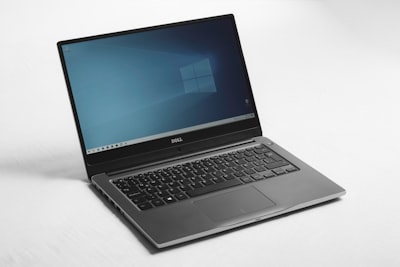
In an unexpected move, Microsoft has released an out-of-band (OOB) update to fix a serious compatibility issue affecting specific Dell models. The bug, caused by a faulty interaction between the Intel Innovation Platform Framework driver and the new Windows USB-C Connection Manager, led to drastic temperature increases, abnormal power consumption, and random shutdowns. The company quickly responded by pulling the July Patch Tuesday security update for affected devices and releasing patches KB5121767 (for Windows 11 25H2 and 24H2) and KB5121768 (a hotpatch for Enterprise) to unblock the installation of cumulative security fixes.
This incident once again highlights the fragility of modern ecosystems, where integration between hardware, firmware, and operating system demands extremely fine quality control. Microsoft defended the behavior changes as 'variations in performance, power consumption, or system behavior,' a description that, according to industry sources, fell short of reality: machines became unstable, overheated, and in many cases stopped working until manually cooled. The root cause was introduced in the previous June update, indicating that pre-release testing failed to detect the incompatibility with Intel drivers used in Dell enterprise laptops.
Microsoft's reaction speed is certainly commendable. However, the need for an OOB patch — the first in several months — reveals that the Windows chief's promise of sustained quality improvement has not yet been fully realized. For organizations relying on Windows environments, such incidents generate operational costs (downtime, technical support) and also risk productivity and security, as affected devices temporarily miss the latest vulnerability fixes.
From a business perspective, these situations reinforce the need for technology providers that understand modern architectural complexity. Q2BSTUDIO, as a software development and technology company, offers solutions that go beyond simple maintenance: custom software development that cleanly integrates with Windows, Linux, and cloud ecosystems, minimizing compatibility risks. When a third-party driver causes a systemic failure, having well-designed software tested in heterogeneous environments makes the difference between agile recovery and operational chaos.
Moreover, the cloud plays a crucial role in mitigating these problems. Companies that have migrated their workloads to cloud AWS or Azure can maintain business continuity even if local endpoints are temporarily out of service. Desktop virtualization, application streaming, and managed update services reduce reliance on local hardware integrity. Q2BSTUDIO helps clients design cloud architectures that absorb such contingencies without the end user noticing the disruption.
The role of artificial intelligence in early anomaly detection has also become indispensable. AI-based monitoring systems can identify overheating or abnormal consumption patterns before they become critical incidents. Q2BSTUDIO's AI agent solutions allow automating responses, such as scheduled restarts or preventive shutdowns, that protect hardware while waiting for an official patch. The combination of proactive cybersecurity and intelligent device management is now a competitive advantage.
In the business intelligence domain, tools like Power BI are essential for visualizing the state of the device fleet. A well-built dashboard can show in real time which machines are applying patches, which have thermal issues, and how performance evolves. Q2BSTUDIO integrates Power BI with data sources from Azure, AWS, and even local logs to offer a 360-degree view of the IT estate's health. This analytical capability enables informed decisions before a minor problem escalates into a crisis.
Cybersecurity, of course, cannot be overlooked. An overheating machine that shuts down unexpectedly can cause data loss or leave systems exposed during reboots. Q2BSTUDIO's cybersecurity solutions include continuous pentesting and threat monitoring, ensuring that even when hardware fails, data remains encrypted and protected. Microsoft's OOB update is an example of how collaboration between hardware manufacturers, driver developers, and the Windows ecosystem is essential, but it also makes clear that companies must have their own resilience layer.
For IT teams managing fleets of thousands of Dell laptops, the lesson is twofold: on one hand, updates must be tested on a pilot group before mass deployment; on the other, automation tools are needed to quickly roll back changes. Q2BSTUDIO's process automation platforms can orchestrate these tasks, integrating PowerShell scripts, Windows Update APIs, and ticketing systems for an immediate response.
Looking ahead, the arrival of Windows 11 25H2 and the growing complexity of Intel drivers demand a more rigorous approach to regression testing. Microsoft has promised to improve its internal processes, but in the meantime, companies must protect themselves with a multi-layer strategy: quality hardware, custom software, cloud infrastructure, artificial intelligence, and data analytics. Q2BSTUDIO offers precisely that combination, helping organizations not only react to problems but also anticipate them.
In summary, although Microsoft's OOB update resolves the immediate overheating issue on Dell PCs, the incident underscores the importance of comprehensive technology management. Investment in custom applications, cloud services, cybersecurity, BI, and AI agents is not a luxury but a necessity for any company wanting to maintain operations in a landscape of constant updates. Q2BSTUDIO positions itself as the technological ally that turns these challenges into opportunities for continuous improvement.