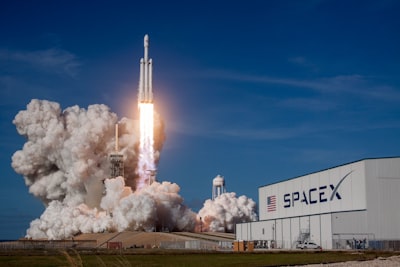
The potential inclusion of SpaceX in the Nasdaq-100 index has sparked intense debate among investors and analysts. Elon Musk's company, valued at around $1.77 trillion in its hypothetical IPO, represents a high-risk bet that, if realized, could alter the composition of index funds tracking this benchmark. Can a single company destabilize the most popular investment vehicle for retail savers? To answer that, we need to understand how index funds work, what the entry of a giant like SpaceX implies, and what role technology plays in managing these risks.
Index funds are built on a principle of passive diversification: they replicate an index weighted by market capitalization. The larger a company's market value, the greater its weight in the fund. If SpaceX enters the Nasdaq-100 with a capitalization surpassing giants like Apple or Microsoft, its weighting could reach 10% or more. This means any investor holding an index fund linked to that index would be investing a significant portion of their portfolio in a company with extreme volatility and a business model subject to regulatory and technological uncertainties.
Historically, index funds have been considered safe havens because they spread risk across hundreds of companies. However, concentration in a few stocks has been rising. In the Nasdaq-100 itself, the top five companies already account for nearly 40% of the index. If SpaceX joins, that concentration could exceed 50%, contradicting the diversification philosophy these products promote. The paradox is clear: an instrument designed to minimize risk may end up exposing investors to a non-trivial tail risk.
For fund managers, the entry of a company like SpaceX poses both technical and strategic challenges. Rebalancing algorithms must adjust weights daily, and such a massive inclusion can cause temporary deviations from the benchmark. This is where technology plays a crucial role. Companies like Q2BSTUDIO offer custom software solutions that simulate the impact of extraordinary events on indexed portfolios. Using AI models and intelligent agents, it is possible to anticipate the effects of an IPO of this magnitude and adjust hedging strategies before the official rebalancing occurs.
Furthermore, cybersecurity becomes critical when handling multi-million-dollar portfolio data. Cyberattacks targeting investment funds have increased in recent years, and the entry of a high-profile asset like SpaceX could attract even more attention from cybercriminals. Cloud platforms from AWS and Azure provide scalable, secure infrastructure for hosting fund management systems, while BI and Power BI tools enable real-time visualization of concentration risk exposure. Q2BSTUDIO, with its experience in system integration, helps firms implement these solutions robustly.
From the retail investor's perspective, the entry of SpaceX into an index fund does not necessarily spell disaster, but it does mean increased exposure to a high-risk asset. The solution is not to abandon index funds, but to complement the strategy with personalized analysis. AI agents developed by Q2BSTUDIO can automate weight monitoring and suggest real-time adjustments, allowing the investor to maintain a balanced portfolio without constant oversight. In fact, many independent asset managers already use such tools to offer index portfolios with an active twist, known as smart beta.
The debate over SpaceX and index funds also has regulatory implications. Supervisory bodies, such as the SEC in the United States, might review maximum weighting rules in indices to prevent excessive concentration. However, any regulatory change will take time, and technology offers immediate solutions. Process automation, powered by AI agents and business intelligence platforms, enables managers to react swiftly to events like the inclusion of a $1.77 trillion company in a benchmark index.
In conclusion, the arrival of SpaceX in index funds is a reminder that no investment vehicle is without risk. The key lies in actively managing those risks using advanced technological tools. Q2BSTUDIO, as a software and technology development company, offers precisely that: custom software capabilities, artificial intelligence, cybersecurity, cloud computing, and business intelligence that allow investors and fund managers to navigate increasingly complex market environments. Far from fearing the entry of SpaceX, informed investors should prepare to seize the opportunities offered by financial and technological innovation.