The semiconductor industry faces one of its biggest bottlenecks in ASML’s EUV scanner production, and the key lies in Zeiss’s ability to manufacture its precision optical systems. The German company has announced a significant expansion of its plant in Oberkochen, Germany, aiming to increase output of the lenses and mirrors needed for extreme ultraviolet lithography. This expansion not only seeks to relieve current constraints but also to prepare the ground for the next generation of EUV machines, essential for 3nm and 2nm nodes.
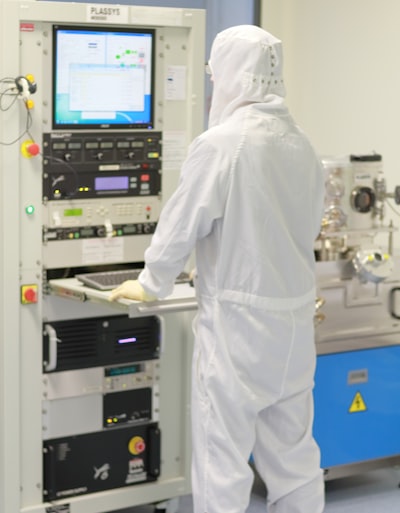
The new infrastructure includes state-of-the-art cleanrooms, automated assembly lines, and metrology laboratories. Production capacity is expected to increase by up to 40% over the next two years. However, the complexity of these optical systems requires extreme quality control and manufacturing processes that integrate advanced sensor technology and data analysis. This is where software solutions play a critical role.
To manage the enormous amount of data generated by thousands of sensors in the plant, Zeiss could benefit from cloud platforms such as AWS or Azure. Companies like Q2BSTUDIO offer specialized cloud services that enable scalable storage and real-time processing, facilitating the creation of digital twins of production lines. Furthermore, artificial intelligence is becoming an indispensable tool for predicting failures in optical equipment and optimizing manufacturing parameters.
In this context, the development of autonomous AI agents capable of adjusting cleanroom conditions in real time or detecting anomalies on mirror surfaces can make the difference between a defective batch and a successful one. Q2BSTUDIO, as a software and technology development company, has implemented similar solutions in high-precision industrial environments, combining AI with cybersecurity to protect intellectual property.
Cybersecurity is, in fact, another fundamental pillar. Semiconductor fabrication plants are attractive targets for cyberattacks aiming to steal designs or disrupt production. A comprehensive approach including pentesting, continuous monitoring, and network segmentation is essential. Q2BSTUDIO provides cybersecurity services that help companies like Zeiss keep their optical systems safe from external threats.
Business analytics also plays a strategic role. With Business Intelligence tools like Power BI, plant managers can visualize key performance indicators, from optical yield rates to energy consumption, and make data-driven decisions quickly. Integrating these dashboards with production systems enables agile and data-based management.
Beyond the physical expansion, the real challenge is digital: automating processes, applying predictive AI, and ensuring cybersecurity across the entire supply chain. Zeiss has already collaborated with ASML on optical simulation models, but adopting cloud platforms and custom software solutions could further accelerate production.
Meanwhile, the semiconductor market is experiencing unprecedented demand driven by generative AI, data centers, and automotive. Each new EUV scanner coming off ASML's assembly line directly depends on Zeiss's ability to deliver its optical systems. Thus, any improvement in Zeiss's production has a multiplier effect across the entire industry.
The German plant expansion represents a step forward, but it won’t be enough on its own. Digitizing processes through custom applications, like those developed by Q2BSTUDIO, will allow Zeiss to optimize every stage of the manufacturing process. From managing raw optical material inventories to AI-assisted quality control, custom software becomes the invisible enabler of EUV technology.
In conclusion, Zeiss's expansion is positive news for the chip supply chain, but its success will depend on how quickly it integrates advanced digital tools. Collaboration with experts in software, cloud, AI, cybersecurity, and BI will be key to transforming physical capacity into real production output. Q2BSTUDIO, with its experience in software development and technology, is positioned to support this transition toward smart manufacturing.